Vancouver Canada
Vancouver Canada
Canada
NORTH AMERICA
Yes
13
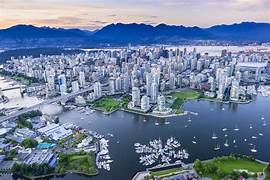
"Vancouver is a significant metropolis in Western Canada, specifically in British Columbia's Lower Mainland area. According to the 2021 Canadian census, there were 662,248 residents in the city, which is the largest in the province, compared to 631,486 in 2016. With 2.6 million people in 2021, the Metro Vancouver region is the third-largest metropolis in Canada. The Lower Mainland, which includes the Fraser Valley and Greater Vancouver, has a regional population of over 3 million people. With more than 5,700 people per square kilometer (15,000/sq mi), Vancouver has the highest population density in Canada and the fourth highest in North America, behind New York City, San Francisco, and Mexico City. Vancouver is one of the most linguistically and ethnically diverse cities in Canada, with 54.5% of its population belonging to visible minority groups, 49.3% not being native English speakers, and 47.8% not speaking either French or English as their first language. It has consistently been listed among the most livable cities in Canada and the globe. Vancouver is also one of the priciest cities in the world and Canada when it comes to the affordability of housing. The urban planning design ideology of the city is known as Vancouverism. Numerous international conferences and events have been held in Vancouver, including the 1954 Commonwealth Games, UN Habitat I, Expo 86, APEC Canada 1997, the World Police and Fire Games in 1989 and 2009; several matches of 2015 FIFA Women's World Cup, including the finals at BC Place in downtown Vancouver,and the 2010 Winter Olympics and Paralympics, which were held in Vancouver and Whistler, a resort town 125 kilometers (78 miles) north of the city. Greenpeace was established in Vancouver in 1969. In 2014, TED talks were established in the city as a permanent fixture. The city's name comes from George Vancouver, who gave several locations British names after he surveyed Burrard Inlet's inner harbor in 1792. The Dutch ""van Coevorden"" translates to someone from the town of Coevorden in the Netherlands, which is where the family name ""Vancouver"" comes from. The explorer's forebears ""from Coevorden"" came to England, giving rise to the name that would eventually become ""Vancouver."" Prior to 1850 According to archaeological records, the Vancouver region was already inhabited by Aboriginal people between 8,000 and 10,000 years ago. Numerous villages belonging to the Squamish, Musqueam, and Tsleil-Waututh (Burrard) tribes of the Coast Salish group were located in different areas of modern Vancouver, including Stanley Park, False Creek, Kitsilano, Point Grey, and the mouth of the Fraser River. Although José María Narváez of Spain discovered the coast of present-day Point Grey and portions of Burrard Inlet in 1791, Europeans first learned about the site of the future Vancouver during that expedition.
Kruger National Park Africa
Kruger National Park Africa
Africa
AFRICAN
Yes
37
Covering 19,623 km2 (7,576 sq mi), Kruger National Park is located in the northeastern South African provinces of Mpumalanga and Limpopo. It stretches 65 km (40 mi) from east to west and 360 km (220 mi) from north to south. Skukuza is home to the administrative headquarters. The South African Republic's government first protected portions of the park in 1898, and in 1926 it was designated as the country's first national park. It is a part of the biosphere reserve known as the Kruger to Canyons Biosphere. Kruger National Park is home to all five of the big game creatures and boasts 147 species of large mammals, more than any other game reserve in Africa. Webcams have been installed to watch the wildlife. There are believed to be just 400 African wild dog packs in all of South Africa, and Kruger is home to packs of these endangered animals. There is a reasonably consistent group of bird species from the park's southern to central regions, but the mopane-dominated flatlands north of the Olifants show a fall in richness.The larger birds of prey, on the other hand, breed during the dry winter, when their prey is most exposed, whereas the majority of species breed during the summer, when rainfall sustain the majority of vegetable and animal food. In 1918, Kruger National Park was declared, and a commission was formed to oversee its development and planning. A government officer named Johannes Andries (Dries) de Ridder served as the commission's first secretary. After 44 years in charge of the Kruger Park, Warden James Stevenson-Hamilton retired on April 30, 1946. Colonel J. A. B. Sandenbergh of the South African Air Force took his post. The government forcibly removed the Makuleke people from the northern portion of the park in 1969, and approximately 1500 of them were relocated to territory in the south so that their original tribal lands could be incorporated into the larger Kruger National Park. The famed Big Five (lion, leopard, elephant, rhinoceros, and buffalo) are among the remarkably diverse species that makes Kruger National Park famous. The park, which spans about two million hectares, draws tourists from all around the world with its unmatched wildlife viewing opportunities.


 (1).jpg)

.jpg)

.jpg)


.jpg)