Vancouver Canada
Vancouver Canada
Canada
NORTH AMERICA
Yes
13
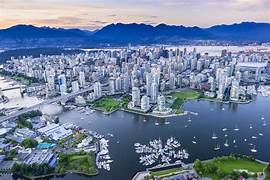
"Vancouver is a significant metropolis in Western Canada, specifically in British Columbia's Lower Mainland area. According to the 2021 Canadian census, there were 662,248 residents in the city, which is the largest in the province, compared to 631,486 in 2016. With 2.6 million people in 2021, the Metro Vancouver region is the third-largest metropolis in Canada. The Lower Mainland, which includes the Fraser Valley and Greater Vancouver, has a regional population of over 3 million people. With more than 5,700 people per square kilometer (15,000/sq mi), Vancouver has the highest population density in Canada and the fourth highest in North America, behind New York City, San Francisco, and Mexico City. Vancouver is one of the most linguistically and ethnically diverse cities in Canada, with 54.5% of its population belonging to visible minority groups, 49.3% not being native English speakers, and 47.8% not speaking either French or English as their first language. It has consistently been listed among the most livable cities in Canada and the globe. Vancouver is also one of the priciest cities in the world and Canada when it comes to the affordability of housing. The urban planning design ideology of the city is known as Vancouverism. Numerous international conferences and events have been held in Vancouver, including the 1954 Commonwealth Games, UN Habitat I, Expo 86, APEC Canada 1997, the World Police and Fire Games in 1989 and 2009; several matches of 2015 FIFA Women's World Cup, including the finals at BC Place in downtown Vancouver,and the 2010 Winter Olympics and Paralympics, which were held in Vancouver and Whistler, a resort town 125 kilometers (78 miles) north of the city. Greenpeace was established in Vancouver in 1969. In 2014, TED talks were established in the city as a permanent fixture. The city's name comes from George Vancouver, who gave several locations British names after he surveyed Burrard Inlet's inner harbor in 1792. The Dutch ""van Coevorden"" translates to someone from the town of Coevorden in the Netherlands, which is where the family name ""Vancouver"" comes from. The explorer's forebears ""from Coevorden"" came to England, giving rise to the name that would eventually become ""Vancouver."" Prior to 1850 According to archaeological records, the Vancouver region was already inhabited by Aboriginal people between 8,000 and 10,000 years ago. Numerous villages belonging to the Squamish, Musqueam, and Tsleil-Waututh (Burrard) tribes of the Coast Salish group were located in different areas of modern Vancouver, including Stanley Park, False Creek, Kitsilano, Point Grey, and the mouth of the Fraser River. Although José María Narváez of Spain discovered the coast of present-day Point Grey and portions of Burrard Inlet in 1791, Europeans first learned about the site of the future Vancouver during that expedition.
Cairo Africa
Cairo Africa
Cairo
AFRICAN
Yes
38
Cairo isn’t just the capital of Egypt — it’s the pulse of the nation. A city where ancient history meets modern chaos, where the call to prayer rises above the traffic, and where every alley seems to hum with life. Home to over 10 million people, Cairo is one of the biggest and most energetic cities in the Middle East and Africa. It’s a place of contrasts — the timeless Pyramids of Giza just a short drive from bustling markets, rooftop cafés, and shiny new malls. The Greater Cairo Metropolitan Area, with more than 22 million residents, is among the most populated urban regions on Earth. Surrounded by ancient sites like Memphis, Heliopolis, and the Giza Plateau, Cairo is a living bridge between Egypt’s past and its future. The city’s origins trace back to Fustat, Egypt’s first Islamic capital founded in 641 CE, and later to 969 CE, when the Fatimid dynasty created what we now call Cairo. Through centuries — under the Ayyubids, Mamluks, and beyond — the city became Egypt’s heart of architecture, art, and learning.
.jpg)

 (1).jpg)

.jpg)




.jpg)