Peru
Peru
Peru
SOUTH AMERICA
Yes
16
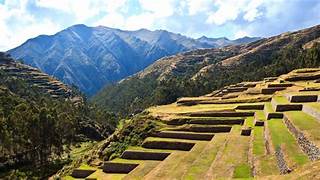
"Located in western South America, Peru is formally known as the Republic of Peru. Ecuador and Colombia abut it to the north, Brazil to the east, Bolivia to the southeast, Chile to the south, and the Pacific Ocean to the west and south. With habitats ranging from the arid plains of the Pacific coastline region in the west to the Andes mountain ranges that stretch from the country's north to its southeast, to the tropical Amazon basin rainforest in the east with the Amazon River, Peru is a megadiverse nation. Lima is the capital and largest city of Peru, which is home to more than 32 million people. Peru is the third largest country in South America and the 19th largest country in the world, with 1,285,216 km2 (496,225 sq mi). With one of the longest histories of civilization of any nation, dating back to the 10th millennium BCE Caral–Supe civilization—the earliest in the Americas and regarded as one of the cradles of civilization—Peruvian territory was home to a number of cultures during the ancient and medieval eras. The Nazca culture, the Wari and Tiwanaku empires, the Kingdom of Cusco, and the Inca Empire—the biggest state in pre-Columbian Americas—are notable examples of successive cultures and civilizations. Following the Spanish Empire's 16th-century conquest of the area, Charles V created a viceroyalty with the official name of the Kingdom of Peru, which included the majority of its South American lands and had Lima as its capital.The National University of San Marcos was formally founded in Lima in 1551, marking the beginning of higher education in the Americas. Following the military campaigns of Simón Bolívar, José de San Martín, and Bernardo O'Higgins, as well as the pivotal battle of Ayacucho, Peru officially declared its independence from Spain in 1821 and achieved full independence in 1824. Peru saw phases of economic expansion intermingled with political and social instability during the 20th century, including internal strife between guerrilla groups and the state. Under the authoritarian leadership of Alberto Fujimori and Vladimiro Montesinos in the 1990s, the implementation of Plan Verde moved Peru toward neoliberal economics; the political philosophy of the former, Fujimorism, left a lasting mark on the nation's government that persists to this day. A representative democratic republic with 25 regions, Peru is a sovereign state. Mining, manufacturing, agriculture, and fishing are its primary economic pursuits; other, expanding industries include biotechnology and telecommunications.The nation is a member of the Pacific Pumas, a political and economic alliance of nations on the Pacific coast of Latin America that have similar tendencies toward greater governance, steady macroeconomic underpinnings, positive growth, and openness to international integration. Peru is regarded as a medium power and has a high social freedom rating. It is also an active member of the World Trade Organization, the Asia-Pacific Economic Cooperation, the Pacific Alliance, and the Comprehensive and Progressive Agreement for Trans-Pacific Partnership. Mestizos, Native Americans, Europeans, Africans, and Asians make up Peru's population. Although a sizable portion of Peruvians speak Quechuan languages, Aymara, or other Indigenous languages, Spanish is the primary language spoken there. A vast range of expressions in disciplines like art, music, literature, and food are the outcome of this blending of cultural traditions. Peru's dynamic cuisine, which combines Indigenous, Spanish, African, and Asian elements, has recently won praise from all over the world. With restaurants like Central and Maido that have won awards, Lima is today regarded as a gastronomic center of the world.
Kruger National Park Africa
Kruger National Park Africa
Africa
AFRICAN
Yes
37
Covering 19,623 km2 (7,576 sq mi), Kruger National Park is located in the northeastern South African provinces of Mpumalanga and Limpopo. It stretches 65 km (40 mi) from east to west and 360 km (220 mi) from north to south. Skukuza is home to the administrative headquarters. The South African Republic's government first protected portions of the park in 1898, and in 1926 it was designated as the country's first national park. It is a part of the biosphere reserve known as the Kruger to Canyons Biosphere. Kruger National Park is home to all five of the big game creatures and boasts 147 species of large mammals, more than any other game reserve in Africa. Webcams have been installed to watch the wildlife. There are believed to be just 400 African wild dog packs in all of South Africa, and Kruger is home to packs of these endangered animals. There is a reasonably consistent group of bird species from the park's southern to central regions, but the mopane-dominated flatlands north of the Olifants show a fall in richness.The larger birds of prey, on the other hand, breed during the dry winter, when their prey is most exposed, whereas the majority of species breed during the summer, when rainfall sustain the majority of vegetable and animal food. In 1918, Kruger National Park was declared, and a commission was formed to oversee its development and planning. A government officer named Johannes Andries (Dries) de Ridder served as the commission's first secretary. After 44 years in charge of the Kruger Park, Warden James Stevenson-Hamilton retired on April 30, 1946. Colonel J. A. B. Sandenbergh of the South African Air Force took his post. The government forcibly removed the Makuleke people from the northern portion of the park in 1969, and approximately 1500 of them were relocated to territory in the south so that their original tribal lands could be incorporated into the larger Kruger National Park. The famed Big Five (lion, leopard, elephant, rhinoceros, and buffalo) are among the remarkably diverse species that makes Kruger National Park famous. The park, which spans about two million hectares, draws tourists from all around the world with its unmatched wildlife viewing opportunities.


 (1).jpg)

.jpg)

.jpg)


.jpg)