Peru
Peru
Peru
SOUTH AMERICA
Yes
16
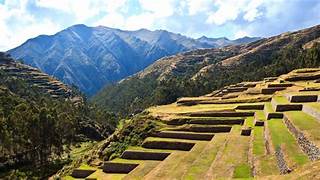
"Located in western South America, Peru is formally known as the Republic of Peru. Ecuador and Colombia abut it to the north, Brazil to the east, Bolivia to the southeast, Chile to the south, and the Pacific Ocean to the west and south. With habitats ranging from the arid plains of the Pacific coastline region in the west to the Andes mountain ranges that stretch from the country's north to its southeast, to the tropical Amazon basin rainforest in the east with the Amazon River, Peru is a megadiverse nation. Lima is the capital and largest city of Peru, which is home to more than 32 million people. Peru is the third largest country in South America and the 19th largest country in the world, with 1,285,216 km2 (496,225 sq mi). With one of the longest histories of civilization of any nation, dating back to the 10th millennium BCE Caral–Supe civilization—the earliest in the Americas and regarded as one of the cradles of civilization—Peruvian territory was home to a number of cultures during the ancient and medieval eras. The Nazca culture, the Wari and Tiwanaku empires, the Kingdom of Cusco, and the Inca Empire—the biggest state in pre-Columbian Americas—are notable examples of successive cultures and civilizations. Following the Spanish Empire's 16th-century conquest of the area, Charles V created a viceroyalty with the official name of the Kingdom of Peru, which included the majority of its South American lands and had Lima as its capital.The National University of San Marcos was formally founded in Lima in 1551, marking the beginning of higher education in the Americas. Following the military campaigns of Simón Bolívar, José de San Martín, and Bernardo O'Higgins, as well as the pivotal battle of Ayacucho, Peru officially declared its independence from Spain in 1821 and achieved full independence in 1824. Peru saw phases of economic expansion intermingled with political and social instability during the 20th century, including internal strife between guerrilla groups and the state. Under the authoritarian leadership of Alberto Fujimori and Vladimiro Montesinos in the 1990s, the implementation of Plan Verde moved Peru toward neoliberal economics; the political philosophy of the former, Fujimorism, left a lasting mark on the nation's government that persists to this day. A representative democratic republic with 25 regions, Peru is a sovereign state. Mining, manufacturing, agriculture, and fishing are its primary economic pursuits; other, expanding industries include biotechnology and telecommunications.The nation is a member of the Pacific Pumas, a political and economic alliance of nations on the Pacific coast of Latin America that have similar tendencies toward greater governance, steady macroeconomic underpinnings, positive growth, and openness to international integration. Peru is regarded as a medium power and has a high social freedom rating. It is also an active member of the World Trade Organization, the Asia-Pacific Economic Cooperation, the Pacific Alliance, and the Comprehensive and Progressive Agreement for Trans-Pacific Partnership. Mestizos, Native Americans, Europeans, Africans, and Asians make up Peru's population. Although a sizable portion of Peruvians speak Quechuan languages, Aymara, or other Indigenous languages, Spanish is the primary language spoken there. A vast range of expressions in disciplines like art, music, literature, and food are the outcome of this blending of cultural traditions. Peru's dynamic cuisine, which combines Indigenous, Spanish, African, and Asian elements, has recently won praise from all over the world. With restaurants like Central and Maido that have won awards, Lima is today regarded as a gastronomic center of the world.
Cape Town
Cape Town
South Africa
AFRICAN
Yes
35
South Africa's legislative capital is Cape Town. It is the oldest city in the nation and the location of the South African Parliament. Cape Town is the largest city in the Western Cape and the second most populous city in the nation, after Johannesburg.The city is a part of the metropolitan municipality known as the City of Cape Town.Table Mountain, Cape Point, the city's harbor, and its natural environment in the Cape Floristic Region are some of its most well-known features. Numerous publications have ranked Cape Town as the world's greatest city and the finest place to go, including Time Out in 2025, The New York Times in 2014, and The Telegraph for the last eight years (2017–2025). With the greatest concentration of Cape Dutch-style buildings worldwide, Cape Town is renowned for its architectural legacy. Constantia, the historic government buildings in the Central Business District, and Long Street are the best examples of the Cape Dutch architectural style, which blends the architectural traditions of the Netherlands, Germany, France, and Indonesia. Mostert's Mill in Mowbray is the only fully operational windmill in South Africa. Constructed in 1796, it underwent restorations in 1935 and 1995. In 2014, the International Council of Societies of Industrial Design declared Cape Town the World Design Capital. Additionally, Cape Town is designated a "Design City" by the Creative Cities Network of UNESCO. Cape Town's biggest performing arts facility is the Artscape Theatre Centre. The 17th-century savory, sweet, spiced beef dish known as bobotie is one of the foods that originated in Cape Town or is associated with it. A sandwich stuffed with slap chips and other toppings, the Gatsby was initially offered in the Athlone area in 1976 and has since come to represent the city.A classic Cape Malay dessert, the koe'sister is characterized as a cake-like dumpling flavored with cinnamon and topped with a dusting of desiccated coconut. Table Mountain's mass and the chilly Benguela Current of the South Atlantic Ocean both locally alter Cape Town's Mediterranean climate. While the average high temperature is 70°F (21°C) in January and February and the average low temperature is 55°F (13°C) in July, the coast and mountain slopes experience colder weather. Freezing rarely happens. Rainfall occurs on 69 days of the year on average; the southern winter months of June through August account for roughly half of the 26 inches (660 millimeters) of yearly rainfall. Every year, almost five million tons of goods pass through the port of Cape Town. Although ships with a draft of more than 40 feet are not permitted to enter the port during low tide, interoceanic commerce benefits greatly from its dry dock and maintenance facilities. Container traffic is accommodated at the Ben Schoeman Dock.


 (1).jpg)

.jpg)

.jpg)


.jpg)