Hanoi Vietnam
Hanoi Vietnam
Vietnam
ASIA
Yes
0
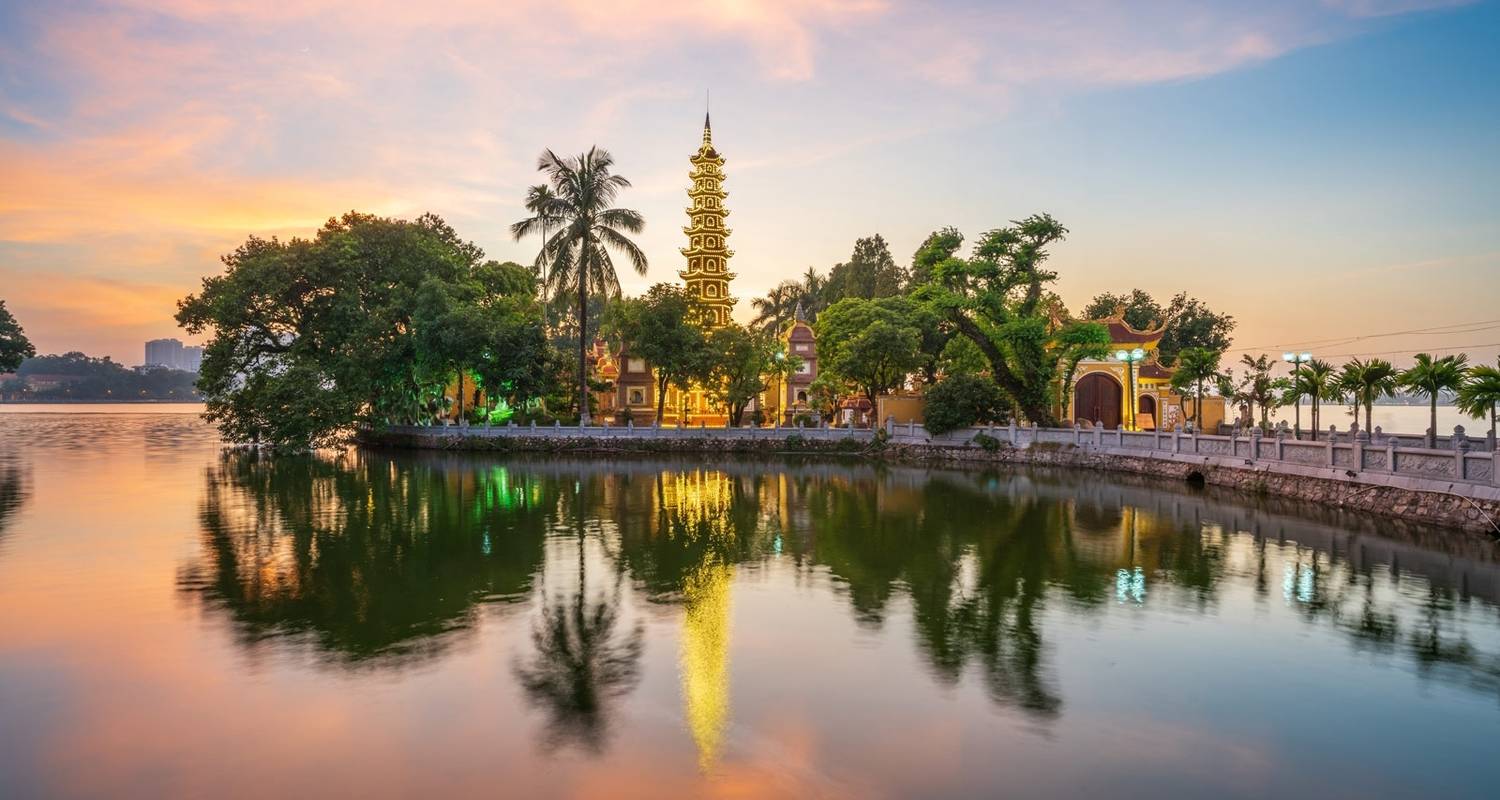
"Vietnam's capital city is Hanoi. Approximately 85 miles (140 km) inland from the South China Sea, the city is located in northern Vietnam on the western bank of the Red River. Hanoi is not just the capital of the country but also a province-level municipality (thanh pho) that is run by the national government. 1,205 square miles (3,120 square kilometers) is the total area. A city's population was 1,523,936 in 1999; 5,053,654 in the municipality; 2,316,722 in 2009; 6,451,909 in the municipality; and 3,292,000 in the city as of 2014. Hanoi and Ho Chi Minh City will rank among the world's fastest-growing cities in terms of GDP growth between 2008 and 2025, citing a new PricewaterhouseCoopers ranking.[99] Hanoi made up 17% of the national budget, generated 12.6% of the GDP, exported 7.5% of all exports, and drew in 22% of Vietnam's investment capital in 2013. With a nominal GDP of 451,213 billion VND (US$21.48 billion) at current prices, the city's GDP per capita was 63.3 million VND (US$3,000) in 2013. Another robust area of the city is trade. With relations to 161 nations and territories, Hanoi had 2,000 companies involved in international trade in 2003. Between 1996 and 2000, the city's export value increased by 11.6 percent year on average, and between 2001 and 2003, it increased by 9.1 percent. Significant changes also occurred in the economic structure, with banking, finance, and tourism now playing a bigger part. Another robust area of the city is trade. With relations to 161 nations and territories, Hanoi had 2,000 companies involved in international trade in 2003. Between 1996 and 2000, the city's export value increased by 11.6 percent year on average, and between 2001 and 2003, it increased by 9.1 percent. Significant changes also occurred in the economic structure, with banking, finance, and tourism now playing a bigger part. The first Western-style universities in Indochina were established in Hanoi, the capital of French Indochina. These included École Supérieure des Beaux-Arts de l'Indochina (1925), which is now Vietnam University of Fine Art (VNUFA) in Hanoi, Indochina Medical College (1902), which is now Hanoi Medical University (HMU), and Indochina University (1904), which is now the largest of the country's universities, Vietnam National University (VNU) in Hanoi. Noi Bai International Airport, situated in Soc Son District, around 15 km (9 km) north of Hanoi, serves the city. The airport underwent a significant makeover with the opening of the new international terminal (T2), which was created and constructed by Japanese contractors and inaugurated in January 2015. Additionally, the airport and city center are now connected by the new Nhat Tan cable-stay bridge and a new roadway, which opened simultaneously and provide far greater convenience than the previous route (via Thang Long bridge). Though it's also traditional to settle on the trip fee before taking a cab from the airport to the city center, taxis are frequent and typically have meters. Six national railway lines, totaling 162 km (101 mi) in length, pass through Hanoi, making it the starting or finishing location for many of the country's Vietnam Railways train routes.From Hanoi station (previously Hang Co station), the Reunification Express (tàu Thống Nhất) travels to Ho Chi Minh City, stopping at cities and provinces en route. Additionally, trains regularly leave Hanoi for Hai Phong and other northern locations. The city of Hanoi is home to numerous stadiums and gymnasiums. The most favored ones are Quần Ngựa Sports Palace (Văn Cao Avenue), Hanoi Aquatics Sports Complex, Hanoi Indoor Games Gymnasium, and Mỹ Đình National Stadium (Lê Đức Thọ Boulevard). The others are Thanh Trì Stadium, Hàng Đẫy Stadium, and Hà Đông Stadium. In 2009, Hanoi hosted the third Asian Indoor Games. The others are Vạn Bảo Sports Complex, Trịnh Hoài Đức Gymnasium, and Hai Bà Trưng Gymnasium. Several of these locations had activities during the Hanoi-hosted SEA Games in 2003 and 2021."
Kruger National Park Africa
Kruger National Park Africa
Africa
AFRICAN
Yes
37
Covering 19,623 km2 (7,576 sq mi), Kruger National Park is located in the northeastern South African provinces of Mpumalanga and Limpopo. It stretches 65 km (40 mi) from east to west and 360 km (220 mi) from north to south. Skukuza is home to the administrative headquarters. The South African Republic's government first protected portions of the park in 1898, and in 1926 it was designated as the country's first national park. It is a part of the biosphere reserve known as the Kruger to Canyons Biosphere. Kruger National Park is home to all five of the big game creatures and boasts 147 species of large mammals, more than any other game reserve in Africa. Webcams have been installed to watch the wildlife. There are believed to be just 400 African wild dog packs in all of South Africa, and Kruger is home to packs of these endangered animals. There is a reasonably consistent group of bird species from the park's southern to central regions, but the mopane-dominated flatlands north of the Olifants show a fall in richness.The larger birds of prey, on the other hand, breed during the dry winter, when their prey is most exposed, whereas the majority of species breed during the summer, when rainfall sustain the majority of vegetable and animal food. In 1918, Kruger National Park was declared, and a commission was formed to oversee its development and planning. A government officer named Johannes Andries (Dries) de Ridder served as the commission's first secretary. After 44 years in charge of the Kruger Park, Warden James Stevenson-Hamilton retired on April 30, 1946. Colonel J. A. B. Sandenbergh of the South African Air Force took his post. The government forcibly removed the Makuleke people from the northern portion of the park in 1969, and approximately 1500 of them were relocated to territory in the south so that their original tribal lands could be incorporated into the larger Kruger National Park. The famed Big Five (lion, leopard, elephant, rhinoceros, and buffalo) are among the remarkably diverse species that makes Kruger National Park famous. The park, which spans about two million hectares, draws tourists from all around the world with its unmatched wildlife viewing opportunities.


 (1).jpg)

.jpg)

.jpg)


.jpg)