Hanoi Vietnam
Hanoi Vietnam
Vietnam
ASIA
Yes
0
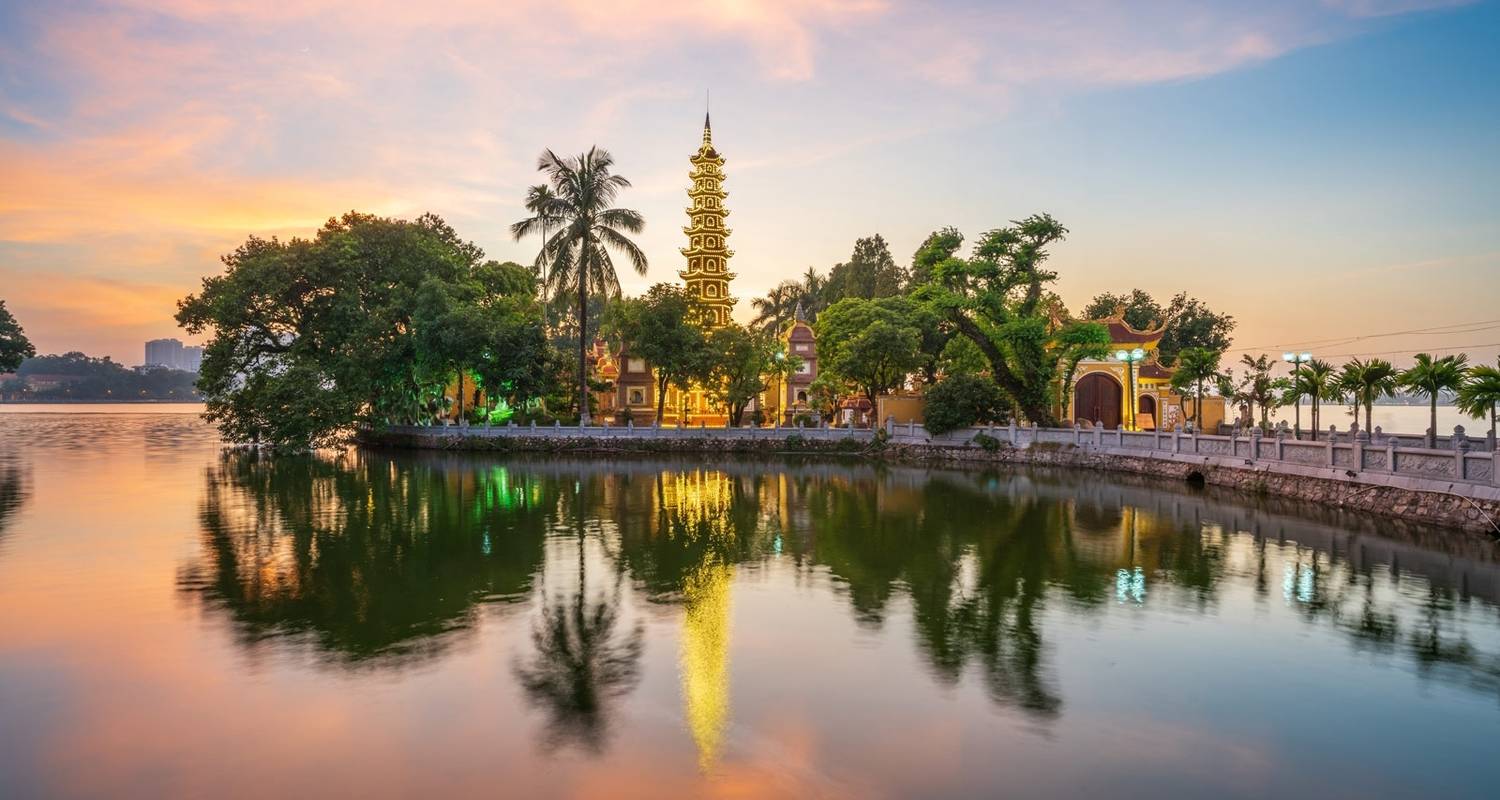
"Vietnam's capital city is Hanoi. Approximately 85 miles (140 km) inland from the South China Sea, the city is located in northern Vietnam on the western bank of the Red River. Hanoi is not just the capital of the country but also a province-level municipality (thanh pho) that is run by the national government. 1,205 square miles (3,120 square kilometers) is the total area. A city's population was 1,523,936 in 1999; 5,053,654 in the municipality; 2,316,722 in 2009; 6,451,909 in the municipality; and 3,292,000 in the city as of 2014. Hanoi and Ho Chi Minh City will rank among the world's fastest-growing cities in terms of GDP growth between 2008 and 2025, citing a new PricewaterhouseCoopers ranking.[99] Hanoi made up 17% of the national budget, generated 12.6% of the GDP, exported 7.5% of all exports, and drew in 22% of Vietnam's investment capital in 2013. With a nominal GDP of 451,213 billion VND (US$21.48 billion) at current prices, the city's GDP per capita was 63.3 million VND (US$3,000) in 2013. Another robust area of the city is trade. With relations to 161 nations and territories, Hanoi had 2,000 companies involved in international trade in 2003. Between 1996 and 2000, the city's export value increased by 11.6 percent year on average, and between 2001 and 2003, it increased by 9.1 percent. Significant changes also occurred in the economic structure, with banking, finance, and tourism now playing a bigger part. Another robust area of the city is trade. With relations to 161 nations and territories, Hanoi had 2,000 companies involved in international trade in 2003. Between 1996 and 2000, the city's export value increased by 11.6 percent year on average, and between 2001 and 2003, it increased by 9.1 percent. Significant changes also occurred in the economic structure, with banking, finance, and tourism now playing a bigger part. The first Western-style universities in Indochina were established in Hanoi, the capital of French Indochina. These included École Supérieure des Beaux-Arts de l'Indochina (1925), which is now Vietnam University of Fine Art (VNUFA) in Hanoi, Indochina Medical College (1902), which is now Hanoi Medical University (HMU), and Indochina University (1904), which is now the largest of the country's universities, Vietnam National University (VNU) in Hanoi. Noi Bai International Airport, situated in Soc Son District, around 15 km (9 km) north of Hanoi, serves the city. The airport underwent a significant makeover with the opening of the new international terminal (T2), which was created and constructed by Japanese contractors and inaugurated in January 2015. Additionally, the airport and city center are now connected by the new Nhat Tan cable-stay bridge and a new roadway, which opened simultaneously and provide far greater convenience than the previous route (via Thang Long bridge). Though it's also traditional to settle on the trip fee before taking a cab from the airport to the city center, taxis are frequent and typically have meters. Six national railway lines, totaling 162 km (101 mi) in length, pass through Hanoi, making it the starting or finishing location for many of the country's Vietnam Railways train routes.From Hanoi station (previously Hang Co station), the Reunification Express (tàu Thống Nhất) travels to Ho Chi Minh City, stopping at cities and provinces en route. Additionally, trains regularly leave Hanoi for Hai Phong and other northern locations. The city of Hanoi is home to numerous stadiums and gymnasiums. The most favored ones are Quần Ngựa Sports Palace (Văn Cao Avenue), Hanoi Aquatics Sports Complex, Hanoi Indoor Games Gymnasium, and Mỹ Đình National Stadium (Lê Đức Thọ Boulevard). The others are Thanh Trì Stadium, Hàng Đẫy Stadium, and Hà Đông Stadium. In 2009, Hanoi hosted the third Asian Indoor Games. The others are Vạn Bảo Sports Complex, Trịnh Hoài Đức Gymnasium, and Hai Bà Trưng Gymnasium. Several of these locations had activities during the Hanoi-hosted SEA Games in 2003 and 2021."
Cape Town
Cape Town
South Africa
AFRICAN
Yes
35
South Africa's legislative capital is Cape Town. It is the oldest city in the nation and the location of the South African Parliament. Cape Town is the largest city in the Western Cape and the second most populous city in the nation, after Johannesburg.The city is a part of the metropolitan municipality known as the City of Cape Town.Table Mountain, Cape Point, the city's harbor, and its natural environment in the Cape Floristic Region are some of its most well-known features. Numerous publications have ranked Cape Town as the world's greatest city and the finest place to go, including Time Out in 2025, The New York Times in 2014, and The Telegraph for the last eight years (2017–2025). With the greatest concentration of Cape Dutch-style buildings worldwide, Cape Town is renowned for its architectural legacy. Constantia, the historic government buildings in the Central Business District, and Long Street are the best examples of the Cape Dutch architectural style, which blends the architectural traditions of the Netherlands, Germany, France, and Indonesia. Mostert's Mill in Mowbray is the only fully operational windmill in South Africa. Constructed in 1796, it underwent restorations in 1935 and 1995. In 2014, the International Council of Societies of Industrial Design declared Cape Town the World Design Capital. Additionally, Cape Town is designated a "Design City" by the Creative Cities Network of UNESCO. Cape Town's biggest performing arts facility is the Artscape Theatre Centre. The 17th-century savory, sweet, spiced beef dish known as bobotie is one of the foods that originated in Cape Town or is associated with it. A sandwich stuffed with slap chips and other toppings, the Gatsby was initially offered in the Athlone area in 1976 and has since come to represent the city.A classic Cape Malay dessert, the koe'sister is characterized as a cake-like dumpling flavored with cinnamon and topped with a dusting of desiccated coconut. Table Mountain's mass and the chilly Benguela Current of the South Atlantic Ocean both locally alter Cape Town's Mediterranean climate. While the average high temperature is 70°F (21°C) in January and February and the average low temperature is 55°F (13°C) in July, the coast and mountain slopes experience colder weather. Freezing rarely happens. Rainfall occurs on 69 days of the year on average; the southern winter months of June through August account for roughly half of the 26 inches (660 millimeters) of yearly rainfall. Every year, almost five million tons of goods pass through the port of Cape Town. Although ships with a draft of more than 40 feet are not permitted to enter the port during low tide, interoceanic commerce benefits greatly from its dry dock and maintenance facilities. Container traffic is accommodated at the Ben Schoeman Dock.


 (1).jpg)

.jpg)

.jpg)


.jpg)