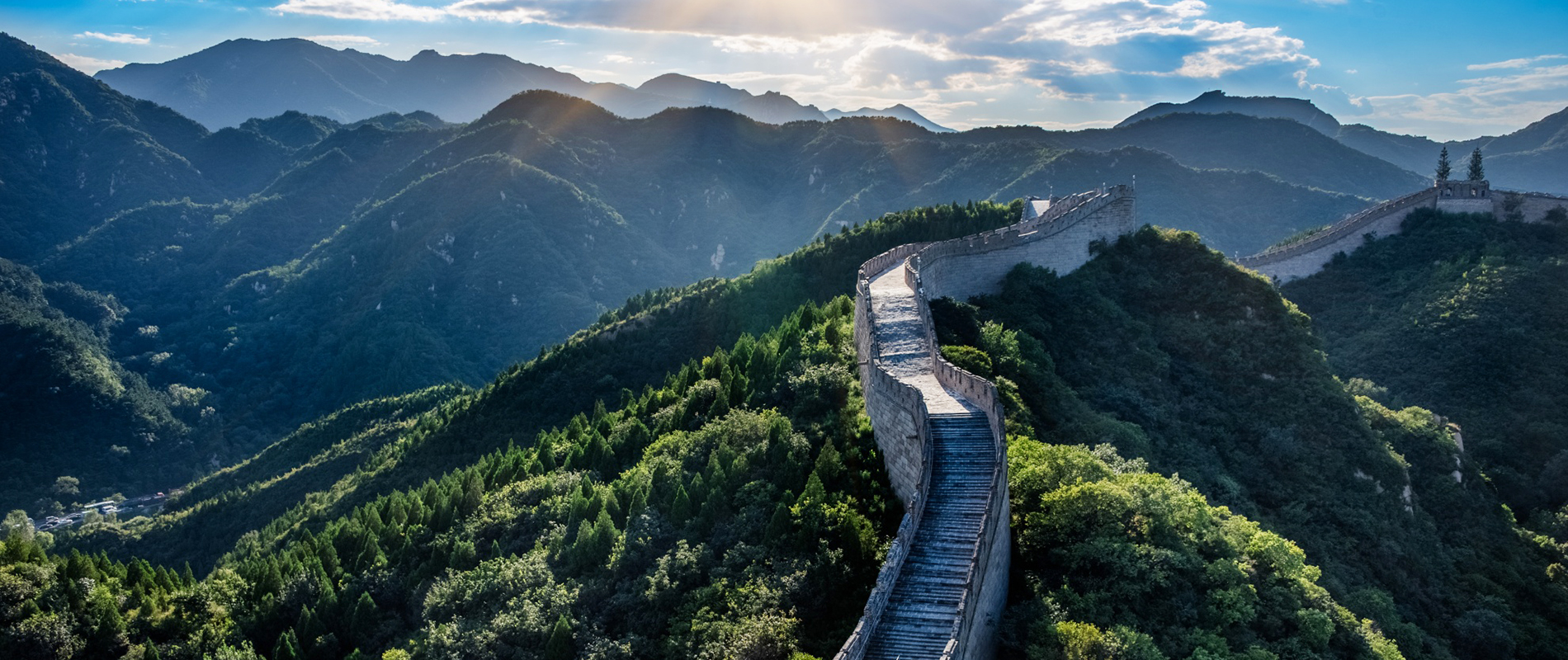
The Great Wall of China, China
The Great Wall is on almost every traveler's list of places to see in China, and Beijing is the best place to see it. Beijing was not only one of the oldest capitals in Chinese history, but it was also one of the most strategically important places in the north. Many kings were keen to have the Great Wall built here in order to protect the region. It just so happens that Beijing's north and west are mountainous areas with dangerous and complicated topography.
The Great Wall of China, which stretches over 20,000 kilometers from the Yellow Sea in the east to the Gobi Desert in the west, is well-known worldwide and plays a significant role in the decision of many people to travel to China. With more than 25,000 battlements winding around treacherous mountain peaks and dense forests, the UNESCO-listed wall, which is 7 meters wide and 6 to 14 meters high, dates back more than 2,300 years. Despite what many people think, it is actually a series of sections with mountains that act as a natural defense, rather than a single, lengthy wall. Furthermore, although it's still a common misconception, you cannot see it from space! Beginning in the fifth century BC, defense wall construction was used to demarcate frontiers and divide competing domains. A large portion of the Wall as it exists now dates back to the Ming dynasty (1368–1644), when the emperor rebuilt the Wall's numerous portions. During the Qing Dynasty (1644–1912), the Wall deteriorated and was systematically disassembled to provide building materials; bricks from the Wall with the Imperial Seal may be found in Beijing's Hutongs. In order to allow people from around the world to awe at the amazing feat of human engineering, portions of the Wall have been restored to their previous splendor. We've selected a few of the wall's top locations for you to see below. It offers visitors the iconic Great Wall image and is highly photogenic, with 16 renovated watchtowers situated amidst rolling mountains. In addition to the intriguing Great Wall Museum, there are several eateries and gift shops at the base of the Badaling part of the Wall. Beijing's Top 8 Great Wall Sections to See 1. Mutianyu Great Wall: The Most Visited Area by Foreign Visitors 2. China's Most Famous Section: The Badaling Great Wall 3. The Great Wall encircles the millennium-old town of Juyongguan. 4. The Most Beautiful and Best-Photographed Part of Jinshanling Great Wall 5. The Only Great Wall beside a Lake, Huanghuacheng 6. Simatai Great Wall: The Greatest Area to Visit at Night 7. The Wildest and Most Precipitous Part of the Jiankou Great Wall 8. Gubeikou Great Wall: The Best Area for Hiking Lovers
 (1).jpg)
 (1).jpg)
.jpg)
.jpg)
 (1).jpg)
 (1).jpg)
.jpg)
.jpg)

.jpg)






