Hanoi Vietnam
Hanoi Vietnam
Vietnam
ASIA
Yes
0
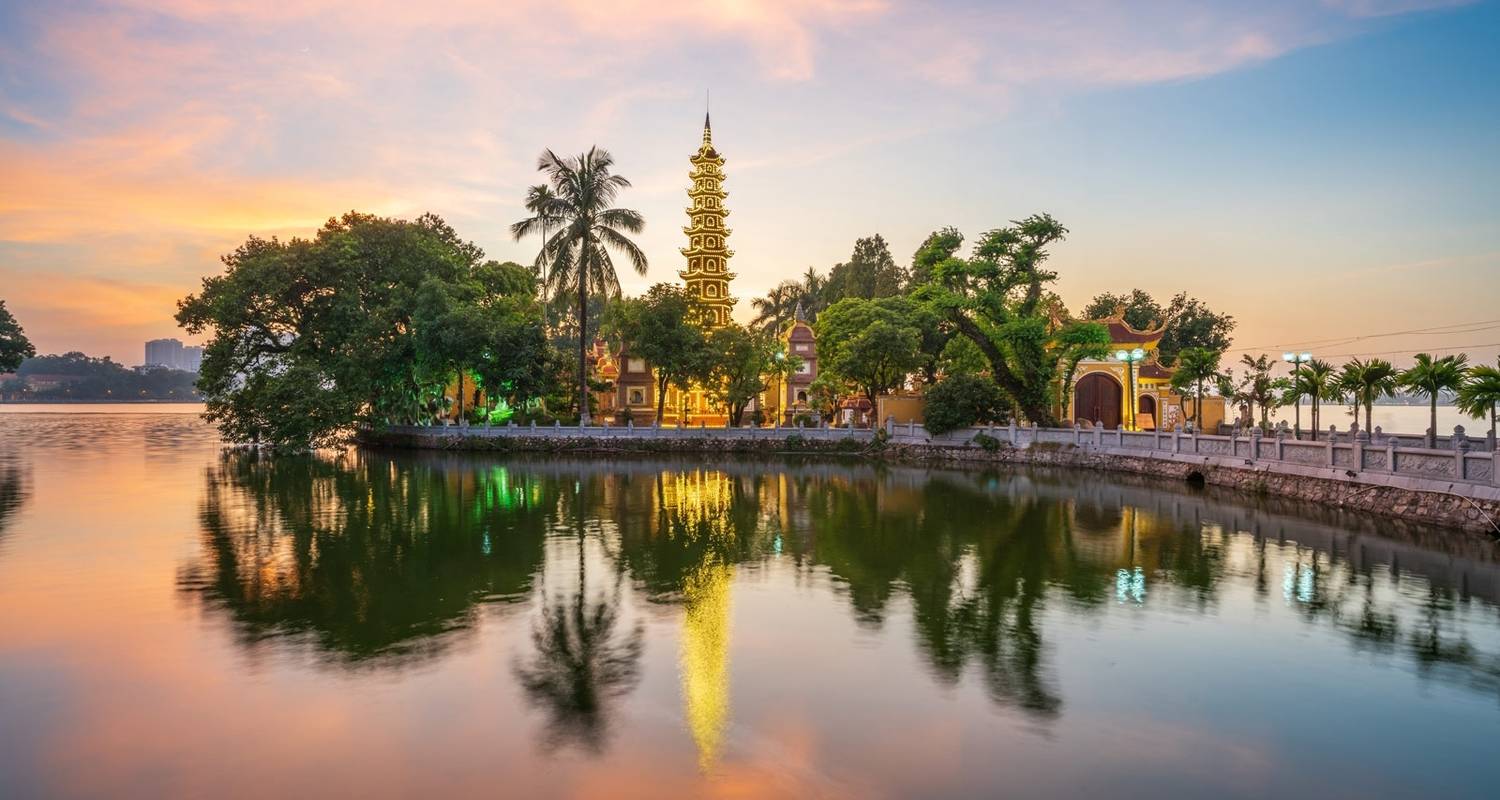
"Vietnam's capital city is Hanoi. Approximately 85 miles (140 km) inland from the South China Sea, the city is located in northern Vietnam on the western bank of the Red River. Hanoi is not just the capital of the country but also a province-level municipality (thanh pho) that is run by the national government. 1,205 square miles (3,120 square kilometers) is the total area. A city's population was 1,523,936 in 1999; 5,053,654 in the municipality; 2,316,722 in 2009; 6,451,909 in the municipality; and 3,292,000 in the city as of 2014. Hanoi and Ho Chi Minh City will rank among the world's fastest-growing cities in terms of GDP growth between 2008 and 2025, citing a new PricewaterhouseCoopers ranking.[99] Hanoi made up 17% of the national budget, generated 12.6% of the GDP, exported 7.5% of all exports, and drew in 22% of Vietnam's investment capital in 2013. With a nominal GDP of 451,213 billion VND (US$21.48 billion) at current prices, the city's GDP per capita was 63.3 million VND (US$3,000) in 2013. Another robust area of the city is trade. With relations to 161 nations and territories, Hanoi had 2,000 companies involved in international trade in 2003. Between 1996 and 2000, the city's export value increased by 11.6 percent year on average, and between 2001 and 2003, it increased by 9.1 percent. Significant changes also occurred in the economic structure, with banking, finance, and tourism now playing a bigger part. Another robust area of the city is trade. With relations to 161 nations and territories, Hanoi had 2,000 companies involved in international trade in 2003. Between 1996 and 2000, the city's export value increased by 11.6 percent year on average, and between 2001 and 2003, it increased by 9.1 percent. Significant changes also occurred in the economic structure, with banking, finance, and tourism now playing a bigger part. The first Western-style universities in Indochina were established in Hanoi, the capital of French Indochina. These included École Supérieure des Beaux-Arts de l'Indochina (1925), which is now Vietnam University of Fine Art (VNUFA) in Hanoi, Indochina Medical College (1902), which is now Hanoi Medical University (HMU), and Indochina University (1904), which is now the largest of the country's universities, Vietnam National University (VNU) in Hanoi. Noi Bai International Airport, situated in Soc Son District, around 15 km (9 km) north of Hanoi, serves the city. The airport underwent a significant makeover with the opening of the new international terminal (T2), which was created and constructed by Japanese contractors and inaugurated in January 2015. Additionally, the airport and city center are now connected by the new Nhat Tan cable-stay bridge and a new roadway, which opened simultaneously and provide far greater convenience than the previous route (via Thang Long bridge). Though it's also traditional to settle on the trip fee before taking a cab from the airport to the city center, taxis are frequent and typically have meters. Six national railway lines, totaling 162 km (101 mi) in length, pass through Hanoi, making it the starting or finishing location for many of the country's Vietnam Railways train routes.From Hanoi station (previously Hang Co station), the Reunification Express (tàu Thống Nhất) travels to Ho Chi Minh City, stopping at cities and provinces en route. Additionally, trains regularly leave Hanoi for Hai Phong and other northern locations. The city of Hanoi is home to numerous stadiums and gymnasiums. The most favored ones are Quần Ngựa Sports Palace (Văn Cao Avenue), Hanoi Aquatics Sports Complex, Hanoi Indoor Games Gymnasium, and Mỹ Đình National Stadium (Lê Đức Thọ Boulevard). The others are Thanh Trì Stadium, Hàng Đẫy Stadium, and Hà Đông Stadium. In 2009, Hanoi hosted the third Asian Indoor Games. The others are Vạn Bảo Sports Complex, Trịnh Hoài Đức Gymnasium, and Hai Bà Trưng Gymnasium. Several of these locations had activities during the Hanoi-hosted SEA Games in 2003 and 2021."
Ho Chi Minh Vietnam
Ho Chi Minh Vietnam
Vietnam
ASIA
Yes
21
"With 14,002,598 residents as of 2025, Ho Chi Minh City, usually referred to as Saigon, is the most populated city in Vietnam. The Saigon River is the greatest of the rivers and canals that characterize the city's topography. Approximately 25% of Vietnam's total GDP comes from Ho Chi Minh City, the country's major financial hub and the province and municipality with the highest gross regional product [7].[8] The metropolitan area of Ho Chi Minh City has the greatest economy outside of an ASEAN nation capital and ranks fifth in ASEAN. Due to Đại Việt's expansionist policy of Nam tiến, the region was first a part of Cambodian states until joining the Vietnamese Nguyễn lords in 1698. At the end of their existence, before the Nguyễn dynasty was established, it served as the capital of the Nguyễn lords. From 1862 until 1949, it served as the capital of French Cochinchina following the collapse of the Citadel of Saigon. The Independence Palace, Bitexco Financial Tower, Landmark 81 Tower, the War Remnants Museum, and Bến Thành Market are just a few of the city's modern and historic landmarks that draw tourists. The Phạm Ngũ Lão Ward and the Bùi Viện street within the ward are noteworthy examples of the city's busy nightlife and winding, pedestrian-friendly lanes. Tân Sơn Nhất International Airport serves the city and is the biggest airport in Vietnam in terms of the number of passengers it handles. In 2010, it handled an estimated 15.5 million passengers annually, which accounted for more than half of all air travel in Vietnam. In 2025, Long Thành International Airport is expected to open for business. Tân Sơn Nhất Airport will handle domestic flights, while Long Thành Airport, located in Long Thành District, Đồng Nai Province, approximately 40 km (25 mi) east of Ho Chi Minh City, would handle international flights. When finished, it can handle up to 100 million passengers annually. Additionally, the city serves as a station for numerous Vietnam Railways train routes throughout the nation. From Saigon Railway Station in District 3, the Reunification Express (tàu Thống Nhất) travels to Hanoi, making stops in cities and provinces en route. Sóng Thần and Sài Gòn are the two primary stations in the city. There are also a number of minor stations, including Thủ Đức, Bình Triệu, Gò Vấp, and Dĩ An. Nevertheless, rail transportation is still in its infancy and currently accounts for just 0.6% of passenger traffic and 6% of cargo exports. Because of its history, both Western and Eastern styles have typically served as inspiration for artwork. The Ho Chi Minh City Museum of Fine Arts and other art galleries on Nam Kỳ Khởi Nghĩa street, Trần Phú street, and Bùi Viện street are well-known places to see art in Ho Chi Minh City. There are several association football clubs in the city. Ho Chi Minh City F.C., one of the biggest clubs in the city, is situated at Thống Nhất Stadium. Previously known as Cảng Sài Gòn, they won the V.League 1 championship four times (in 1986, 1993–94, 1997, and 2001–02). Originally known as Quân Khu 4, Navibank Saigon F.C. was headquartered at Thống Nhất Stadium and won the First Division in 2008. The team was then promoted to the V-League in 2009, but it was disbanded due to a corruption controversy."

 (1).jpg)

.jpg)

.jpg)


