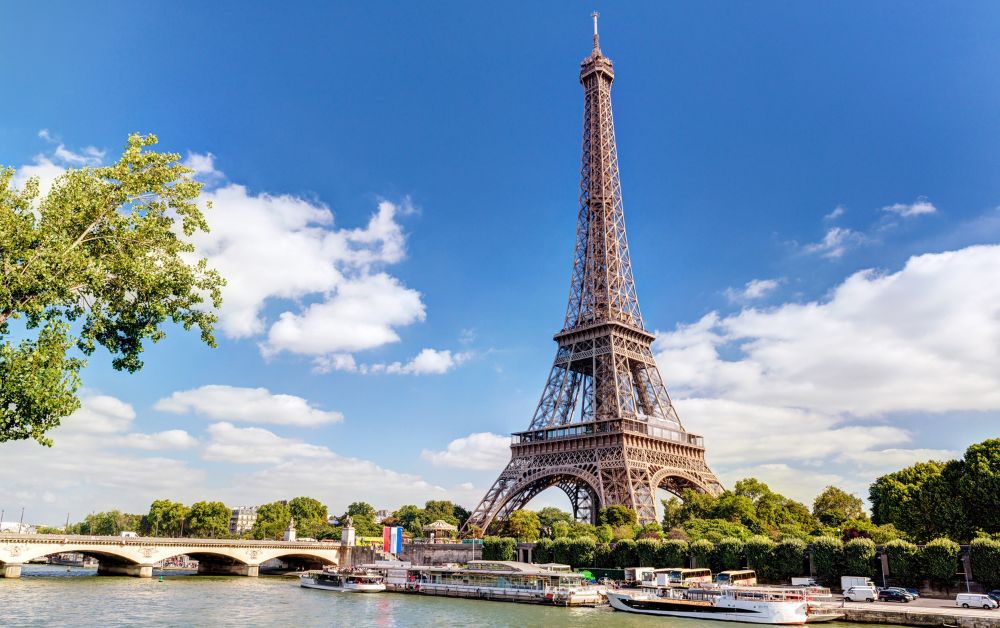
Eiffel Tower, France
If Paris had a heartbeat, it would be the Eiffel Tower. When you picture the city, chances are this iron giant is the first thing that comes to mind. Gustave Eiffel built it for the 1889 World’s Fair, and although Parisians weren’t exactly thrilled at the start, today it’s the most visited paid monument in the world. Soaring 330 meters above the city, the tower doesn’t just decorate the skyline—it owns it. Some people can’t wait to ride to the top for sweeping views, while others prefer lying on the grass at Champ de Mars, watching it from below. And then comes the true showstopper: after sunset, 20,000 lights sparkle across its frame every hour. It’s the kind of magic that makes your heart skip a beat. No photo or video ever comes close to the real thing.
Why You Must Visit the Eiffel Tower: It’s Paris’s most iconic landmark and a global symbol of love and romance. The panoramic views from its platforms let you see the city in all directions. Its nightly sparkle show is pure magic that defines the Paris experience. Dining or picnicking by the tower gives you memories you’ll never forget. It’s not just a monument—it’s the soul of Paris. How to Reach the Eiffel Tower By Metro The Metro is your best bet for speed and convenience: Bir-Hakeim (Line 6): Closest station—just a few minutes’ walk. Trocadero (Line 9): Famous for that dramatic “first look” of the tower. Ecole Militaire (Line 8): Great if you’re exploring more of the Left Bank. By Train If you’re rolling into Paris by train, it’s easy: From Gare du Nord: Line 4 → Strasbourg–Saint-Denis → Line 9 → Trocadero. From Gare de Lyon: Line 14 → Charles de Gaulle–Etoile → Line 6 → Bir-Hakeim. From Montparnasse or Saint-Lazare: Both connect quickly to Champ de Mars. By Flight Flying into Paris? You’ll likely land at: Charles de Gaulle (CDG): The main hub, 45–60 minutes from the tower by train. Orly (ORY): Smaller, closer, and only 30–40 minutes from the center. Scenic Walks If you have the time, ditch the Metro and stroll along the Seine. Cross Pont Alexandre III or Pont d’Iena, and watch the tower slowly rise into view—it’s like stepping straight into a Paris movie. Where to Eat Around the Eiffel Tower Dining in the Tower Yes—you can actually dine inside the Eiffel Tower: Le Jules Verne: Michelin-starred fine dining with breathtaking views. 58 Tour Eiffel: More casual, family-friendly, but still unforgettable. Cafes & Bistros Nearby A few steps away from the tourist crowds, you’ll stumble upon classic Parisian cafes. Start your day with a buttery croissant, linger over a glass of wine in the afternoon, or go for French staples like onion soup and escargot. Creperies are also everywhere—perfect for a quick bite between sightseeing. Picnic Perfection Sometimes, the best Paris meal is the simplest. Pick up a fresh baguette, cheese, charcuterie, and a bottle of wine from a local market, then spread your blanket on the Champ de Mars. As the tower sparkles above you, you’ll understand why Parisians love their picnics. Eiffel Tower Experiences & Insider Tips Best Time to Visit: Mornings are quieter, evenings are pure magic with the lights. Tickets: Choose stairs (budget-friendly but a workout), elevators to the second floor, or summit tickets. Always book online to skip long lines. Seasonal Highlights: Bastille Day fireworks, a winter ice rink, and the nightly sparkle show. Top Photo Spots: Trocadero Gardens, Pont de Bir-Hakeim, or a Seine river cruise. Planning Your Visit Costs: Tickets range from €11 (stairs) to €29 (summit). Meals can be as little as €10 for street food or €150+ for fine dining. Hotels range from €100 budget stays to €1,000+ luxury suites. Time Needed: Plan at least 2–3 hours. Add more if you’re dining, picnicking, or wandering nearby. Accessibility: Elevators make the tower family- and wheelchair-friendly. Champ de Mars is stroller-ready, while the stairs are best left to adventurous climbers. The Eiffel Tower isn’t just another stop on a Paris itinerary—it’s the city’s soul. Whether you’re picnicking on the grass, eating dinner high above the skyline, or standing in awe as the lights twinkle against the night, the experience will stay with you forever. Romantic, iconic, and unmistakably Paris.
 (1).jpg)
 (1).jpg)
.jpg)
.jpg)
 (1).jpg)
 (1).jpg)
.jpg)
.jpg)
.jpg)






