Wales Europe
Wales Europe
Europe
EUROPE
Yes
19
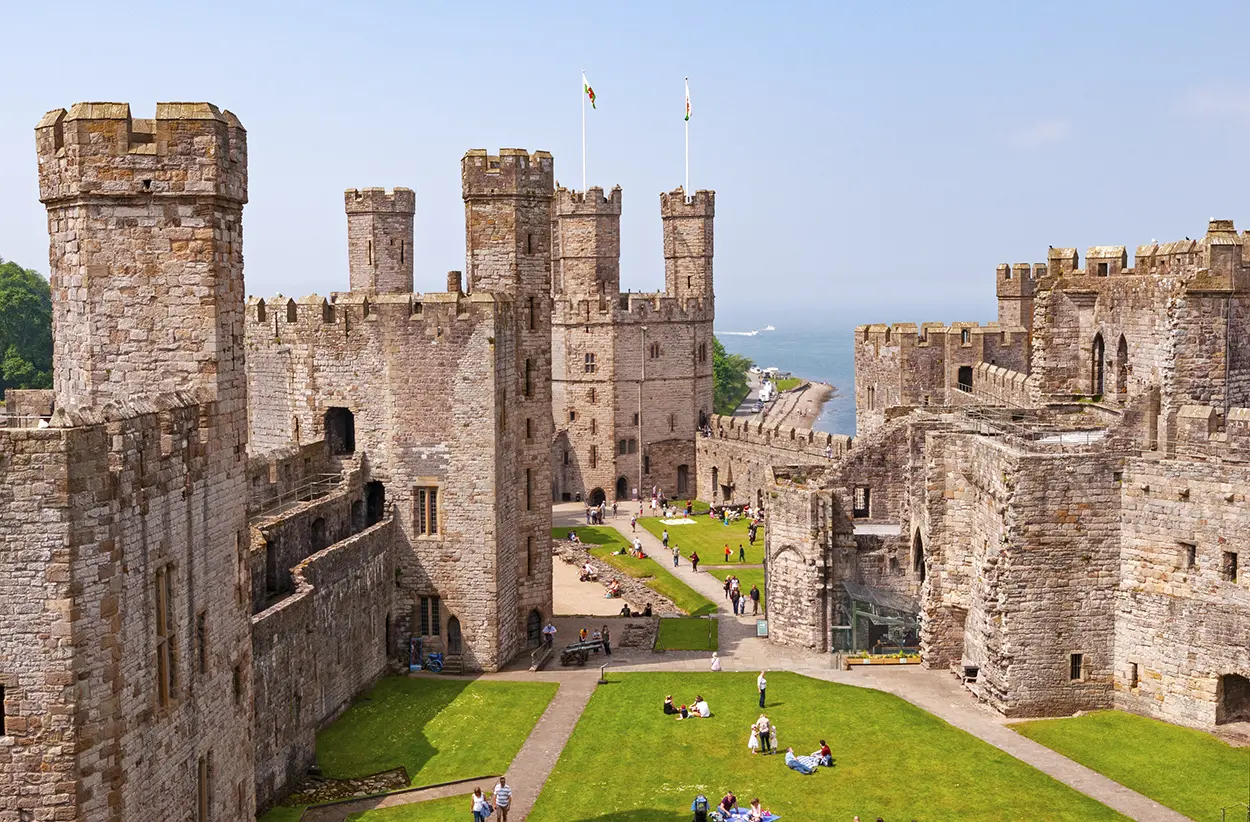
Wales is a part of the United Kingdom, which is an extension of Great Britain to the west. Cardiff serves as both the capital and the primary financial and economic hub. The little country of Wales, which is made up of six different regions, is renowned for its remarkably untamed terrain. It was one of the most important political and cultural hubs of Celtic Europe and has retained elements of its culture that set it apart from its English neighbors. Wales' maritime climate is characterized by erratic changes in Atlantic air masses, which, when paired with the country's wide range of elevations, frequently result in daily variations in local conditions. The nation as a whole receives an average of 55 inches (1,385 mm) of precipitation year, which is both frequent and frequently more than sufficient. No season is particularly rainy or dry; precipitation averages around 4 inches (88 mm) in April and 6 inches (142 mm) in January. In the uplands, where snow or sleet falls around ten days a year, winter snowfall can be substantial. Red kites, European polecats and pine martens, choughs (crowlike birds that breed inland as well as at some coastal places), and other mammals and birds that are rare or extinct elsewhere in Britain can be found in the more isolated areas of Wales. There are many of seabirds and shorebirds, and Cardigan Bay is home to bottlenose dolphins. Over half of Wales's GDP and almost two-thirds of its jobs are in the industries of trade, hotels, restaurants, government (including health and education services), and financial and business services. Cardiff and neighboring cities are home to the majority of services. Wales utilizes the pound sterling and depends on the Bank of England for currency and other financial affairs; it does not have its own central bank or national currency. Wales is home to numerous commercial banks and insurance providers. Wales is known as "the land of song," and its traditional culture is based on oral (and aural) arts such as spoken and written language and vocal music, especially choral singing with intricate harmonies and multiple parts. Welsh folk culture up to the early 18th century included the singing of penillion, or basic vernacular songs, to the triple harp. Efforts have been made to bring the tradition back. Government support for literature, art, music, film, and drama is provided by the Welsh Arts Council. The council sponsors art exhibitions, theater companies and theatres in Welsh and English, regional arts associations, music societies and festivals, especially those involved in commissioning new works, and assists in arranging British and international orchestras' visits of Wales.
Cape Town
Cape Town
South Africa
AFRICAN
Yes
35
South Africa's legislative capital is Cape Town. It is the oldest city in the nation and the location of the South African Parliament. Cape Town is the largest city in the Western Cape and the second most populous city in the nation, after Johannesburg.The city is a part of the metropolitan municipality known as the City of Cape Town.Table Mountain, Cape Point, the city's harbor, and its natural environment in the Cape Floristic Region are some of its most well-known features. Numerous publications have ranked Cape Town as the world's greatest city and the finest place to go, including Time Out in 2025, The New York Times in 2014, and The Telegraph for the last eight years (2017–2025). With the greatest concentration of Cape Dutch-style buildings worldwide, Cape Town is renowned for its architectural legacy. Constantia, the historic government buildings in the Central Business District, and Long Street are the best examples of the Cape Dutch architectural style, which blends the architectural traditions of the Netherlands, Germany, France, and Indonesia. Mostert's Mill in Mowbray is the only fully operational windmill in South Africa. Constructed in 1796, it underwent restorations in 1935 and 1995. In 2014, the International Council of Societies of Industrial Design declared Cape Town the World Design Capital. Additionally, Cape Town is designated a "Design City" by the Creative Cities Network of UNESCO. Cape Town's biggest performing arts facility is the Artscape Theatre Centre. The 17th-century savory, sweet, spiced beef dish known as bobotie is one of the foods that originated in Cape Town or is associated with it. A sandwich stuffed with slap chips and other toppings, the Gatsby was initially offered in the Athlone area in 1976 and has since come to represent the city.A classic Cape Malay dessert, the koe'sister is characterized as a cake-like dumpling flavored with cinnamon and topped with a dusting of desiccated coconut. Table Mountain's mass and the chilly Benguela Current of the South Atlantic Ocean both locally alter Cape Town's Mediterranean climate. While the average high temperature is 70°F (21°C) in January and February and the average low temperature is 55°F (13°C) in July, the coast and mountain slopes experience colder weather. Freezing rarely happens. Rainfall occurs on 69 days of the year on average; the southern winter months of June through August account for roughly half of the 26 inches (660 millimeters) of yearly rainfall. Every year, almost five million tons of goods pass through the port of Cape Town. Although ships with a draft of more than 40 feet are not permitted to enter the port during low tide, interoceanic commerce benefits greatly from its dry dock and maintenance facilities. Container traffic is accommodated at the Ben Schoeman Dock.


 (1).jpg)

.jpg)

.jpg)


.jpg)