Wales Europe
Wales Europe
Europe
EUROPE
Yes
19
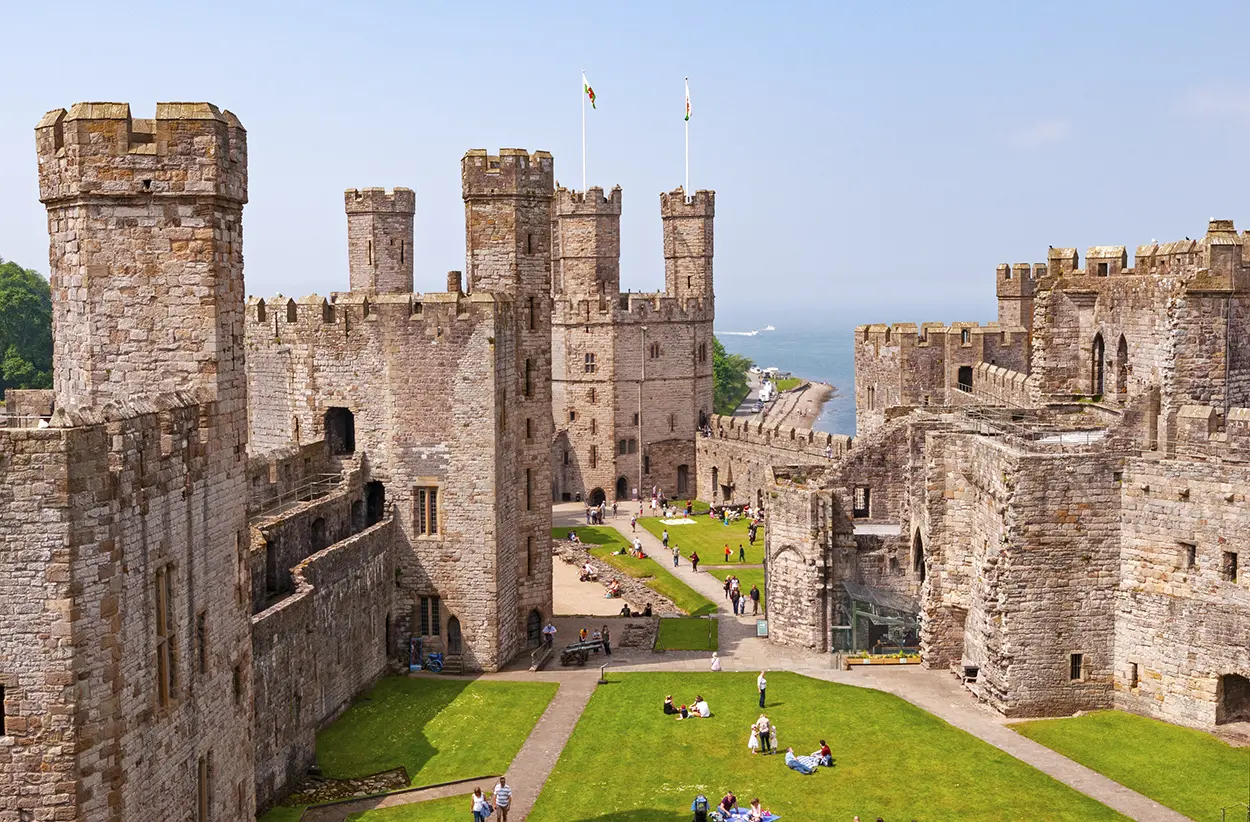
Wales is a part of the United Kingdom, which is an extension of Great Britain to the west. Cardiff serves as both the capital and the primary financial and economic hub. The little country of Wales, which is made up of six different regions, is renowned for its remarkably untamed terrain. It was one of the most important political and cultural hubs of Celtic Europe and has retained elements of its culture that set it apart from its English neighbors. Wales' maritime climate is characterized by erratic changes in Atlantic air masses, which, when paired with the country's wide range of elevations, frequently result in daily variations in local conditions. The nation as a whole receives an average of 55 inches (1,385 mm) of precipitation year, which is both frequent and frequently more than sufficient. No season is particularly rainy or dry; precipitation averages around 4 inches (88 mm) in April and 6 inches (142 mm) in January. In the uplands, where snow or sleet falls around ten days a year, winter snowfall can be substantial. Red kites, European polecats and pine martens, choughs (crowlike birds that breed inland as well as at some coastal places), and other mammals and birds that are rare or extinct elsewhere in Britain can be found in the more isolated areas of Wales. There are many of seabirds and shorebirds, and Cardigan Bay is home to bottlenose dolphins. Over half of Wales's GDP and almost two-thirds of its jobs are in the industries of trade, hotels, restaurants, government (including health and education services), and financial and business services. Cardiff and neighboring cities are home to the majority of services. Wales utilizes the pound sterling and depends on the Bank of England for currency and other financial affairs; it does not have its own central bank or national currency. Wales is home to numerous commercial banks and insurance providers. Wales is known as "the land of song," and its traditional culture is based on oral (and aural) arts such as spoken and written language and vocal music, especially choral singing with intricate harmonies and multiple parts. Welsh folk culture up to the early 18th century included the singing of penillion, or basic vernacular songs, to the triple harp. Efforts have been made to bring the tradition back. Government support for literature, art, music, film, and drama is provided by the Welsh Arts Council. The council sponsors art exhibitions, theater companies and theatres in Welsh and English, regional arts associations, music societies and festivals, especially those involved in commissioning new works, and assists in arranging British and international orchestras' visits of Wales.
Kruger National Park Africa
Kruger National Park Africa
Africa
AFRICAN
Yes
37
Covering 19,623 km2 (7,576 sq mi), Kruger National Park is located in the northeastern South African provinces of Mpumalanga and Limpopo. It stretches 65 km (40 mi) from east to west and 360 km (220 mi) from north to south. Skukuza is home to the administrative headquarters. The South African Republic's government first protected portions of the park in 1898, and in 1926 it was designated as the country's first national park. It is a part of the biosphere reserve known as the Kruger to Canyons Biosphere. Kruger National Park is home to all five of the big game creatures and boasts 147 species of large mammals, more than any other game reserve in Africa. Webcams have been installed to watch the wildlife. There are believed to be just 400 African wild dog packs in all of South Africa, and Kruger is home to packs of these endangered animals. There is a reasonably consistent group of bird species from the park's southern to central regions, but the mopane-dominated flatlands north of the Olifants show a fall in richness.The larger birds of prey, on the other hand, breed during the dry winter, when their prey is most exposed, whereas the majority of species breed during the summer, when rainfall sustain the majority of vegetable and animal food. In 1918, Kruger National Park was declared, and a commission was formed to oversee its development and planning. A government officer named Johannes Andries (Dries) de Ridder served as the commission's first secretary. After 44 years in charge of the Kruger Park, Warden James Stevenson-Hamilton retired on April 30, 1946. Colonel J. A. B. Sandenbergh of the South African Air Force took his post. The government forcibly removed the Makuleke people from the northern portion of the park in 1969, and approximately 1500 of them were relocated to territory in the south so that their original tribal lands could be incorporated into the larger Kruger National Park. The famed Big Five (lion, leopard, elephant, rhinoceros, and buffalo) are among the remarkably diverse species that makes Kruger National Park famous. The park, which spans about two million hectares, draws tourists from all around the world with its unmatched wildlife viewing opportunities.


 (1).jpg)

.jpg)

.jpg)


.jpg)