Normady France
Normady France
France
EUROPE
Yes
22
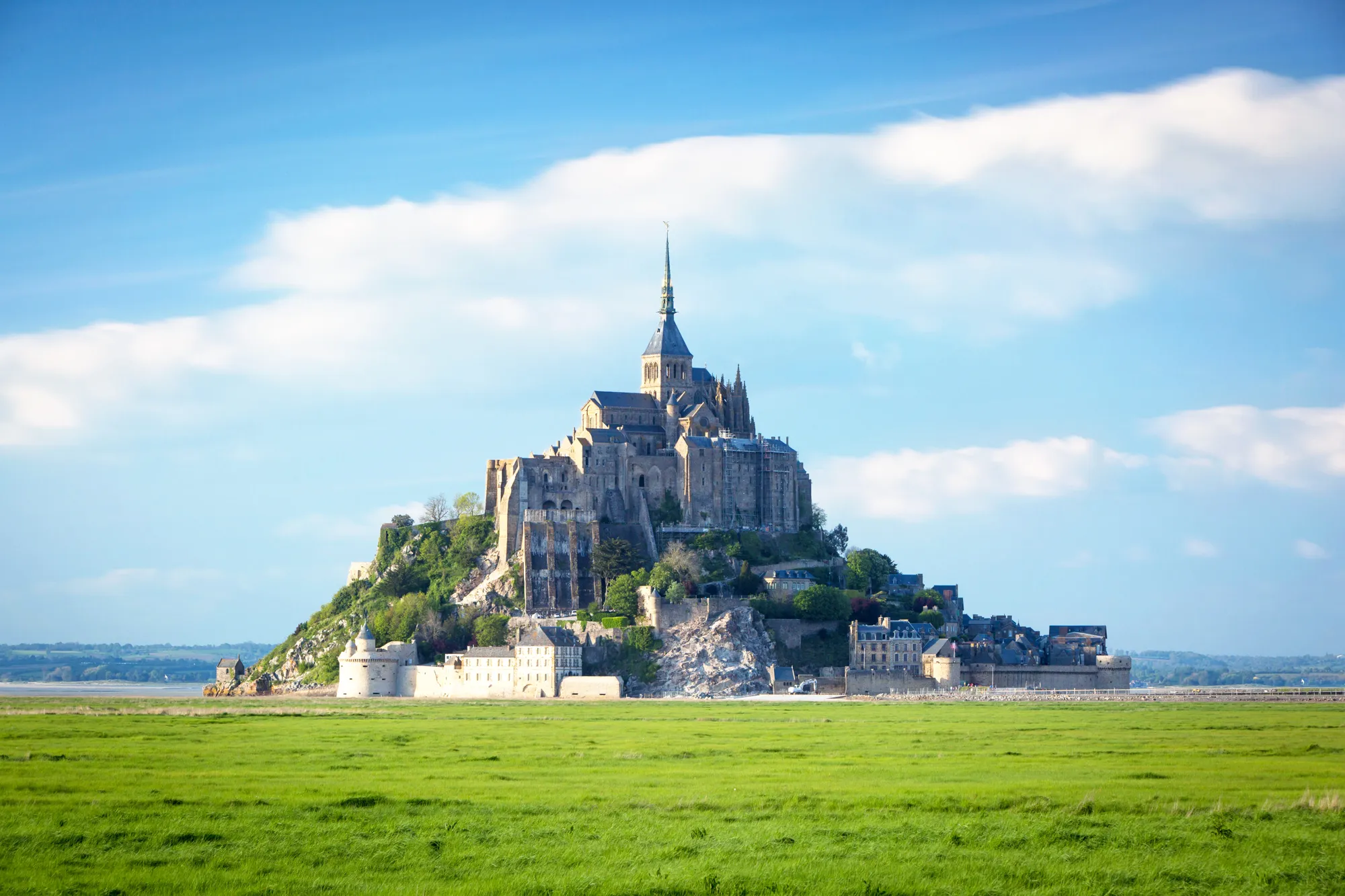
Located in northwest Europe, Normandy is a geographical and cultural region that closely corresponds to the former Duchy of Normandy. Insular Normandy (primarily the British Channel Islands) and mainland Normandy (a portion of France) make up Normandy. It is 30,627 square kilometers (11,825 square miles) in size.The population was 3,499,280 in 2017. Normandy is the ancient home of the Norman language, and its residents are referred to as Normans. Rouen, Caen, Le Havre, and Cherbourg are all large settlements. The historical Duchy of Normandy, which included small areas that are now part of the departments of Mayenne and Sarthe, is comparable to the cultural region of Normandy. The Channel Islands, which are 194 square kilometers (75 square miles) in size and are made up of the British Crown Dependencies of Guernsey and Jersey, were formerly a part of Normandy. The Vikings first settled the area in the ninth century, and the Viking jarl Rollo and King Charles III of France signed a contract in the tenth century, which is how Normandy got its name. Following the Norman conquest of England in 1066, Normandy and England were connected for over 150 years since the same individual served as both the Duke of Normandy and the King of England. Cave paintings and other archeological discoveries demonstrate that people lived in the area during the prehistoric era. There are numerous megalithic monuments in Normandy as well. Since at least the Bronze Age, Normandy has been inhabited by Celtic period Celts, also referred to as Belgae and Gauls. This region of Gaul was home to nine distinct Celtic tribes when Julius Caesar invaded it in 58–50 BC. Germanic raids decimated Lugdunensis Secunda, as the present-day region of Normandy was known at the time, in the late third century AD. On both sides of the English Channel, the Romans constructed the Saxon Shore, a system of coastal defenses. Saxon pirates settled mostly in the Bessin region after raiding coastal villages.[8] They have been found in various Merovingian cemeteries dug up east of Caen, according to modern archeology.During this time, Christianity also spread throughout the region, and by the fourth century, Rouen had a metropolitan bishop. The Roman Lugdunensis Secunda, whose borders nearly matched those of the future duchy of Normandy, served as the model for the ecclesiastical province of Rouen. The lower Seine region, the Pays de Caux, and the area westward through the Pays d'Auge as far as the Cotentin Peninsula and Channel Islands were all part of the erstwhile independent Duchy of Normandy. The majority of the area is in the Paris Basin, but Western Normandy is part of the Armorican Massif. On the Cotentin peninsula, Jobourg is home to some of France's oldest exposed rocks.The English Channel forms the region's western and northern borders. In the east are limestone cliffs, while in the west are granite cliffs. Long stretches of beach are also found in the region's center.
Johannesburg Africa
Johannesburg Africa
South Africa
AFRICAN
Yes
39
Johannesburg is a city in South Africa's Gauteng province. It is the main financial and industrial center of the nation. Johannesburg, one of the newest big cities in the world, was established in 1886 after gold was discovered. Prior to becoming one of South Africa's four provinces, the city was a part of the Transvaal, an independent Afrikaner, or Boer, republic. Today, the city is a part of one of South Africa's nine provinces, Gauteng, which means "Place of Gold" in Sotho. The Highveld, a wide, grassy plateau that stretches across the interior of South Africa, is where Johannesburg is located. The city is situated on the edge of the Witwatersrand, also known as the Rand, which is a chain of low, rocky ridges that serves as a watershed between the drainages into the Atlantic and Indian seas. The city is between 5,700 and 5,930 feet (1,740 and 1,810 meters) above sea level. The climate of Johannesburg is moderate. The average temperature is around 75 °F (24 °C) in the summer and 55 °F (13 °C) in the winter, with very few periods below freezing. In both winter and summer, the city receives roughly eight hours of sunlight each day. Although the overall amount of rainfall fluctuates greatly from year to year, it averages around 28 inches (700 millimeters) annually. A major location for several creative and cultural industries, Johannesburg is a cultural center in South Africa with a diverse range of cultural venues. In addition to a plethora of other museums, theaters, galleries, and libraries, Johannesburg is home to the South African Ballet Theatre, the National School of Arts, and the University of Witwatersrand's School of the Arts.The Central Business District of Johannesburg is home to the Johannesburg City Library. The city is home to a number of Premiership and National First Division football teams. The top Johannesburg teams in the Premiership, such as Orlando Pirates (also known as the Buccaneers) and Kaizer Chiefs (also known as Amakhosi), are bitter rivals. They are headquartered at the Orlando and FNB stadiums in the city. Soccer City, the site of the 2010 FIFA World Cup final, hosts a number of major league and cup matches. FC AK and Jomo Cosmos are the teams in the First Division. The stadiums used by Katlehong City and Alexandra United are Alexandra and Reiger Park, respectively.


 (1).jpg)

.jpg)
.jpg)



.jpg)