Normady France
Normady France
France
EUROPE
Yes
22
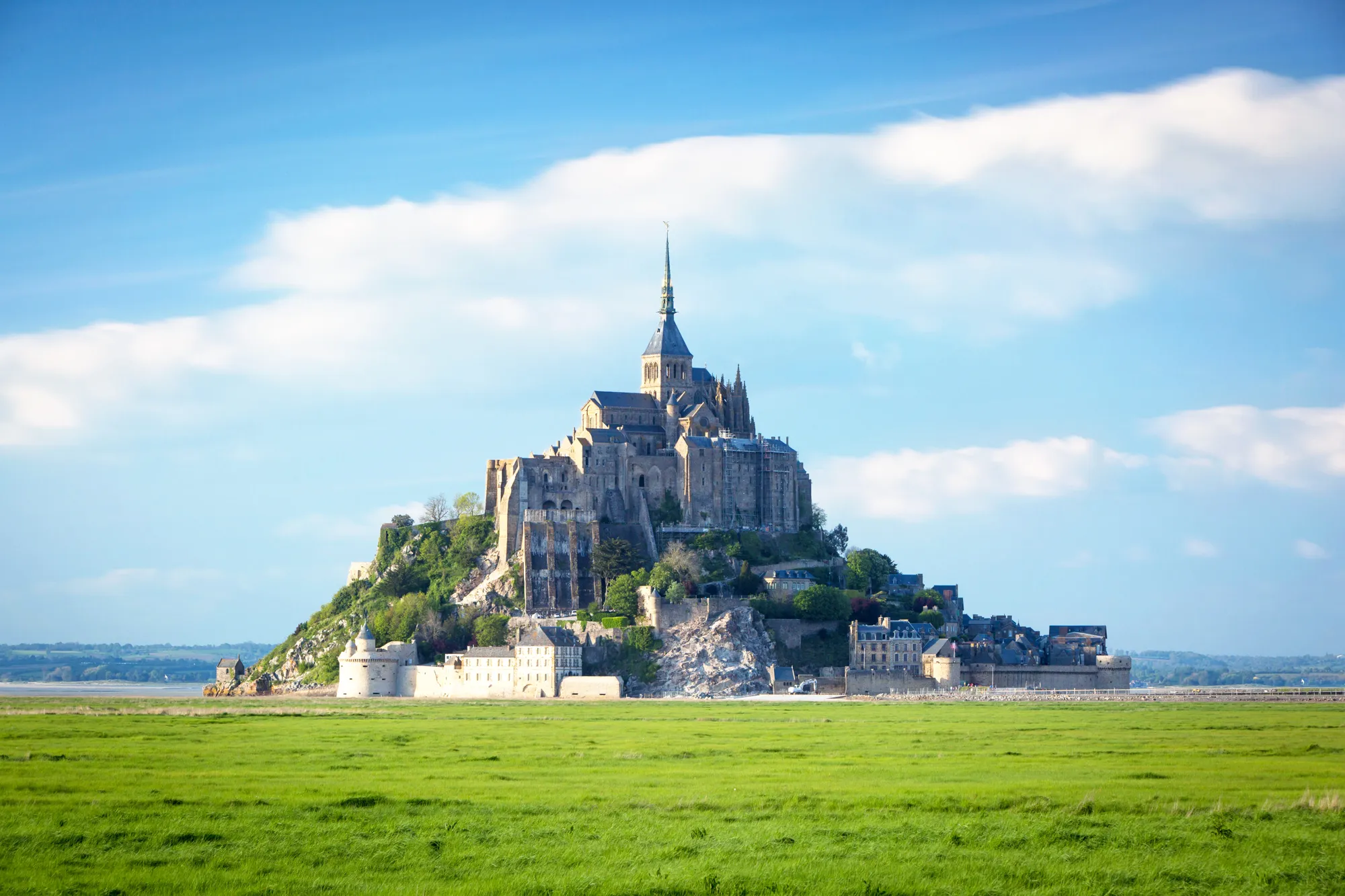
Located in northwest Europe, Normandy is a geographical and cultural region that closely corresponds to the former Duchy of Normandy. Insular Normandy (primarily the British Channel Islands) and mainland Normandy (a portion of France) make up Normandy. It is 30,627 square kilometers (11,825 square miles) in size.The population was 3,499,280 in 2017. Normandy is the ancient home of the Norman language, and its residents are referred to as Normans. Rouen, Caen, Le Havre, and Cherbourg are all large settlements. The historical Duchy of Normandy, which included small areas that are now part of the departments of Mayenne and Sarthe, is comparable to the cultural region of Normandy. The Channel Islands, which are 194 square kilometers (75 square miles) in size and are made up of the British Crown Dependencies of Guernsey and Jersey, were formerly a part of Normandy. The Vikings first settled the area in the ninth century, and the Viking jarl Rollo and King Charles III of France signed a contract in the tenth century, which is how Normandy got its name. Following the Norman conquest of England in 1066, Normandy and England were connected for over 150 years since the same individual served as both the Duke of Normandy and the King of England. Cave paintings and other archeological discoveries demonstrate that people lived in the area during the prehistoric era. There are numerous megalithic monuments in Normandy as well. Since at least the Bronze Age, Normandy has been inhabited by Celtic period Celts, also referred to as Belgae and Gauls. This region of Gaul was home to nine distinct Celtic tribes when Julius Caesar invaded it in 58–50 BC. Germanic raids decimated Lugdunensis Secunda, as the present-day region of Normandy was known at the time, in the late third century AD. On both sides of the English Channel, the Romans constructed the Saxon Shore, a system of coastal defenses. Saxon pirates settled mostly in the Bessin region after raiding coastal villages.[8] They have been found in various Merovingian cemeteries dug up east of Caen, according to modern archeology.During this time, Christianity also spread throughout the region, and by the fourth century, Rouen had a metropolitan bishop. The Roman Lugdunensis Secunda, whose borders nearly matched those of the future duchy of Normandy, served as the model for the ecclesiastical province of Rouen. The lower Seine region, the Pays de Caux, and the area westward through the Pays d'Auge as far as the Cotentin Peninsula and Channel Islands were all part of the erstwhile independent Duchy of Normandy. The majority of the area is in the Paris Basin, but Western Normandy is part of the Armorican Massif. On the Cotentin peninsula, Jobourg is home to some of France's oldest exposed rocks.The English Channel forms the region's western and northern borders. In the east are limestone cliffs, while in the west are granite cliffs. Long stretches of beach are also found in the region's center.
Cape Town
Cape Town
South Africa
AFRICAN
Yes
35
South Africa's legislative capital is Cape Town. It is the oldest city in the nation and the location of the South African Parliament. Cape Town is the largest city in the Western Cape and the second most populous city in the nation, after Johannesburg.The city is a part of the metropolitan municipality known as the City of Cape Town.Table Mountain, Cape Point, the city's harbor, and its natural environment in the Cape Floristic Region are some of its most well-known features. Numerous publications have ranked Cape Town as the world's greatest city and the finest place to go, including Time Out in 2025, The New York Times in 2014, and The Telegraph for the last eight years (2017–2025). With the greatest concentration of Cape Dutch-style buildings worldwide, Cape Town is renowned for its architectural legacy. Constantia, the historic government buildings in the Central Business District, and Long Street are the best examples of the Cape Dutch architectural style, which blends the architectural traditions of the Netherlands, Germany, France, and Indonesia. Mostert's Mill in Mowbray is the only fully operational windmill in South Africa. Constructed in 1796, it underwent restorations in 1935 and 1995. In 2014, the International Council of Societies of Industrial Design declared Cape Town the World Design Capital. Additionally, Cape Town is designated a "Design City" by the Creative Cities Network of UNESCO. Cape Town's biggest performing arts facility is the Artscape Theatre Centre. The 17th-century savory, sweet, spiced beef dish known as bobotie is one of the foods that originated in Cape Town or is associated with it. A sandwich stuffed with slap chips and other toppings, the Gatsby was initially offered in the Athlone area in 1976 and has since come to represent the city.A classic Cape Malay dessert, the koe'sister is characterized as a cake-like dumpling flavored with cinnamon and topped with a dusting of desiccated coconut. Table Mountain's mass and the chilly Benguela Current of the South Atlantic Ocean both locally alter Cape Town's Mediterranean climate. While the average high temperature is 70°F (21°C) in January and February and the average low temperature is 55°F (13°C) in July, the coast and mountain slopes experience colder weather. Freezing rarely happens. Rainfall occurs on 69 days of the year on average; the southern winter months of June through August account for roughly half of the 26 inches (660 millimeters) of yearly rainfall. Every year, almost five million tons of goods pass through the port of Cape Town. Although ships with a draft of more than 40 feet are not permitted to enter the port during low tide, interoceanic commerce benefits greatly from its dry dock and maintenance facilities. Container traffic is accommodated at the Ben Schoeman Dock.


 (1).jpg)

.jpg)

.jpg)


.jpg)