Lake Louise Canada
Lake Louise Canada
Canada
NORTH AMERICA
Yes
13
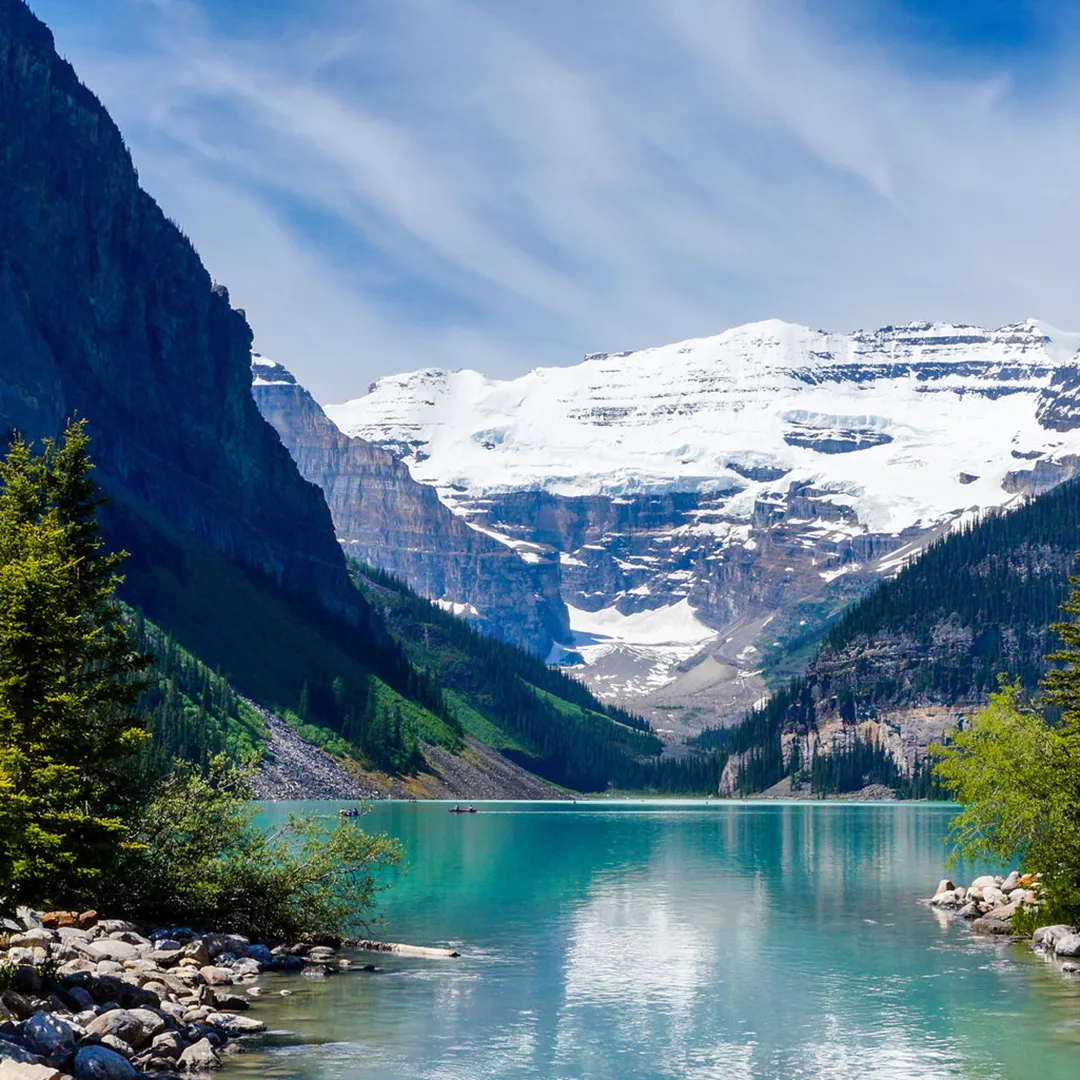
"The Canadian hamlet of Lake Louise is located in Alberta's Banff National Park. Located on the Bow River in Alberta's Rockies, 3 km (1.9 mi) northeast of the lake with the same name, it is named for Princess Louise, Duchess of Argyll. Originally established in 1884 as a Canadian Pacific Railway outpost, Lake Louise is Canada's highest community at 1,600 meters (5,200 feet) above sea level. The climate of Lake Louise is subarctic (Köppen climatic classification Dfc). The average annual snowfall is 279.1 cm (109.9 in), and while winter temperatures can drop below -50 °C (-58 °F), they often hover around -18.4 °C (-1.1 °F) in January and -17.6 °C (-0.3 °F) in February. Summers are characterized by chilly, crisp days and icy mornings. In each month of the year, snowfall is possible. It may also be referred to as a subalpine climate because lower elevations on that latitude have humid continental climates instead. The frost-free period is only 14 days on average due to the high altitude and significant diurnal air temperature change. According to Statistics Canada's 2011 Census of Population, Lake Louise had 691 residents.Workers in the tourism and service sectors frequently relocate to the area for employment, so the population frequently changes from year to year. While Highway 1A starts at the community's entrance, the Trans-Canada Highway (Highway 1) runs alongside the community. Just north of the village is the southernmost point of Highway 93, also known as the Icefields Parkway. The foothills of the Rocky Mountains, including what is now Lake Louise, were inhabited exclusively by local indigenous peoples before European settlers arrived. They hunted the once-common bison, as well as elk, moose, and other big and small game animals, as well as fished the area's abundant waterways and foraged the area's numerous edible and medicinal plant species. The Canadian Pacific Railway (CPR), which would pass through Bow Valley, started construction in the 1870s. The site was named 'Emerald Lake' by CPR worker Tom Wilson, who visited it in 1882 with a Nakoda guide. Afterwards, the hamlet was referred to as ""Holt City,"" ""Laggan,"" and finally, ""Lake Louise."" Although a CPR station from around 1890 was replaced in 1910, the railway company kept using it for other uses until 1976, when it was given to Calgary's Heritage Park Historical Village. The depot was relocated to the park and renovated in the manner of the time when the village was known as Laggan. Because of its excellent preservation and current use as a restaurant, the 1910 station was designated a heritage railway station by the federal government in 1991. Since its 1892 addition to Rocky Mountains Park, Lake Louise has grown to become a popular international tourist attraction thanks to its proximity to the Trans-Canada Highway.
Vancouver Canada
Vancouver Canada
Canada
NORTH AMERICA
Yes
13
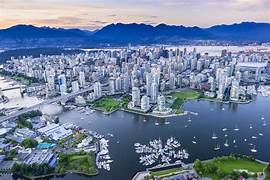
"Vancouver is a significant metropolis in Western Canada, specifically in British Columbia's Lower Mainland area. According to the 2021 Canadian census, there were 662,248 residents in the city, which is the largest in the province, compared to 631,486 in 2016. With 2.6 million people in 2021, the Metro Vancouver region is the third-largest metropolis in Canada. The Lower Mainland, which includes the Fraser Valley and Greater Vancouver, has a regional population of over 3 million people. With more than 5,700 people per square kilometer (15,000/sq mi), Vancouver has the highest population density in Canada and the fourth highest in North America, behind New York City, San Francisco, and Mexico City. Vancouver is one of the most linguistically and ethnically diverse cities in Canada, with 54.5% of its population belonging to visible minority groups, 49.3% not being native English speakers, and 47.8% not speaking either French or English as their first language. It has consistently been listed among the most livable cities in Canada and the globe. Vancouver is also one of the priciest cities in the world and Canada when it comes to the affordability of housing. The urban planning design ideology of the city is known as Vancouverism. Numerous international conferences and events have been held in Vancouver, including the 1954 Commonwealth Games, UN Habitat I, Expo 86, APEC Canada 1997, the World Police and Fire Games in 1989 and 2009; several matches of 2015 FIFA Women's World Cup, including the finals at BC Place in downtown Vancouver,and the 2010 Winter Olympics and Paralympics, which were held in Vancouver and Whistler, a resort town 125 kilometers (78 miles) north of the city. Greenpeace was established in Vancouver in 1969. In 2014, TED talks were established in the city as a permanent fixture. The city's name comes from George Vancouver, who gave several locations British names after he surveyed Burrard Inlet's inner harbor in 1792. The Dutch ""van Coevorden"" translates to someone from the town of Coevorden in the Netherlands, which is where the family name ""Vancouver"" comes from. The explorer's forebears ""from Coevorden"" came to England, giving rise to the name that would eventually become ""Vancouver."" Prior to 1850 According to archaeological records, the Vancouver region was already inhabited by Aboriginal people between 8,000 and 10,000 years ago. Numerous villages belonging to the Squamish, Musqueam, and Tsleil-Waututh (Burrard) tribes of the Coast Salish group were located in different areas of modern Vancouver, including Stanley Park, False Creek, Kitsilano, Point Grey, and the mouth of the Fraser River. Although José María Narváez of Spain discovered the coast of present-day Point Grey and portions of Burrard Inlet in 1791, Europeans first learned about the site of the future Vancouver during that expedition.

 (1).jpg)

.jpg)

.jpg)


