Vancouver Canada
Vancouver Canada
Canada
NORTH AMERICA
Yes
13
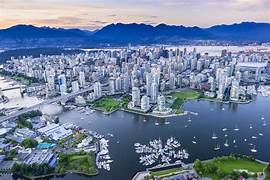
"Vancouver is a significant metropolis in Western Canada, specifically in British Columbia's Lower Mainland area. According to the 2021 Canadian census, there were 662,248 residents in the city, which is the largest in the province, compared to 631,486 in 2016. With 2.6 million people in 2021, the Metro Vancouver region is the third-largest metropolis in Canada. The Lower Mainland, which includes the Fraser Valley and Greater Vancouver, has a regional population of over 3 million people. With more than 5,700 people per square kilometer (15,000/sq mi), Vancouver has the highest population density in Canada and the fourth highest in North America, behind New York City, San Francisco, and Mexico City. Vancouver is one of the most linguistically and ethnically diverse cities in Canada, with 54.5% of its population belonging to visible minority groups, 49.3% not being native English speakers, and 47.8% not speaking either French or English as their first language. It has consistently been listed among the most livable cities in Canada and the globe. Vancouver is also one of the priciest cities in the world and Canada when it comes to the affordability of housing. The urban planning design ideology of the city is known as Vancouverism. Numerous international conferences and events have been held in Vancouver, including the 1954 Commonwealth Games, UN Habitat I, Expo 86, APEC Canada 1997, the World Police and Fire Games in 1989 and 2009; several matches of 2015 FIFA Women's World Cup, including the finals at BC Place in downtown Vancouver,and the 2010 Winter Olympics and Paralympics, which were held in Vancouver and Whistler, a resort town 125 kilometers (78 miles) north of the city. Greenpeace was established in Vancouver in 1969. In 2014, TED talks were established in the city as a permanent fixture. The city's name comes from George Vancouver, who gave several locations British names after he surveyed Burrard Inlet's inner harbor in 1792. The Dutch ""van Coevorden"" translates to someone from the town of Coevorden in the Netherlands, which is where the family name ""Vancouver"" comes from. The explorer's forebears ""from Coevorden"" came to England, giving rise to the name that would eventually become ""Vancouver."" Prior to 1850 According to archaeological records, the Vancouver region was already inhabited by Aboriginal people between 8,000 and 10,000 years ago. Numerous villages belonging to the Squamish, Musqueam, and Tsleil-Waututh (Burrard) tribes of the Coast Salish group were located in different areas of modern Vancouver, including Stanley Park, False Creek, Kitsilano, Point Grey, and the mouth of the Fraser River. Although José María Narváez of Spain discovered the coast of present-day Point Grey and portions of Burrard Inlet in 1791, Europeans first learned about the site of the future Vancouver during that expedition.
Maasai Mara Africa
Maasai Mara Africa
Africa
AFRICAN
Yes
38
Maasai Mara, frequently spelled Masai Mara, and referred to locals as just "The Mara," is a sizable national game reserve in Kenya's Narok County that borders Tanzania's Serengeti National Park. The Maasai people, the region's original occupants who came from the Nile Basin, are honored by the name. From a distance, their description of the region is as follows: "Mara" means "spotted" in the Maa language due to the short, bushy trees that are scattered throughout the terrain. With its populations of lions, leopards, cheetahs, and African bush elephants, the Maasai Mara is one of Africa's wilderness and wildlife protection areas. In addition, it is home to the Great Migration, which has earned it a spot among the ten Wonders of the World and the Seven Natural Wonders of Africa. Depending on the weather, the Great Migration often takes place in July when a huge number of wildebeest migrate from Tanzania across the Mara River. The Maasai Mara National Reserve, the Mara Triangle, a number of Maasai group ranches, and Maasai Mara conservancies are all included in the Greater Mara ecosystem. The Masai Mara, sometimes referred to as "the world's eight world wonders" or one of the most well-known wildlife places in the world, is home to an abundance of species, breathtaking views, and unending plains.The Masai Mara National Reserve, an unfenced reserve with unrestricted wildlife movement, and a number of conservancies comprise the Greater Masai Mara area. Maasai families privately own these parcels of land. The Maasai families who lease their property to safari lodges have the opportunity to use the money they make from the conservancies to fund development or education projects in their communities. The Masai Mara was called in honour of the Maasai people, the traditional residents of the area. 'Mara' means'spotted' in Maasai (Maa) dialect. It won't be difficult to comprehend how the Masai Mara gained its name after visiting. The terrain does appear somewhat'spotted' due to the small, bushy trees that dot it. The environment of the Greater Masai Mara is enormous. It is almost 1510 square kilometers in size. The Serengeti National Park in Tanzania is adjacent to the Maasai Mara, a sizable game reserve in Narok County, Kenya. It is named after the Maasai people, who were the original occupants of the region, and how they described it from a distance: "Mara" means "spotted" in the Maasai language, referring to the numerous trees, plants, cloud shadows, and animals that dotted the terrain.


 (1).jpg)

.jpg)

.jpg)


.jpg)