Kasol Himachal Pradesh
Kasol Himachal Pradesh
India
ASIA
Yes
18
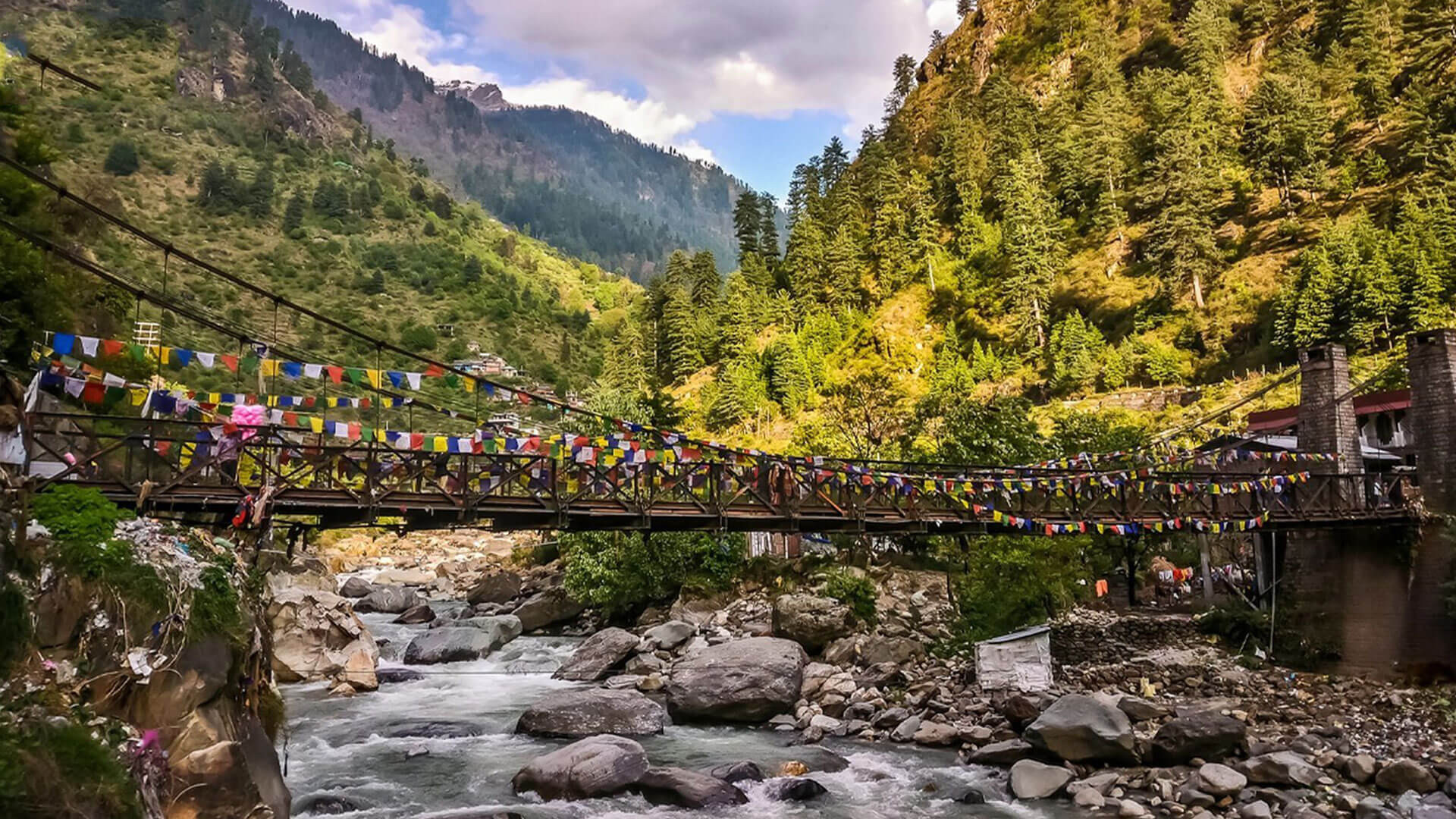
The Indian state of Himachal Pradesh contains the hamlet of Kasol in the Kullu district. It is located between Bhuntar and Manikaran in the Parvati Valley, on the banks of the Parvati River. It is situated 36 km (22 mi) from Kullu town, the district center, 3.5 km from Manikaran, and 30 km (19 mi) from Bhuntar. Backpackers love Kasol, which serves as a starting point for the neighboring hikes to Malana and Kheerganga.Because of the large number of Israeli visitors, it is known as Mini Israel of India. The nearest airport to Bhuntar is Kullu-Manali Airport (IATA: KUU, ICAO: VIBR), which is roughly 31 kilometers away. Cities like Delhi, Shimla, Kolkata, and others are connected by it. The closest train station is Joginder Nagar, which is roughly 144 kilometers away. Additionally, Kasol is 260 kilometers from Chandigarh Airport (IXC). In addition to receiving a decent amount of snowfall from late December to February, Kasol has pleasant weather for a number of months of the year. Its climate is classified as humid subtropical by the Köppen-Geiger climate classification system. Kasol is a charming tiny town on the banks of the Parvati River in Himachal Pradesh, India. It's frequently called the 'Amsterdam of India' and is quickly becoming a well-known destination for hikers, travelers, and environment enthusiasts. Overall, the town's culture is a blend of Indian, Himachali, Israeli, and hippie. Trekking paths, snow-capped peaks, rivers, thick woods, picturesque vistas, and nice weather are just a few of the many natural and adventurous attractions that Kasol has to offer. Kasol is well-known for its hiking routes and is a popular destination for treks to Yanker Pass, Sar Pass, Pin Parbati Pass, and Kheerganga. Visit the village of Malana to get a true sense of the culture in this area. Malana is a little hamlet a few kilometers from Kasol where residents live in self-imposed seclusion. However, the settlement, which is frequently referred to as "Little Greece," boasts many picturesque attractions.
Cape Town
Cape Town
South Africa
AFRICAN
Yes
35
South Africa's legislative capital is Cape Town. It is the oldest city in the nation and the location of the South African Parliament. Cape Town is the largest city in the Western Cape and the second most populous city in the nation, after Johannesburg.The city is a part of the metropolitan municipality known as the City of Cape Town.Table Mountain, Cape Point, the city's harbor, and its natural environment in the Cape Floristic Region are some of its most well-known features. Numerous publications have ranked Cape Town as the world's greatest city and the finest place to go, including Time Out in 2025, The New York Times in 2014, and The Telegraph for the last eight years (2017–2025). With the greatest concentration of Cape Dutch-style buildings worldwide, Cape Town is renowned for its architectural legacy. Constantia, the historic government buildings in the Central Business District, and Long Street are the best examples of the Cape Dutch architectural style, which blends the architectural traditions of the Netherlands, Germany, France, and Indonesia. Mostert's Mill in Mowbray is the only fully operational windmill in South Africa. Constructed in 1796, it underwent restorations in 1935 and 1995. In 2014, the International Council of Societies of Industrial Design declared Cape Town the World Design Capital. Additionally, Cape Town is designated a "Design City" by the Creative Cities Network of UNESCO. Cape Town's biggest performing arts facility is the Artscape Theatre Centre. The 17th-century savory, sweet, spiced beef dish known as bobotie is one of the foods that originated in Cape Town or is associated with it. A sandwich stuffed with slap chips and other toppings, the Gatsby was initially offered in the Athlone area in 1976 and has since come to represent the city.A classic Cape Malay dessert, the koe'sister is characterized as a cake-like dumpling flavored with cinnamon and topped with a dusting of desiccated coconut. Table Mountain's mass and the chilly Benguela Current of the South Atlantic Ocean both locally alter Cape Town's Mediterranean climate. While the average high temperature is 70°F (21°C) in January and February and the average low temperature is 55°F (13°C) in July, the coast and mountain slopes experience colder weather. Freezing rarely happens. Rainfall occurs on 69 days of the year on average; the southern winter months of June through August account for roughly half of the 26 inches (660 millimeters) of yearly rainfall. Every year, almost five million tons of goods pass through the port of Cape Town. Although ships with a draft of more than 40 feet are not permitted to enter the port during low tide, interoceanic commerce benefits greatly from its dry dock and maintenance facilities. Container traffic is accommodated at the Ben Schoeman Dock.


 (1).jpg)

.jpg)

.jpg)


.jpg)