Edinburgh Scotland
Edinburgh Scotland
Scotland
EUROPE
Yes
25
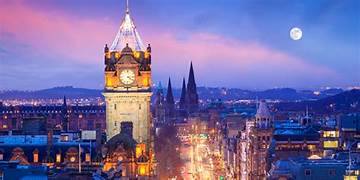
Scotland's capital, Edinburgh, is one of the country's thirty-two council districts. The Pentland Hills to the south and the Firth of Forth to the north enclose this southeast Scottish region. Edinburgh is the second most populated city in Scotland and the seventh most populous city in the United Kingdom, with 506,520 residents as of 2020. In the same year, there were 912,490 people living in the larger metropolitan area. The highest courts in Scotland, the Scottish Government, the Scottish Parliament, and the Palace of Holyroodhouse, the official residence of the British monarch in Scotland, are all located in Edinburgh, which has been acknowledged as the capital of Scotland since at least the 15th century. Additionally, the Church of Scotland's General Assembly meets there every year. For a long time, the city has been a hub for education, especially in the areas of engineering, medical, Scottish law, literature, philosophy, and the sciences. Founded in 1582, the University of Edinburgh is currently one of the city's three universities. The city is a hub for culture and is home to organizations like the Scottish National Gallery, the National Museum of Scotland, and the National Library of Scotland. The city is also well-known for the Fringe, the biggest annual international arts festival in the world, and the Edinburgh International Festival. Edinburgh Castle, the Palace of Holyroodhouse, St. Giles' Cathedral, Greyfriars Kirk, Canongate Kirk, and the vast Georgian New Town, constructed in the 18th and 19th centuries, are among the city's historic sites. Both the Old Town and the New Town are nominated by UNESCO as World Heritage Sites. Since 1999, Edinburgh World Heritage has been in charge of overseeing the site. With 5.3 million visitors in 2023, including 2.4 million from outside, the city's historical and cultural attractions have made it the second most popular tourist destination in Britain. Evidence of a Mesolithic camp site dating to approximately 8500 BC was discovered in Cramond, the earliest known human settlement in the Edinburgh region. On Castle Rock, Arthur's Seat, Craiglockhart Hill, and the Pentland Hills, remnants of later Bronze and Iron Age communities have been discovered. A Brittonic Celtic tribe known as the Votadini was discovered by the Romans when they landed in Lothian around the end of the first century AD.During the Early Middle Ages, the Votadini became part of the Gododdin kingdom, and one of its districts was Eidyn. The Castle Rock location, which is believed to have been Din Eidyn's stronghold, became the kingdom's main hub during this time.
Cairo Africa
Cairo Africa
Cairo
AFRICAN
Yes
38
Cairo isn’t just the capital of Egypt — it’s the pulse of the nation. A city where ancient history meets modern chaos, where the call to prayer rises above the traffic, and where every alley seems to hum with life. Home to over 10 million people, Cairo is one of the biggest and most energetic cities in the Middle East and Africa. It’s a place of contrasts — the timeless Pyramids of Giza just a short drive from bustling markets, rooftop cafés, and shiny new malls. The Greater Cairo Metropolitan Area, with more than 22 million residents, is among the most populated urban regions on Earth. Surrounded by ancient sites like Memphis, Heliopolis, and the Giza Plateau, Cairo is a living bridge between Egypt’s past and its future. The city’s origins trace back to Fustat, Egypt’s first Islamic capital founded in 641 CE, and later to 969 CE, when the Fatimid dynasty created what we now call Cairo. Through centuries — under the Ayyubids, Mamluks, and beyond — the city became Egypt’s heart of architecture, art, and learning.
.jpg)

 (1).jpg)

.jpg)




.jpg)