Seville Spain
Seville Spain
Spain
EUROPE
Yes
27
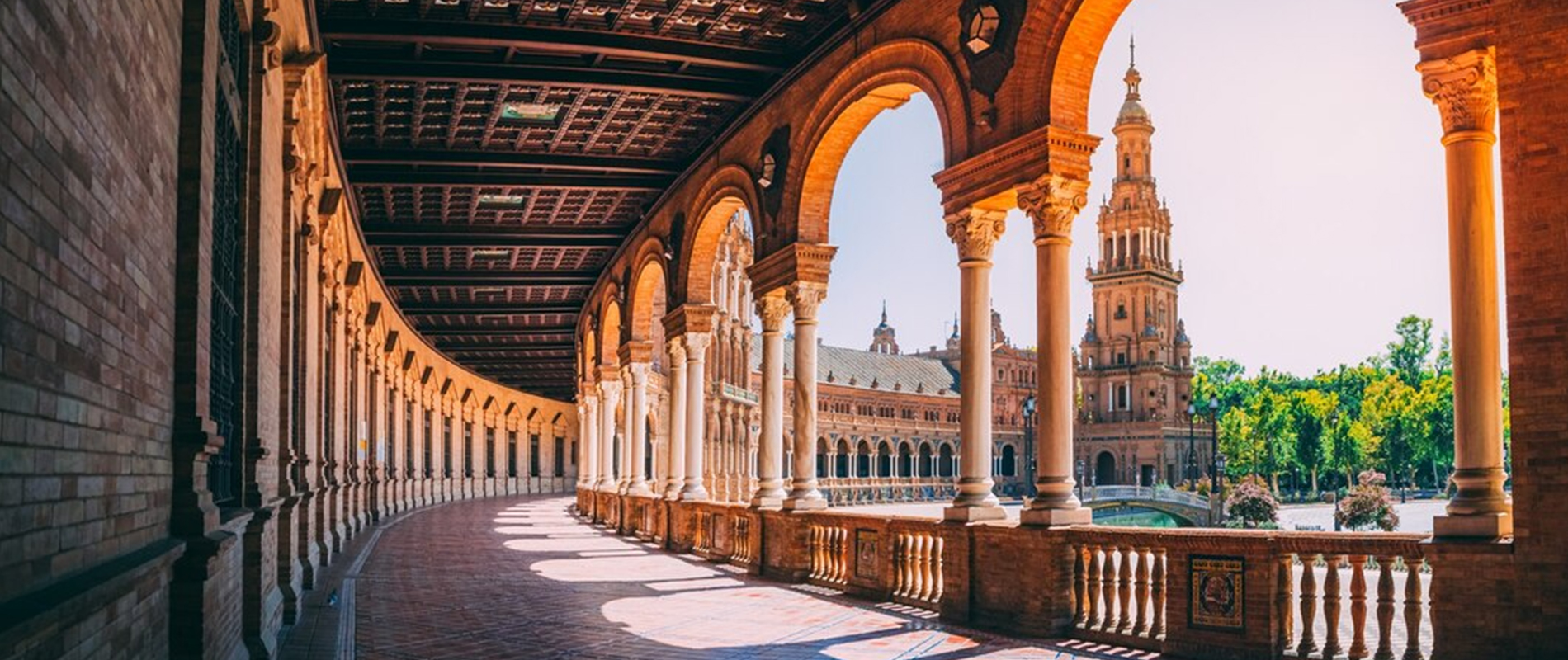
"The capital and largest city of the province of Seville and the Spanish autonomous community of Andalusia is Seville. It is located in the southwest of the Iberian Peninsula, on the lower reaches of the Guadalquivir River.As of 2022, Seville is the largest city in Andalusia and the fourth-largest city in Spain, with a metropolitan population of over 1.5 million and a municipal population of about 701,000. Three structures in its four-square-kilometer (2-square-mile) old town—the General Archive of the Indies, the Cathedral, and the Alcázar Palace complex—are included as UNESCO World Heritage Sites. The sole river port in Spain is Seville Harbor, which is roughly 80 kilometers (50 miles) from the Atlantic Ocean. Summertime in the Andalusian capital is hot, with daily highs frequently rising beyond 35 °C (95 °F) in July and August. The Roman city of Hispalis was the original name of Seville. Following the fall of the Caliphate of Córdoba in the early 11th century, Seville—known as Ishbiliyah after the Islamic invasion in 711—became the center of the independent Taifa of Seville. Later, it was governed by the Almoravids and Almohads until it was absorbed into the Crown of Castile in 1248. Seville, which was run from the Casa de Contratación and served as the entry point for the Spanish Empire's transatlantic trade, grew to become one of the biggest towns in Western Europe in the sixteenth century. When the Guadalquivir's drought conditions worsened, American trade gradually shifted away from Seville and toward downstream-dependent berths and eventually the Bay of Cadiz, where control of the Indies fleets (1680) and the Casa de Contratación (1717) was eventually transferred. Next to the Parque de María Luisa on Avenida de María Luisa lies the Teatro Lope de Vega. Vicente Traver y Tomás was its architect, and it was constructed in 1929. It was the auditorium of the city's Ibero-American Exhibition pavilion. A sizable space in this pavilion served as the Exhibition's casino. The theater could hold 1100 people and took up 4600 square meters. Its architecture is Spanish Baroque Revival, and the building's ornamentation and set both adhere to this style. It has presented a wide range of performances, such as dance, opera, jazz, drama, and flamenco. Today, its national and international programming stands out the most, making it one of Spain's most significant theaters. Teatro de la Maestranza, Auditorio Rocío Jurado, and Teatro Central are more significant theaters. The Corral del Coliseo, which is now a residential structure, is also home to Seville's corral de comedias theater. Although Semana Santa is observed throughout Latin America and Spain, Seville hosts a sizable festival that is well-known as a Fiesta of International Tourist Interest. Throughout the week, fifty-four local brotherhoods, known as ""cofradías,"" put on processions and floats that tell the tale of Christ's Passion. Semana Santa is a significant source of Sevillian cultural identity, both material and immaterial, since traditional music and art are interwoven into the processions. "
Kruger National Park Africa
Kruger National Park Africa
Africa
AFRICAN
Yes
37
Covering 19,623 km2 (7,576 sq mi), Kruger National Park is located in the northeastern South African provinces of Mpumalanga and Limpopo. It stretches 65 km (40 mi) from east to west and 360 km (220 mi) from north to south. Skukuza is home to the administrative headquarters. The South African Republic's government first protected portions of the park in 1898, and in 1926 it was designated as the country's first national park. It is a part of the biosphere reserve known as the Kruger to Canyons Biosphere. Kruger National Park is home to all five of the big game creatures and boasts 147 species of large mammals, more than any other game reserve in Africa. Webcams have been installed to watch the wildlife. There are believed to be just 400 African wild dog packs in all of South Africa, and Kruger is home to packs of these endangered animals. There is a reasonably consistent group of bird species from the park's southern to central regions, but the mopane-dominated flatlands north of the Olifants show a fall in richness.The larger birds of prey, on the other hand, breed during the dry winter, when their prey is most exposed, whereas the majority of species breed during the summer, when rainfall sustain the majority of vegetable and animal food. In 1918, Kruger National Park was declared, and a commission was formed to oversee its development and planning. A government officer named Johannes Andries (Dries) de Ridder served as the commission's first secretary. After 44 years in charge of the Kruger Park, Warden James Stevenson-Hamilton retired on April 30, 1946. Colonel J. A. B. Sandenbergh of the South African Air Force took his post. The government forcibly removed the Makuleke people from the northern portion of the park in 1969, and approximately 1500 of them were relocated to territory in the south so that their original tribal lands could be incorporated into the larger Kruger National Park. The famed Big Five (lion, leopard, elephant, rhinoceros, and buffalo) are among the remarkably diverse species that makes Kruger National Park famous. The park, which spans about two million hectares, draws tourists from all around the world with its unmatched wildlife viewing opportunities.


 (1).jpg)

.jpg)

.jpg)


.jpg)