Seville Spain
Seville Spain
Spain
EUROPE
Yes
27
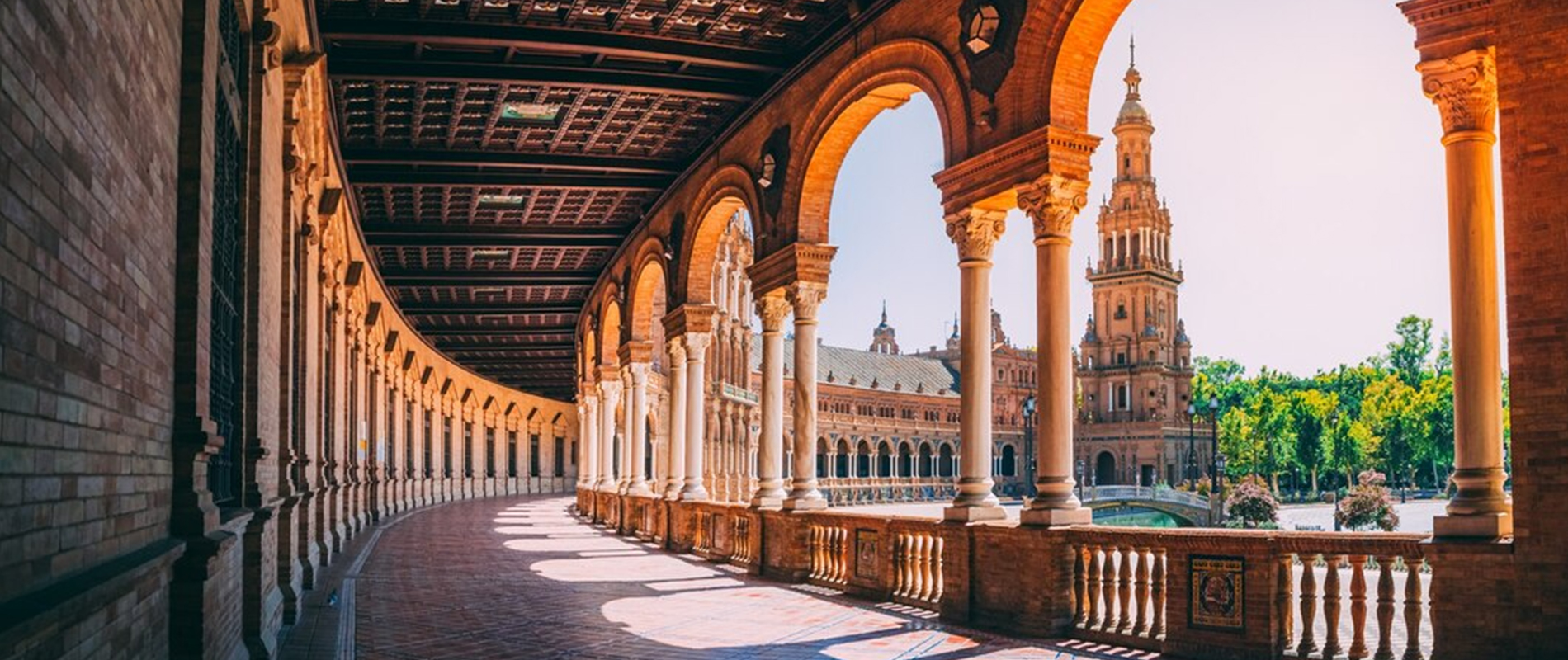
"The capital and largest city of the province of Seville and the Spanish autonomous community of Andalusia is Seville. It is located in the southwest of the Iberian Peninsula, on the lower reaches of the Guadalquivir River.As of 2022, Seville is the largest city in Andalusia and the fourth-largest city in Spain, with a metropolitan population of over 1.5 million and a municipal population of about 701,000. Three structures in its four-square-kilometer (2-square-mile) old town—the General Archive of the Indies, the Cathedral, and the Alcázar Palace complex—are included as UNESCO World Heritage Sites. The sole river port in Spain is Seville Harbor, which is roughly 80 kilometers (50 miles) from the Atlantic Ocean. Summertime in the Andalusian capital is hot, with daily highs frequently rising beyond 35 °C (95 °F) in July and August. The Roman city of Hispalis was the original name of Seville. Following the fall of the Caliphate of Córdoba in the early 11th century, Seville—known as Ishbiliyah after the Islamic invasion in 711—became the center of the independent Taifa of Seville. Later, it was governed by the Almoravids and Almohads until it was absorbed into the Crown of Castile in 1248. Seville, which was run from the Casa de Contratación and served as the entry point for the Spanish Empire's transatlantic trade, grew to become one of the biggest towns in Western Europe in the sixteenth century. When the Guadalquivir's drought conditions worsened, American trade gradually shifted away from Seville and toward downstream-dependent berths and eventually the Bay of Cadiz, where control of the Indies fleets (1680) and the Casa de Contratación (1717) was eventually transferred. Next to the Parque de María Luisa on Avenida de María Luisa lies the Teatro Lope de Vega. Vicente Traver y Tomás was its architect, and it was constructed in 1929. It was the auditorium of the city's Ibero-American Exhibition pavilion. A sizable space in this pavilion served as the Exhibition's casino. The theater could hold 1100 people and took up 4600 square meters. Its architecture is Spanish Baroque Revival, and the building's ornamentation and set both adhere to this style. It has presented a wide range of performances, such as dance, opera, jazz, drama, and flamenco. Today, its national and international programming stands out the most, making it one of Spain's most significant theaters. Teatro de la Maestranza, Auditorio Rocío Jurado, and Teatro Central are more significant theaters. The Corral del Coliseo, which is now a residential structure, is also home to Seville's corral de comedias theater. Although Semana Santa is observed throughout Latin America and Spain, Seville hosts a sizable festival that is well-known as a Fiesta of International Tourist Interest. Throughout the week, fifty-four local brotherhoods, known as ""cofradías,"" put on processions and floats that tell the tale of Christ's Passion. Semana Santa is a significant source of Sevillian cultural identity, both material and immaterial, since traditional music and art are interwoven into the processions. "
Adelaide
Adelaide
Australia
AUSTRALIA
Yes
39
Adelaide, the capital of South Australia, is often described as a city that strikes the perfect balance: not too big that you’re lost, yet large enough to offer rich culture, great food & wine, and beautiful nature. Here’s a comprehensive, human-friendly guide to exploring Adelaide: why it’s worth your visit, how to get there & around, where to stay, what to see, and how to make the most of your time.
.jpg)

 (1).jpg)


.jpg)



.jpg)