San Jose United States
San Jose United States
USA
USA
Yes
31
A hub for politics, business, and culture in Silicon Valley and the San Francisco Bay Area is San Jose. It has a population of 997,368 and a metropolitan area of 1.95 million, making it the most populated city in Northern California and the Bay Area and the 12th most populated city in the US.San Jose is the county seat of Santa Clara County and occupies 179.97 square miles (466.1 km2) on the southern shore of San Francisco Bay, in the heart of the Santa Clara Valley. With a GDP of $1.03 trillion in 2018, the CSA San Jose, which it shares with San Francisco, was the third-largest urban economy in the nation. At $106,757, this CSA has one of the highest GDPs per capita among the more than 500 major statistical areas in the United States in 2018. There is a height restriction for structures in the downtown area of San Jose Mineta International Airport, which is located beneath the airport's final approach corridor (as shown in the panoramic above). Local ordinances set the height limit, which is determined by the distance from the runway and a slope specified by FAA rules. The maximum height of core downtown buildings is at 300 feet (91 meters), though they can rise higher as they move away from the airport. The city's architecture has been much criticized in recent decades. Residents have voiced their displeasure about San Jose's dearth of visually appealing architectural designs. This lack of architectural "beauty" might be attributed to the downtown area's redevelopment starting in the 1950s, which involved demolishing entire blocks of old residential and commercial buildings. This is not the case for the Downtown Historic District, the Hotel De Anza, and the Hotel Sainte Claire, all of which are recognized for their architectural and historical value and are listed on the National Register of Historic Places. Numerous institutions and colleges can be found in San Jose. The largest is San José State University, the original site of the California State University (CSU) system and the California State Normal School, established by the California government in 1862. The institution, which has been in downtown San Jose since 1870, offers more than 250 bachelor's, master's, and doctorate degree programs to about 35,000 students. Because San Jose is a charter city under California law, it has the authority to pass municipal regulations that, within the bounds of the charter, may be in violation of state law.Under the city's council-manager system, the mayor nominates and the city council elects the city manager.
The Grand Canyon USA
The Grand Canyon USA
USA
USA
Yes
25
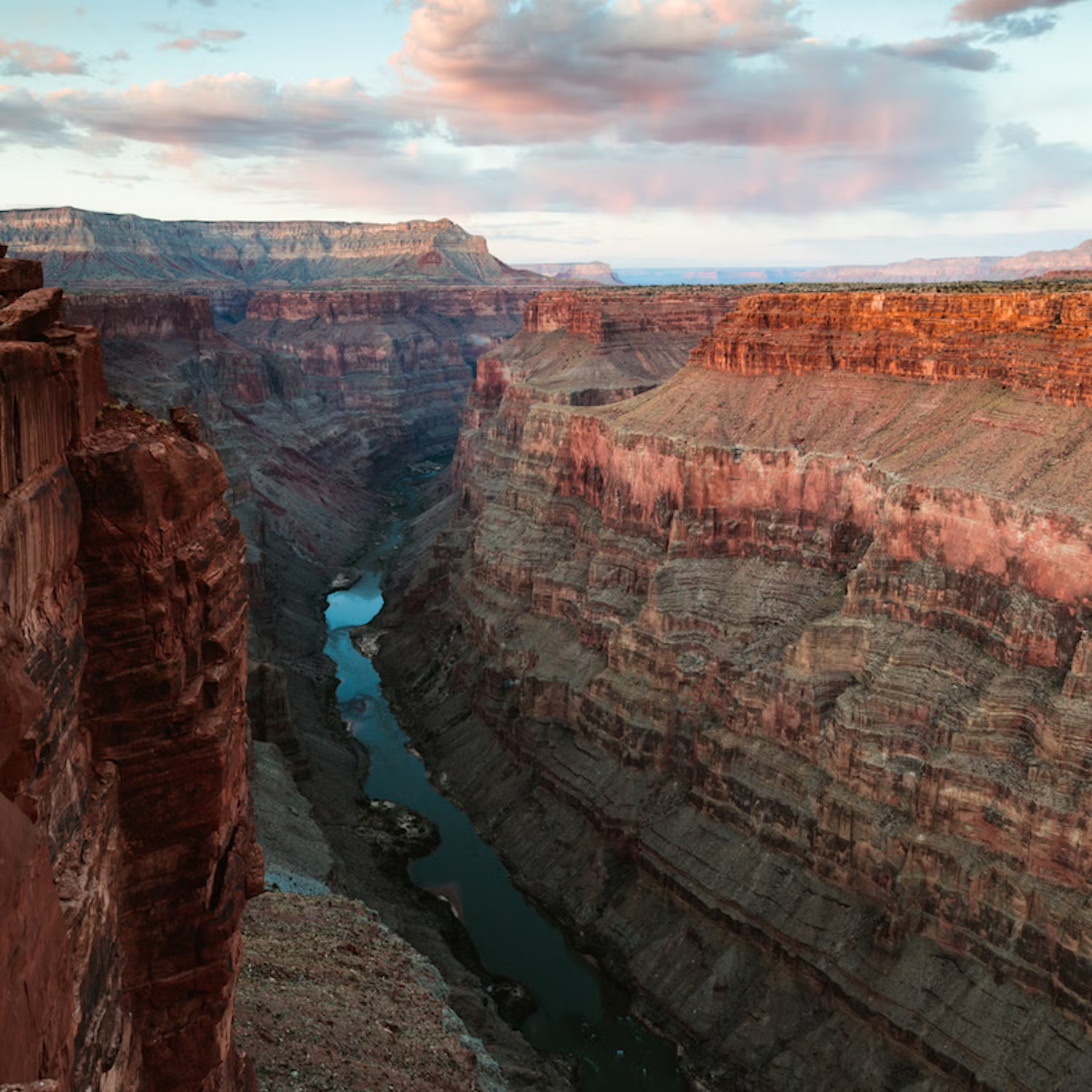
"The Colorado River sculpted the Grand Canyon, a steep-sided canyon in Arizona, USA. The Grand Canyon reaches a depth of more than a mile (6,093 feet or 1,857 meters) and is 277 miles (446 km) long and up to 18 miles (29 km) wide. Grand Canyon National Park, Kaibab National Forest, Grand Canyon–Parashant National Monument, the Hualapai Indian Reservation, the Havasupai Indian Reservation, and the Navajo Nation all contain the canyon and its surrounding rim. President Theodore Roosevelt frequently traveled to the Grand Canyon region to hunt and take in the landscape, and he was a strong advocate for its preservation. Native Americans have lived in the region continuously for thousands of years, establishing settlements inside the canyon and its numerous caverns. The Grand Canyon was a sacred place to the Pueblo people, who visited it on pilgrimage.Arriving from Spain in 1540, García López de Cárdenas is the first European recorded to have seen the Grand Canyon. One of the six separate physiographic regions of the Colorado Plateau province, the Grand Canyon is a river valley in the Colorado Plateau that reveals uplifted Proterozoic and Paleozoic strata.The Grand Canyon is renowned for its breathtaking vastness and its complex and vibrant terrain, while not being the deepest canyon on land in the world (the Kali Gandaki Gorge in Nepal is far deeper). The thick sequence of old rocks that are exposed and well-preserved in the canyon walls makes it noteworthy geologically. Much of the early geologic history of the continent of North America is preserved in these rock layers. The Colorado River basin, which includes the Grand Canyon, formed during the last 70 million years.The geologic origins of the Grand Canyon and the Colorado River have been the subject of data collection, innovative ideas, and often controversial theories by scientists for more than 150 years. A complicated history involving the interaction of numerous geologic events and variables throughout time and in various locations may have contributed to the formation of the Grand Canyon and the Colorado River. The modern-day Four Corners region of the United States was the heart of the Native American society known as the Ancestral Puebloans. They were the earliest known inhabitants of the region surrounding the Grand Canyon. Although the contemporary Puebloan peoples do not favor the term, the cultural group has frequently been referred to as the Anasazi in archaeology.""Anasazi"" means ""enemy ancestors"" or ""alien ancestors"" in Navajo.

 (1).jpg)

.jpg)
.jpg)



