Normady France
Normady France
France
EUROPE
Yes
22
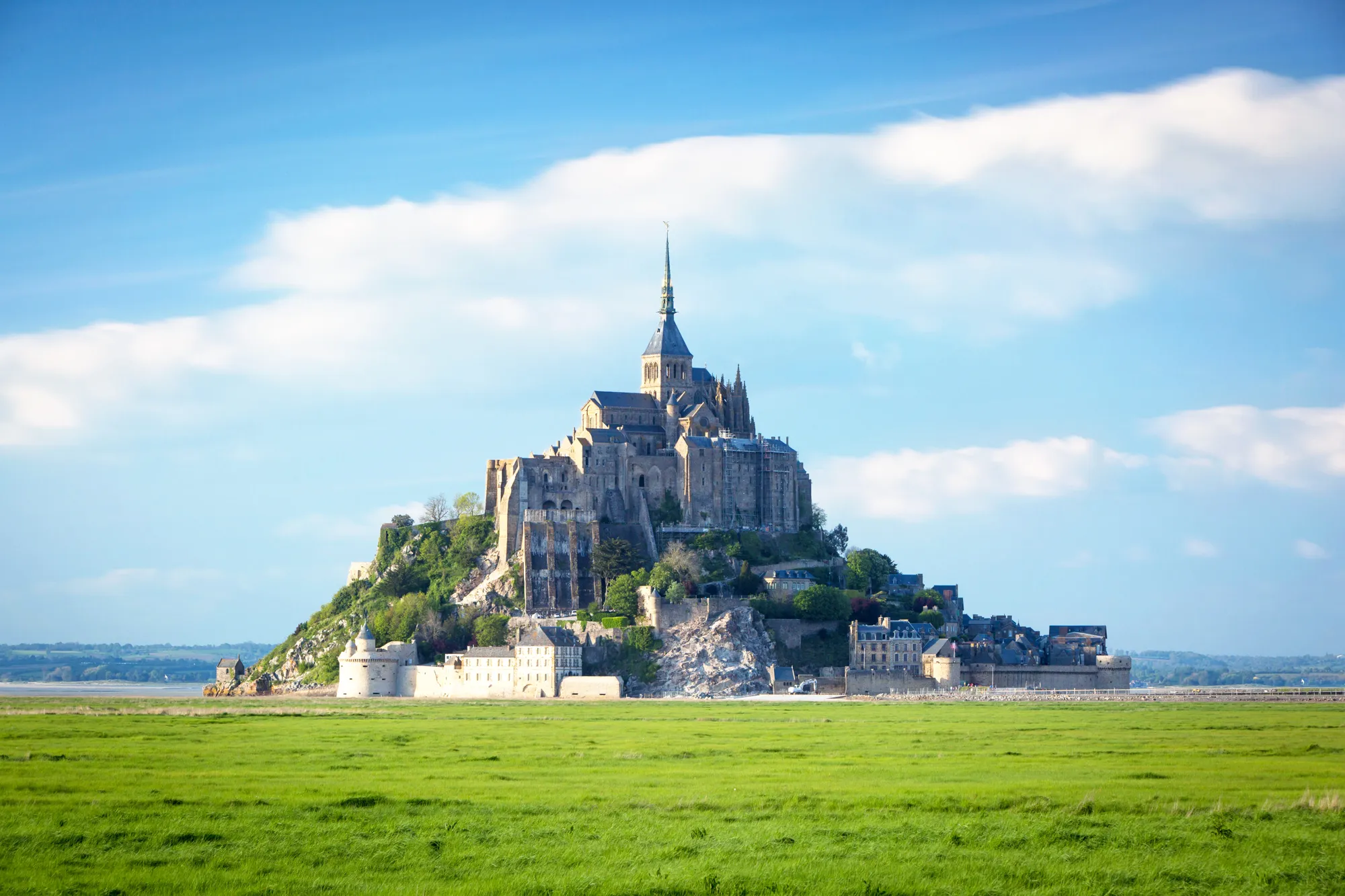
Located in northwest Europe, Normandy is a geographical and cultural region that closely corresponds to the former Duchy of Normandy. Insular Normandy (primarily the British Channel Islands) and mainland Normandy (a portion of France) make up Normandy. It is 30,627 square kilometers (11,825 square miles) in size.The population was 3,499,280 in 2017. Normandy is the ancient home of the Norman language, and its residents are referred to as Normans. Rouen, Caen, Le Havre, and Cherbourg are all large settlements. The historical Duchy of Normandy, which included small areas that are now part of the departments of Mayenne and Sarthe, is comparable to the cultural region of Normandy. The Channel Islands, which are 194 square kilometers (75 square miles) in size and are made up of the British Crown Dependencies of Guernsey and Jersey, were formerly a part of Normandy. The Vikings first settled the area in the ninth century, and the Viking jarl Rollo and King Charles III of France signed a contract in the tenth century, which is how Normandy got its name. Following the Norman conquest of England in 1066, Normandy and England were connected for over 150 years since the same individual served as both the Duke of Normandy and the King of England. Cave paintings and other archeological discoveries demonstrate that people lived in the area during the prehistoric era. There are numerous megalithic monuments in Normandy as well. Since at least the Bronze Age, Normandy has been inhabited by Celtic period Celts, also referred to as Belgae and Gauls. This region of Gaul was home to nine distinct Celtic tribes when Julius Caesar invaded it in 58–50 BC. Germanic raids decimated Lugdunensis Secunda, as the present-day region of Normandy was known at the time, in the late third century AD. On both sides of the English Channel, the Romans constructed the Saxon Shore, a system of coastal defenses. Saxon pirates settled mostly in the Bessin region after raiding coastal villages.[8] They have been found in various Merovingian cemeteries dug up east of Caen, according to modern archeology.During this time, Christianity also spread throughout the region, and by the fourth century, Rouen had a metropolitan bishop. The Roman Lugdunensis Secunda, whose borders nearly matched those of the future duchy of Normandy, served as the model for the ecclesiastical province of Rouen. The lower Seine region, the Pays de Caux, and the area westward through the Pays d'Auge as far as the Cotentin Peninsula and Channel Islands were all part of the erstwhile independent Duchy of Normandy. The majority of the area is in the Paris Basin, but Western Normandy is part of the Armorican Massif. On the Cotentin peninsula, Jobourg is home to some of France's oldest exposed rocks.The English Channel forms the region's western and northern borders. In the east are limestone cliffs, while in the west are granite cliffs. Long stretches of beach are also found in the region's center.
Kruger National Park Africa
Kruger National Park Africa
Africa
AFRICAN
Yes
37
Covering 19,623 km2 (7,576 sq mi), Kruger National Park is located in the northeastern South African provinces of Mpumalanga and Limpopo. It stretches 65 km (40 mi) from east to west and 360 km (220 mi) from north to south. Skukuza is home to the administrative headquarters. The South African Republic's government first protected portions of the park in 1898, and in 1926 it was designated as the country's first national park. It is a part of the biosphere reserve known as the Kruger to Canyons Biosphere. Kruger National Park is home to all five of the big game creatures and boasts 147 species of large mammals, more than any other game reserve in Africa. Webcams have been installed to watch the wildlife. There are believed to be just 400 African wild dog packs in all of South Africa, and Kruger is home to packs of these endangered animals. There is a reasonably consistent group of bird species from the park's southern to central regions, but the mopane-dominated flatlands north of the Olifants show a fall in richness.The larger birds of prey, on the other hand, breed during the dry winter, when their prey is most exposed, whereas the majority of species breed during the summer, when rainfall sustain the majority of vegetable and animal food. In 1918, Kruger National Park was declared, and a commission was formed to oversee its development and planning. A government officer named Johannes Andries (Dries) de Ridder served as the commission's first secretary. After 44 years in charge of the Kruger Park, Warden James Stevenson-Hamilton retired on April 30, 1946. Colonel J. A. B. Sandenbergh of the South African Air Force took his post. The government forcibly removed the Makuleke people from the northern portion of the park in 1969, and approximately 1500 of them were relocated to territory in the south so that their original tribal lands could be incorporated into the larger Kruger National Park. The famed Big Five (lion, leopard, elephant, rhinoceros, and buffalo) are among the remarkably diverse species that makes Kruger National Park famous. The park, which spans about two million hectares, draws tourists from all around the world with its unmatched wildlife viewing opportunities.


 (1).jpg)

.jpg)

.jpg)


.jpg)