Krabi Thaiand
Krabi Thaiand
Thailand
ASIA
Yes
21
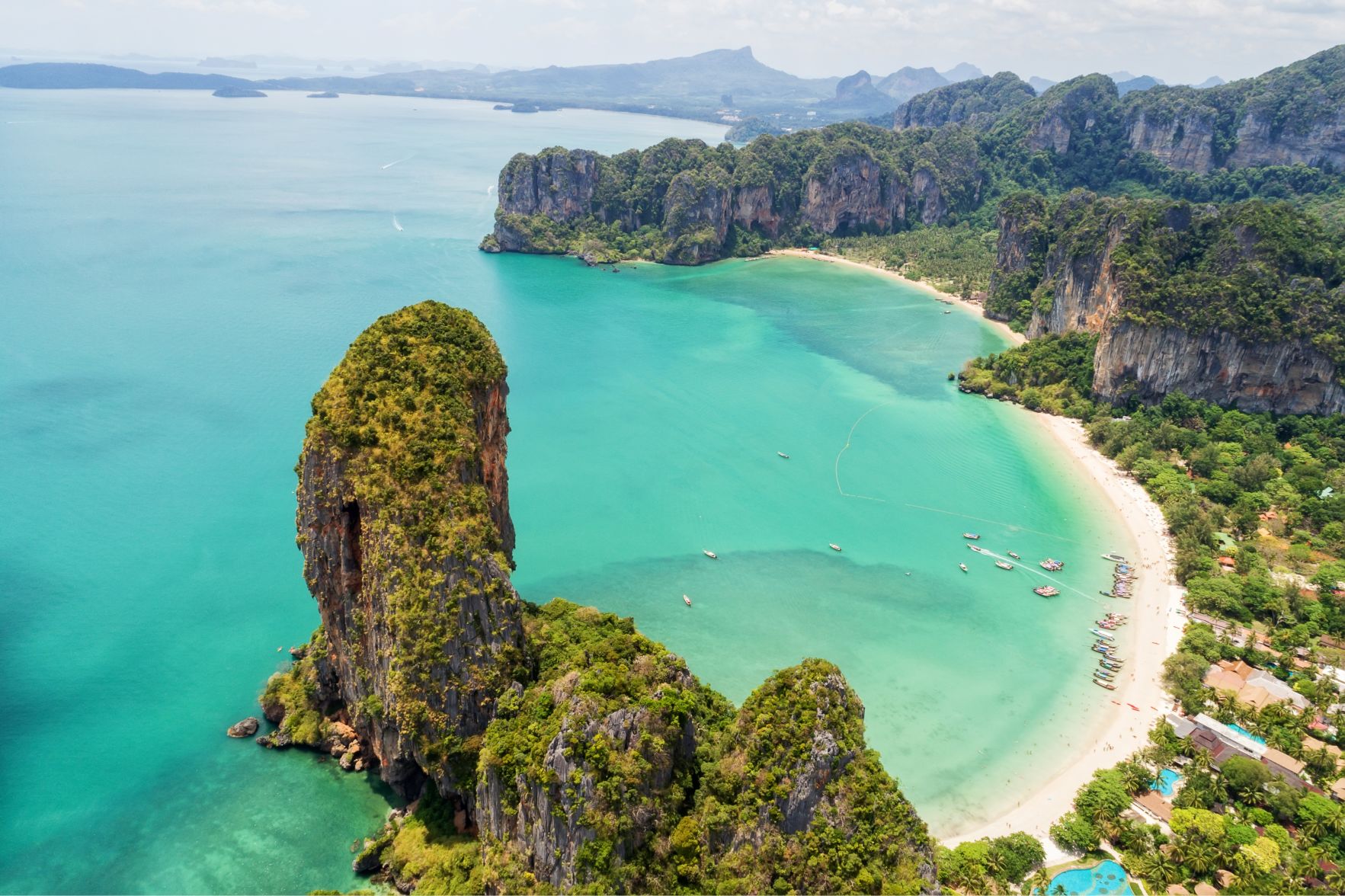
"On the west coast of southern Thailand, where the Krabi River empties into Phang Nga Bay, Krabi serves as both the provincial capital and the principal town of Krabi Province (thesaban mueang). The town, which has 32,644 residents as of 2020, is located 650 kilometers (400 miles) south of Bangkok. Like most of southern Thailand, tourism is the main driver of the local economy. Chao Phraya Nakhon (Noi), the governor of Nakhon Si Thammarat, which was by that time a member of the Thai Kingdom, ordered the establishment of an elephant kraal in Krabi at the beginning of the Rattanakosin period in the late eighteenth century, when the capital was eventually settled in Bangkok.To secure a steady supply of elephants for the larger town, he assigned the Phra Palad, his vizier, to supervise this task. Although it remained a dependency of Nakhon Si Thammarat for a while, Luang Thep Sena was the town's first governor. This was altered in 1875 when Krabi was promoted to a fourth-level town under the previous Thai political structure. The history of Krabi as a distinct entity from other provinces had then begun when administrators began reporting directly to the central government in Bangkok. The town is separated into ten villages and includes the Krabi Yai and Tambon Paknam in the Krabi District.Similar to Phuket, Krabi faces the Andaman Sea and experiences a tropical monsoon environment. The ten-month rainy season, which lasts from March to December, frequently brings days of intense rain.On March 31, 2023, the highest temperature ever recorded in Krabi was 39.6 °C (103.3 °F).On January 11, 2009, it reached its lowest recorded temperature of 15.3 °C (59.5 °F). A large portion of the province is now national parks. Ao Nang, Railay, Ko Phi Phi, and Hat Noppharat Thara-Mu Ko Phi Phi National Park are the top destinations. The province is home to more than 80 tiny islands, including Ko Lanta and Phi Phi, which are popular with explorers, yachtsmen, snorkelers, scuba divers, and Phuket day visitors. Both local Thai residents and visitors from other countries are drawn to Krabi's beaches. Among the most popular activities are kayaking, sailing, snorkeling, and bird viewing. Two national parks in the interior, Khao Phanom Bencha National Park and Than Bokkhorani, which are primarily on the mainland, provide trekking, bird viewing, and eco-tours in addition to inland visual delights such waterfalls and caves. Climbers from all over the world have been drawn to the granite walls at Railay Beach near Ao Nang, which hosts the granite and Fire Festival every year in mid-April. Railay Beach is home to a number of rock climbing schools. The limestone rock features distinctive faces, overhangs, and pockets. There are many multi-pitch sites in Railay, most of which begin on the beach.
Kruger National Park Africa
Kruger National Park Africa
Africa
AFRICAN
Yes
37
Covering 19,623 km2 (7,576 sq mi), Kruger National Park is located in the northeastern South African provinces of Mpumalanga and Limpopo. It stretches 65 km (40 mi) from east to west and 360 km (220 mi) from north to south. Skukuza is home to the administrative headquarters. The South African Republic's government first protected portions of the park in 1898, and in 1926 it was designated as the country's first national park. It is a part of the biosphere reserve known as the Kruger to Canyons Biosphere. Kruger National Park is home to all five of the big game creatures and boasts 147 species of large mammals, more than any other game reserve in Africa. Webcams have been installed to watch the wildlife. There are believed to be just 400 African wild dog packs in all of South Africa, and Kruger is home to packs of these endangered animals. There is a reasonably consistent group of bird species from the park's southern to central regions, but the mopane-dominated flatlands north of the Olifants show a fall in richness.The larger birds of prey, on the other hand, breed during the dry winter, when their prey is most exposed, whereas the majority of species breed during the summer, when rainfall sustain the majority of vegetable and animal food. In 1918, Kruger National Park was declared, and a commission was formed to oversee its development and planning. A government officer named Johannes Andries (Dries) de Ridder served as the commission's first secretary. After 44 years in charge of the Kruger Park, Warden James Stevenson-Hamilton retired on April 30, 1946. Colonel J. A. B. Sandenbergh of the South African Air Force took his post. The government forcibly removed the Makuleke people from the northern portion of the park in 1969, and approximately 1500 of them were relocated to territory in the south so that their original tribal lands could be incorporated into the larger Kruger National Park. The famed Big Five (lion, leopard, elephant, rhinoceros, and buffalo) are among the remarkably diverse species that makes Kruger National Park famous. The park, which spans about two million hectares, draws tourists from all around the world with its unmatched wildlife viewing opportunities.


 (1).jpg)

.jpg)

.jpg)


.jpg)