Wales Europe
Wales Europe
Europe
EUROPE
Yes
19
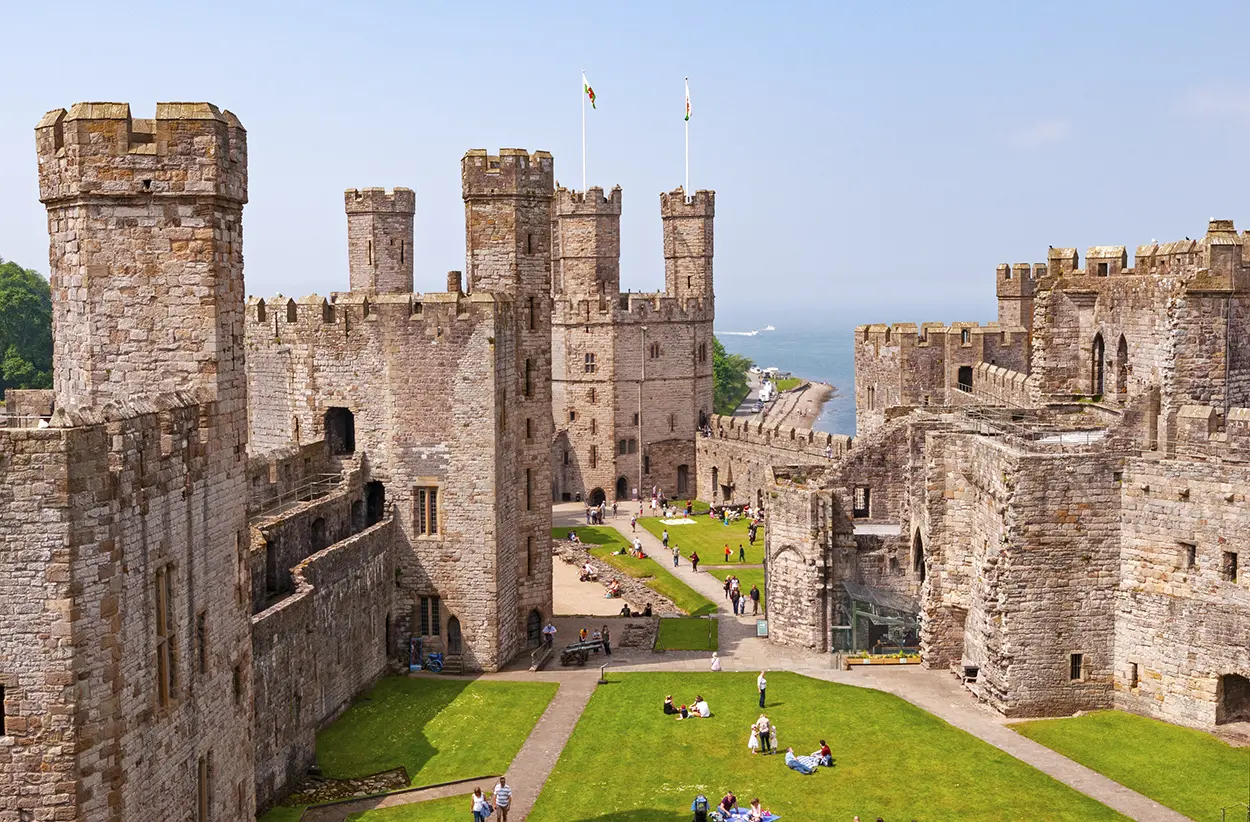
Wales is a part of the United Kingdom, which is an extension of Great Britain to the west. Cardiff serves as both the capital and the primary financial and economic hub. The little country of Wales, which is made up of six different regions, is renowned for its remarkably untamed terrain. It was one of the most important political and cultural hubs of Celtic Europe and has retained elements of its culture that set it apart from its English neighbors. Wales' maritime climate is characterized by erratic changes in Atlantic air masses, which, when paired with the country's wide range of elevations, frequently result in daily variations in local conditions. The nation as a whole receives an average of 55 inches (1,385 mm) of precipitation year, which is both frequent and frequently more than sufficient. No season is particularly rainy or dry; precipitation averages around 4 inches (88 mm) in April and 6 inches (142 mm) in January. In the uplands, where snow or sleet falls around ten days a year, winter snowfall can be substantial. Red kites, European polecats and pine martens, choughs (crowlike birds that breed inland as well as at some coastal places), and other mammals and birds that are rare or extinct elsewhere in Britain can be found in the more isolated areas of Wales. There are many of seabirds and shorebirds, and Cardigan Bay is home to bottlenose dolphins. Over half of Wales's GDP and almost two-thirds of its jobs are in the industries of trade, hotels, restaurants, government (including health and education services), and financial and business services. Cardiff and neighboring cities are home to the majority of services. Wales utilizes the pound sterling and depends on the Bank of England for currency and other financial affairs; it does not have its own central bank or national currency. Wales is home to numerous commercial banks and insurance providers. Wales is known as "the land of song," and its traditional culture is based on oral (and aural) arts such as spoken and written language and vocal music, especially choral singing with intricate harmonies and multiple parts. Welsh folk culture up to the early 18th century included the singing of penillion, or basic vernacular songs, to the triple harp. Efforts have been made to bring the tradition back. Government support for literature, art, music, film, and drama is provided by the Welsh Arts Council. The council sponsors art exhibitions, theater companies and theatres in Welsh and English, regional arts associations, music societies and festivals, especially those involved in commissioning new works, and assists in arranging British and international orchestras' visits of Wales.
Johannesburg Africa
Johannesburg Africa
South Africa
AFRICAN
Yes
39
Johannesburg is a city in South Africa's Gauteng province. It is the main financial and industrial center of the nation. Johannesburg, one of the newest big cities in the world, was established in 1886 after gold was discovered. Prior to becoming one of South Africa's four provinces, the city was a part of the Transvaal, an independent Afrikaner, or Boer, republic. Today, the city is a part of one of South Africa's nine provinces, Gauteng, which means "Place of Gold" in Sotho. The Highveld, a wide, grassy plateau that stretches across the interior of South Africa, is where Johannesburg is located. The city is situated on the edge of the Witwatersrand, also known as the Rand, which is a chain of low, rocky ridges that serves as a watershed between the drainages into the Atlantic and Indian seas. The city is between 5,700 and 5,930 feet (1,740 and 1,810 meters) above sea level. The climate of Johannesburg is moderate. The average temperature is around 75 °F (24 °C) in the summer and 55 °F (13 °C) in the winter, with very few periods below freezing. In both winter and summer, the city receives roughly eight hours of sunlight each day. Although the overall amount of rainfall fluctuates greatly from year to year, it averages around 28 inches (700 millimeters) annually. A major location for several creative and cultural industries, Johannesburg is a cultural center in South Africa with a diverse range of cultural venues. In addition to a plethora of other museums, theaters, galleries, and libraries, Johannesburg is home to the South African Ballet Theatre, the National School of Arts, and the University of Witwatersrand's School of the Arts.The Central Business District of Johannesburg is home to the Johannesburg City Library. The city is home to a number of Premiership and National First Division football teams. The top Johannesburg teams in the Premiership, such as Orlando Pirates (also known as the Buccaneers) and Kaizer Chiefs (also known as Amakhosi), are bitter rivals. They are headquartered at the Orlando and FNB stadiums in the city. Soccer City, the site of the 2010 FIFA World Cup final, hosts a number of major league and cup matches. FC AK and Jomo Cosmos are the teams in the First Division. The stadiums used by Katlehong City and Alexandra United are Alexandra and Reiger Park, respectively.


 (1).jpg)

.jpg)
.jpg)



.jpg)