Prince Edward Island
Prince Edward Island
Canada
NORTH AMERICA
Yes
15
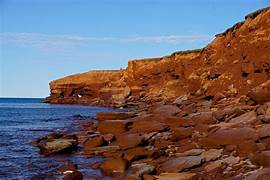
"Canada's Prince Edward Island is an island province. Despite having the highest population density, it is the province with the smallest land area and population. The island is known by a number of titles, including ""Cradle of Confederation,"" ""Garden of the Gulf,"" and ""Birthplace of Confederation.""Charlottetown is its major city and capital. Among the four Atlantic provinces, it is one of the three Maritime provinces. Approximately 10 kilometers (6 miles) from both Nova Scotia and New Brunswick, Prince Edward Island is situated in the Gulf of St. Lawrence. It is roughly 600 kilometers (370 miles) east of Quebec City and 200 kilometers (120 miles) north of Halifax. With a land size of 5,686.03 km2 (2,195.39 sq mi), it is the 23rd largest island in Canada and the 104th largest island in the world [12]. It is the only province in Canada that is made up completely of islands. The island was renamed in 1798 in honor of Prince Edward, Duke of Kent and Strathearn (1767–1820), the fourth son of King George III and the father of the future Queen Victoria in 1819, after it was divided from the British colony of Nova Scotia in 1769. Thus, the title ""Father of the Canadian Crown"" has been applied to Prince Edward. In the Gulf of St. Lawrence, northeast of New Brunswick, north of the Nova Scotia peninsula, and west of Cape Breton Island, sits Prince Edward Island. The Northumberland Strait borders its southern shore. With two urban regions, the island is Canada's most densely populated province overall. The climate of the island is a marine climate considered to be moderate and highly impacted by the neighboring Gulf of St. Lawrence.Because of the Gulf of St. Lawrence's warmer waters, it is typically milder than many parts of New Brunswick and Nova Scotia.The weather is variable throughout the year, and certain weather patterns rarely persist for an extended period of time. As of December 2018, the Province of Prince Edward Island relied entirely on groundwater for its drinking water supply, with about 305 high capacity wells in operation.Groundwater is naturally filtered as it passes through an aquifer. Thirteen wells in three wellfields provide the city of Charlottetown with its water, which is then delivered to consumers. Precipitation replenishes the water that has been removed.
Vancouver Canada
Vancouver Canada
Canada
NORTH AMERICA
Yes
13
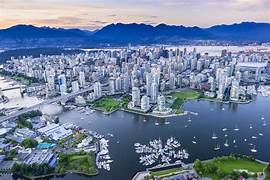
"Vancouver is a significant metropolis in Western Canada, specifically in British Columbia's Lower Mainland area. According to the 2021 Canadian census, there were 662,248 residents in the city, which is the largest in the province, compared to 631,486 in 2016. With 2.6 million people in 2021, the Metro Vancouver region is the third-largest metropolis in Canada. The Lower Mainland, which includes the Fraser Valley and Greater Vancouver, has a regional population of over 3 million people. With more than 5,700 people per square kilometer (15,000/sq mi), Vancouver has the highest population density in Canada and the fourth highest in North America, behind New York City, San Francisco, and Mexico City. Vancouver is one of the most linguistically and ethnically diverse cities in Canada, with 54.5% of its population belonging to visible minority groups, 49.3% not being native English speakers, and 47.8% not speaking either French or English as their first language. It has consistently been listed among the most livable cities in Canada and the globe. Vancouver is also one of the priciest cities in the world and Canada when it comes to the affordability of housing. The urban planning design ideology of the city is known as Vancouverism. Numerous international conferences and events have been held in Vancouver, including the 1954 Commonwealth Games, UN Habitat I, Expo 86, APEC Canada 1997, the World Police and Fire Games in 1989 and 2009; several matches of 2015 FIFA Women's World Cup, including the finals at BC Place in downtown Vancouver,and the 2010 Winter Olympics and Paralympics, which were held in Vancouver and Whistler, a resort town 125 kilometers (78 miles) north of the city. Greenpeace was established in Vancouver in 1969. In 2014, TED talks were established in the city as a permanent fixture. The city's name comes from George Vancouver, who gave several locations British names after he surveyed Burrard Inlet's inner harbor in 1792. The Dutch ""van Coevorden"" translates to someone from the town of Coevorden in the Netherlands, which is where the family name ""Vancouver"" comes from. The explorer's forebears ""from Coevorden"" came to England, giving rise to the name that would eventually become ""Vancouver."" Prior to 1850 According to archaeological records, the Vancouver region was already inhabited by Aboriginal people between 8,000 and 10,000 years ago. Numerous villages belonging to the Squamish, Musqueam, and Tsleil-Waututh (Burrard) tribes of the Coast Salish group were located in different areas of modern Vancouver, including Stanley Park, False Creek, Kitsilano, Point Grey, and the mouth of the Fraser River. Although José María Narváez of Spain discovered the coast of present-day Point Grey and portions of Burrard Inlet in 1791, Europeans first learned about the site of the future Vancouver during that expedition.

 (1).jpg)

.jpg)

.jpg)


