Wellington
Wellington
Australia
AUSTRALIA
Yes
30
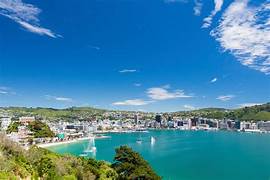
"New Zealand's capital city is Wellington It is situated between the Remutaka Range and Cook Strait near the southwest tip of the North Island. The administrative hub of the Wellington Region, Wellington is the third-largest city in New Zealand and the second-largest in the North Island. It is the southernmost sovereign state capital in the world.In terms of average wind speed, Wellington is the windiest city in the world and has a mild maritime environment. The city has become ingrained in the worldwide consciousness as ""the coolest little capital"" because to the efforts of Positively Wellington Tourism.It has long been hailed as the ""cultural and creative capital"" of New Zealand. A ship from the New Zealand Company arrived in 1839 with representatives tasked with choosing a location for the company's first settlement. The original location near the Hutt River mouth turned out to be inappropriate, thus Lambton Harbour on the west shore was used instead. In 1840, the settlement was given its name in appreciation of Arthur Wellesley, 1st Duke of Wellington, who provided assistance to the firm. Wellington serves as the nation's communications and transportation center. All areas of the North Island can be reached by rail and road, and the capital is connected to the South Island by ferries to Picton. The hub of the nation's internal aviation network is the city's international airport. The harbor, which serves both domestic and foreign ships, exports meats, wood goods, dairy products, wool, and fruit while importing minerals, automobiles, and petroleum products. With a focus on government, corporate services, and finance, the economy is mostly service-based. Additionally, Wellington serves as a regional hub for education and health. The film industry is expanding, and tourism is significant. Even though the city's production has decreased since the late 1980s, the area still produces chemicals, plastics, and machinery in addition to having a printing sector. Wellington is home to Massey University and Victoria University. The biennial New Zealand Festival of the Arts, the biennial Wellington Jazz Festival, the biennial Capital E National Arts Festival for Children, and other high-profile events and cultural celebrations like the World of Wearable Art, TEDxWellington, Cuba Street Carnival, Wellington On a Plate, the New Zealand Fringe Festival, the New Zealand International Comedy Festival, the New Zealand Affordable Art Show, Out In The Square, Beervana, and the Homegrown Music Festival are all held in Wellington. The eastern suburb of Miramar has been transformed into a hub for filmmaking, post-production, and special effects by filmmakers Sir Peter Jackson, Sir Richard Taylor, and an expanding group of creative professionals, earning the nickname ""Wellywood.""Jackson's businesses include Stone Street Studios, which is close to Wellington Airport, Wētā Workshop, Wētā FX, Camperdown Studios, and the post-production firm Park Road Post.
Cape Town
Cape Town
South Africa
AFRICAN
Yes
35
South Africa's legislative capital is Cape Town. It is the oldest city in the nation and the location of the South African Parliament. Cape Town is the largest city in the Western Cape and the second most populous city in the nation, after Johannesburg.The city is a part of the metropolitan municipality known as the City of Cape Town.Table Mountain, Cape Point, the city's harbor, and its natural environment in the Cape Floristic Region are some of its most well-known features. Numerous publications have ranked Cape Town as the world's greatest city and the finest place to go, including Time Out in 2025, The New York Times in 2014, and The Telegraph for the last eight years (2017–2025). With the greatest concentration of Cape Dutch-style buildings worldwide, Cape Town is renowned for its architectural legacy. Constantia, the historic government buildings in the Central Business District, and Long Street are the best examples of the Cape Dutch architectural style, which blends the architectural traditions of the Netherlands, Germany, France, and Indonesia. Mostert's Mill in Mowbray is the only fully operational windmill in South Africa. Constructed in 1796, it underwent restorations in 1935 and 1995. In 2014, the International Council of Societies of Industrial Design declared Cape Town the World Design Capital. Additionally, Cape Town is designated a "Design City" by the Creative Cities Network of UNESCO. Cape Town's biggest performing arts facility is the Artscape Theatre Centre. The 17th-century savory, sweet, spiced beef dish known as bobotie is one of the foods that originated in Cape Town or is associated with it. A sandwich stuffed with slap chips and other toppings, the Gatsby was initially offered in the Athlone area in 1976 and has since come to represent the city.A classic Cape Malay dessert, the koe'sister is characterized as a cake-like dumpling flavored with cinnamon and topped with a dusting of desiccated coconut. Table Mountain's mass and the chilly Benguela Current of the South Atlantic Ocean both locally alter Cape Town's Mediterranean climate. While the average high temperature is 70°F (21°C) in January and February and the average low temperature is 55°F (13°C) in July, the coast and mountain slopes experience colder weather. Freezing rarely happens. Rainfall occurs on 69 days of the year on average; the southern winter months of June through August account for roughly half of the 26 inches (660 millimeters) of yearly rainfall. Every year, almost five million tons of goods pass through the port of Cape Town. Although ships with a draft of more than 40 feet are not permitted to enter the port during low tide, interoceanic commerce benefits greatly from its dry dock and maintenance facilities. Container traffic is accommodated at the Ben Schoeman Dock.


 (1).jpg)

.jpg)

.jpg)


.jpg)