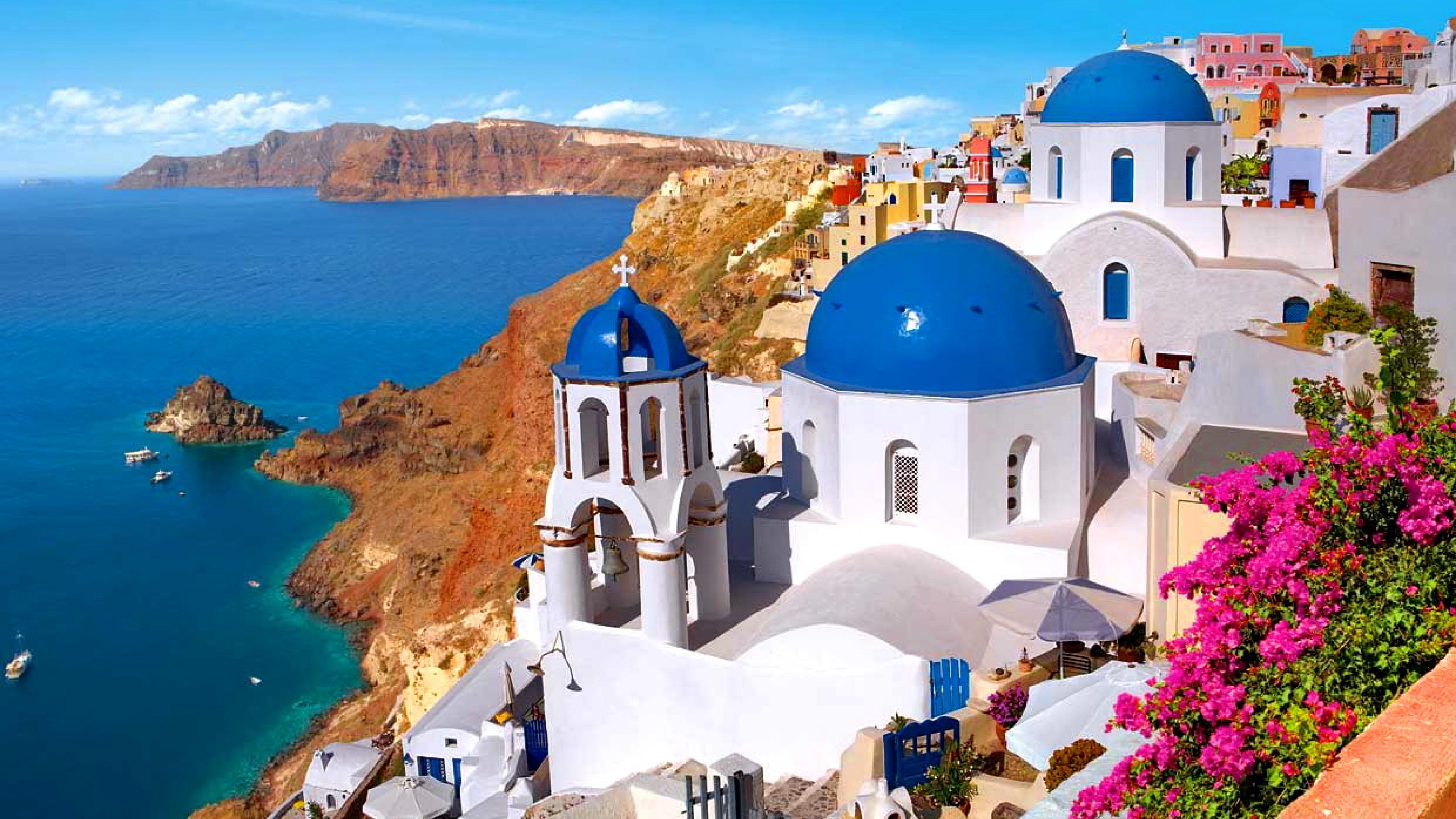
Santorini Greek Island
Santorini Greek Island
Greece
EUROPE
Yes
21
About 200 kilometers (120 miles) southeast of the mainland is the Greek island of Santorini, which is located in the southern Aegean Sea. The Santorini caldera created a small, circular archipelago of islands, of which this is the largest. It is the southernmost island in the Cyclades group, with an area of around 73 km2 (28 sq mi), and has 15,480 residents according to the 2021 census. The populated islands of Santorini and Therasia, as well as the uninhabited islands of Nea Kameni, Palaia Kameni, Aspronisi, Anydros, and Christiana, are all part of the municipality of Santorini. The entire land area is 35 square miles, or 91 km².Thira is the regional unit that includes Santorini. In the South Aegean Volcanic Arc, it is the most active volcanic center. The volcanic arc is roughly 20 to 40 km (12 to 25 mi) wide and 500 km (300 mi) long. Though volcanism on Thera started about 2 million years ago with the eruption of dacitic lavas from vents around Akrotiri, the region first experienced volcanic activity 3–4 million years ago. About 3,600 years ago, the island experienced one of the biggest volcanic eruptions in recorded history, leaving behind thick layers of volcanic ash and a sizable caldera filled with water. Like other Cyclades, Santorini's traditional architecture consists of low-lying cubical homes made of native stone that have been limewashed or whitewashed with different volcanic ashes to provide color. According to the island's traditional architecture, which was established up until the catastrophic earthquake of 1956, these colors have a tendency to replace white in the color of home façades in recent years. The distinctive feature is the widespread application of the hypóskapha, which are sideways or downward excavations of homes into the surrounding pumice. The Thira Autonomous Power Station, situated near Monolithos in the eastern region of Santorini, is the primary source of electricity for both Santorini and Therasia. It is owned by the Public Power Corporation (PPC) and features gas turbines and diesel engines for its generators. The combined installed capacity of the two islands is 0.25 MW of renewable energy and 75.09 MW of thermal energy. The Cyclades Interconnection Project is a €124 million initiative that aims to link the island to Naxos by an underwater cable and, eventually, to the mainland grid by 2023.The island's capital, Fira, is home to the main bus station, from which busses regularly depart. They cover the routes to the majority of tourist destinations and nearly every location on the island.
Cairo Africa
Cairo Africa
Cairo
AFRICAN
Yes
38
Cairo isn’t just the capital of Egypt — it’s the pulse of the nation. A city where ancient history meets modern chaos, where the call to prayer rises above the traffic, and where every alley seems to hum with life. Home to over 10 million people, Cairo is one of the biggest and most energetic cities in the Middle East and Africa. It’s a place of contrasts — the timeless Pyramids of Giza just a short drive from bustling markets, rooftop cafés, and shiny new malls. The Greater Cairo Metropolitan Area, with more than 22 million residents, is among the most populated urban regions on Earth. Surrounded by ancient sites like Memphis, Heliopolis, and the Giza Plateau, Cairo is a living bridge between Egypt’s past and its future. The city’s origins trace back to Fustat, Egypt’s first Islamic capital founded in 641 CE, and later to 969 CE, when the Fatimid dynasty created what we now call Cairo. Through centuries — under the Ayyubids, Mamluks, and beyond — the city became Egypt’s heart of architecture, art, and learning.
.jpg)

 (1).jpg)

.jpg)




.jpg)