San Antonio de los Cobres to Viaducto La Polvorilla countries
San Antonio de los Cobres to Viaducto La Polvorilla countries
South America
SOUTH AMERICA
Yes
19
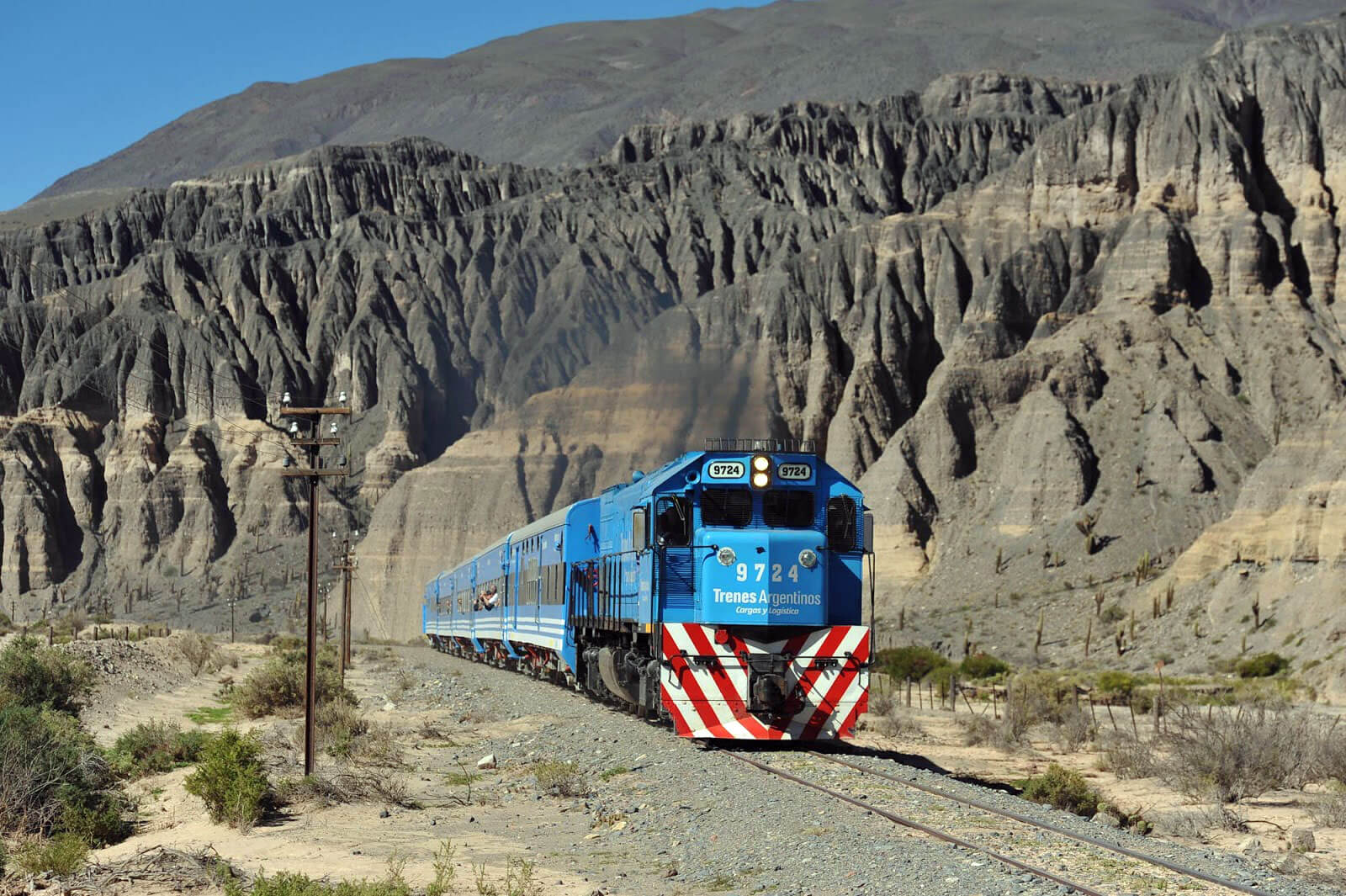
San Antonio de los Cobresand Viaducto La Polvorilla are both located in Argentina, in the Salta Province in the northwest of the country. San Antonio de los Cobres: A high-altitude town situated at about 3,775 meters above sea level in the Andes Mountains. It is known for its mining history, indigenous culture, and as a stop on the famous Tren a las Nubes (Train to the Clouds). Viaducto La Polvorilla: A spectacular railway bridge located near San Antonio de los Cobres. It stands at 4,220 meters above sea level and is the most iconic part of the Tren a las Nubes route, showcasing impressive engineering in a dramatic mountainous landscape. The Salta Province in northwest Argentina is home to both the Viaducto La Polvorilla and San Antonio de los Cobres. About 13 kilometers from San Antonio de los Cobres stands the famous steel railway bridge known as the Viaducto La Polvorilla. It is one of the highest railway bridges in the world, rising 4,220 meters (13,845 ft) above sea level. The "Tren a las Nubes" (Train to the Clouds), a tourist train that travels through the picturesque Andes, includes this viaduct as one of its main features. Argentina is home to the full route, which includes the Viaducto La Polvorilla and San Antonio de los Cobres.
Kruger National Park Africa
Kruger National Park Africa
Africa
AFRICAN
Yes
37
Covering 19,623 km2 (7,576 sq mi), Kruger National Park is located in the northeastern South African provinces of Mpumalanga and Limpopo. It stretches 65 km (40 mi) from east to west and 360 km (220 mi) from north to south. Skukuza is home to the administrative headquarters. The South African Republic's government first protected portions of the park in 1898, and in 1926 it was designated as the country's first national park. It is a part of the biosphere reserve known as the Kruger to Canyons Biosphere. Kruger National Park is home to all five of the big game creatures and boasts 147 species of large mammals, more than any other game reserve in Africa. Webcams have been installed to watch the wildlife. There are believed to be just 400 African wild dog packs in all of South Africa, and Kruger is home to packs of these endangered animals. There is a reasonably consistent group of bird species from the park's southern to central regions, but the mopane-dominated flatlands north of the Olifants show a fall in richness.The larger birds of prey, on the other hand, breed during the dry winter, when their prey is most exposed, whereas the majority of species breed during the summer, when rainfall sustain the majority of vegetable and animal food. In 1918, Kruger National Park was declared, and a commission was formed to oversee its development and planning. A government officer named Johannes Andries (Dries) de Ridder served as the commission's first secretary. After 44 years in charge of the Kruger Park, Warden James Stevenson-Hamilton retired on April 30, 1946. Colonel J. A. B. Sandenbergh of the South African Air Force took his post. The government forcibly removed the Makuleke people from the northern portion of the park in 1969, and approximately 1500 of them were relocated to territory in the south so that their original tribal lands could be incorporated into the larger Kruger National Park. The famed Big Five (lion, leopard, elephant, rhinoceros, and buffalo) are among the remarkably diverse species that makes Kruger National Park famous. The park, which spans about two million hectares, draws tourists from all around the world with its unmatched wildlife viewing opportunities.


 (1).jpg)

.jpg)

.jpg)


.jpg)