Rio De Janeiro Brazil
Rio De Janeiro Brazil
Brazil
SOUTH AMERICA
Yes
14
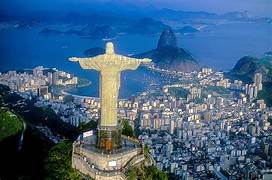
"The capital of the state of Rio de Janeiro is Rio de Janeiro,[a] or just Rio. It is the sixth most populous city in the Americas and the second most populous city in Brazil, behind São Paulo.In 2008, Rio de Janeiro's municipal GDP ranked 30th globally and second in the nation.The estimated value of this is R$343 billion. The city is home to the main offices of several Brazilian mining, oil, and telecommunications firms, notably Grupo Globo, the largest telemedia conglomerate in Latin America, and two of the nation's largest enterprises, Petrobras and Vale. With numerous colleges and institutes based there, it ranks as Brazil's second-largest research and development hub, contributing 17% of the country's total scientific output in 2005. The city really has a lower crime rate than the majority of Brazilian state capitals, despite the high perception of crime. One of the most popular destinations in the Southern Hemisphere, Rio de Janeiro is renowned for its natural surroundings, carnival, samba, bossa nova, and beaches including Ipanema, Leblon, Copacabana, and Barra da Tijuca.The statue of Christ the Redeemer on top of Corcovado mountain, which was named one of the New Seven Wonders of the World, Sugarloaf Mountain with its cable car, the Sambódromo, a permanent parade avenue lined with grandstands that is used during Carnival, and Maracanã Stadium, one of the biggest football stadiums in the world, are some of the landmarks in addition to the beaches. Rio de Janeiro hosted the 2016 Summer Olympics and Paralympics, marking the third time the Olympics were held in a city in the Southern Hemisphere and the first time the games were ever held in a South American or Portuguese-speaking city.[13] The XV Pan American Games, the 2013 FIFA Confederations Cup, and the FIFA World Cup finals in 1950 and 2014 were all hosted in Maracanã Stadium. The city will host the FIFA Women's World Cup in 2027 after hosting the G20 conference in 2024. One of Brazil's major cultural centers is Rio de Janeiro. Its architecture incorporates world-famous 20th-century designs with churches and structures from the 16th through the 19th centuries. Portuguese, English, and French architecture all had an impact on Rio, which for many years served as the city and home of the Portuguese Imperial family. ""Cidade Maravilhosa"" (meaning ""marvelous city"") is Rio de Janeiro's official anthem. The song is always the most popular song during Rio's Carnival in February and is regarded as the city's civic anthem. São Paulo and Rio de Janeiro are regarded as the epicenters of Brazil's urban music movement.
Cairo Africa
Cairo Africa
Cairo
AFRICAN
Yes
38
Cairo isn’t just the capital of Egypt — it’s the pulse of the nation. A city where ancient history meets modern chaos, where the call to prayer rises above the traffic, and where every alley seems to hum with life. Home to over 10 million people, Cairo is one of the biggest and most energetic cities in the Middle East and Africa. It’s a place of contrasts — the timeless Pyramids of Giza just a short drive from bustling markets, rooftop cafés, and shiny new malls. The Greater Cairo Metropolitan Area, with more than 22 million residents, is among the most populated urban regions on Earth. Surrounded by ancient sites like Memphis, Heliopolis, and the Giza Plateau, Cairo is a living bridge between Egypt’s past and its future. The city’s origins trace back to Fustat, Egypt’s first Islamic capital founded in 641 CE, and later to 969 CE, when the Fatimid dynasty created what we now call Cairo. Through centuries — under the Ayyubids, Mamluks, and beyond — the city became Egypt’s heart of architecture, art, and learning.
.jpg)

 (1).jpg)

.jpg)




.jpg)