Barcelona Spain
Barcelona Spain
Spain
EUROPE
Yes
22
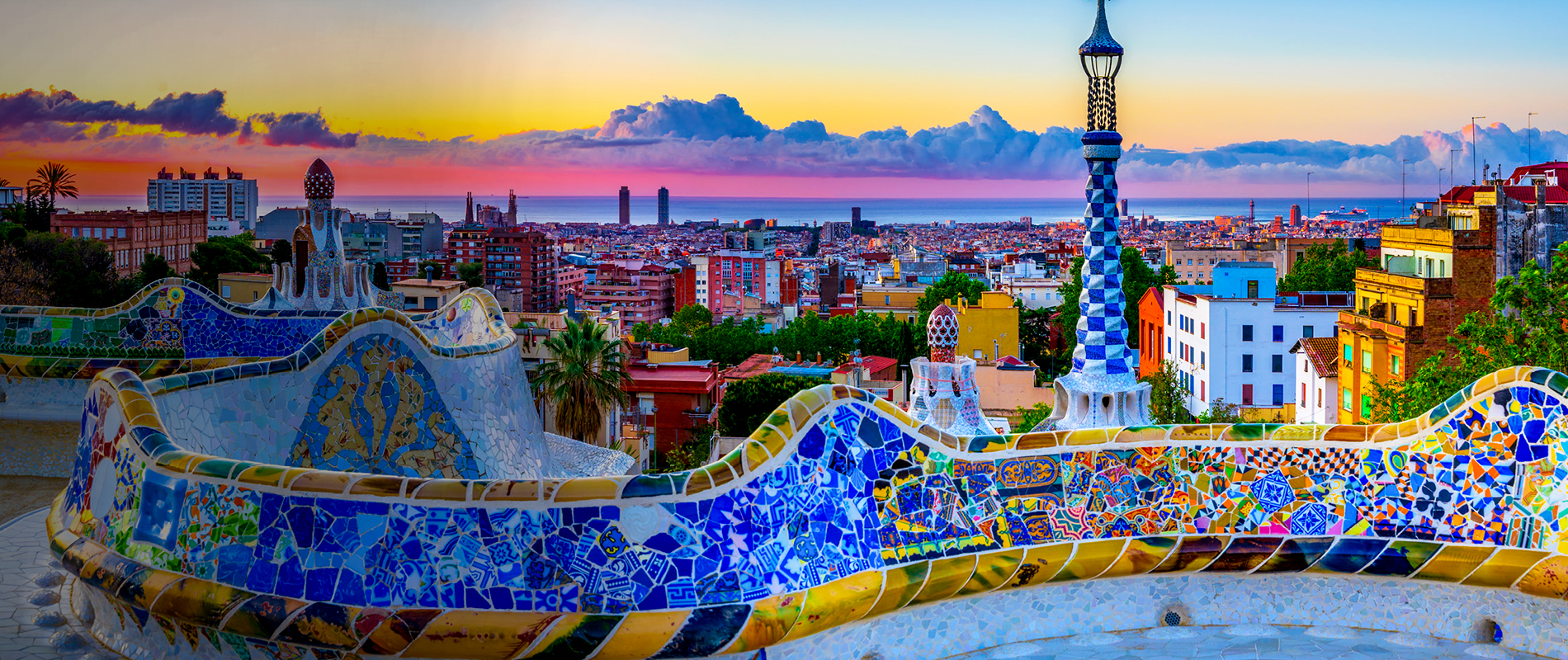
Spain's northeastern coast is home to the city of Barcelona. It is the second most populated municipality in Spain and the capital and largest city of the Catalan autonomous community. Its urban area, which includes many neighboring municipalities in the province of Barcelona, is home to approximately 5.3 million people, making it the fifth most populous urban area in the European Union after Paris, the Ruhr region, Madrid, and Milan. Its city limits have a population of 1.6 million. Situated on the coast between the mouths of the rivers Llobregat and Besòs, and surrounded to the west by the Serra de Collserola mountain range, it is one of the biggest cities on the Mediterranean Sea. The Phoenicians or the Carthaginians, who maintained trading posts along the Catalonian coast, are said to have built Barcelona. Barcelona became the capital of the County of Barcelona during the Middle Ages. Barcelona, which remained the capital of the Principality of Catalonia, joined the Kingdom of Aragon to form the composite monarchy of the Crown of Aragon. It became the most important city in the Crown of Aragon and its main administrative and economic center, but it was soon overtaken by Valencia, which the Catalans had wrested from Moorish control, just before the dynastic union between the Crown of Castile and the Crown of Aragon in 1516. Barcelona became the epicenter of Catalan nationalism, momentarily joining France during the Reapers' War in the 17th century and again under Napoleon from 1812 to 1814. During the 19th and early 20th centuries, it saw industrialization and a number of worker movements. In 1931, it became the capital of Catalonia's autonomy, and from 1936 until its capture by the fascists in 1939, it served as the focal point of Catalonia's revolution during the Spanish Revolution. Barcelona once again served as the capital of an independent Catalonia following Spain's democratic transition in the 1970s. Barcelona's name is derived from the ancient Iberian Baŕkeno, which is recorded in an old coin inscription on the right side. It reads Barkeno in Iberian script, Barkinṓn in Levantine Iberian script, Βαρκιvώv in Ancient Greek sources, and Barcino, Barcilonum, and Barcenona in Latin. It's uncertain where the first population at the location of modern-day Barcelona came from. Various tombs and houses from before 5000 BC have been discovered among the remnants of an early settlement.Barcelona was founded by the mythical Hercules, according to Greek mythology. Barcelona hosted the Summer Olympics in 1992. What had previously been a predominantly industrial city is said to have undergone significant alterations as a result of these aftereffects. In order to prepare for the games, 3 km (2 mi) of beach were constructed and industrial buildings along the waterfront were removed. The city's road capacity expanded by 17%, its sewage processing capacity by 27%, and the number of additional beaches and green spaces by 78% as a result of new building. The number of hotel rooms in the city doubled between 1990 and 2004. More significantly, Barcelona's external image was altered, and by 2012, it was ranked fifth among European cities and 12th globally in terms of travel popularity.
Cape Town
Cape Town
South Africa
AFRICAN
Yes
35
South Africa's legislative capital is Cape Town. It is the oldest city in the nation and the location of the South African Parliament. Cape Town is the largest city in the Western Cape and the second most populous city in the nation, after Johannesburg.The city is a part of the metropolitan municipality known as the City of Cape Town.Table Mountain, Cape Point, the city's harbor, and its natural environment in the Cape Floristic Region are some of its most well-known features. Numerous publications have ranked Cape Town as the world's greatest city and the finest place to go, including Time Out in 2025, The New York Times in 2014, and The Telegraph for the last eight years (2017–2025). With the greatest concentration of Cape Dutch-style buildings worldwide, Cape Town is renowned for its architectural legacy. Constantia, the historic government buildings in the Central Business District, and Long Street are the best examples of the Cape Dutch architectural style, which blends the architectural traditions of the Netherlands, Germany, France, and Indonesia. Mostert's Mill in Mowbray is the only fully operational windmill in South Africa. Constructed in 1796, it underwent restorations in 1935 and 1995. In 2014, the International Council of Societies of Industrial Design declared Cape Town the World Design Capital. Additionally, Cape Town is designated a "Design City" by the Creative Cities Network of UNESCO. Cape Town's biggest performing arts facility is the Artscape Theatre Centre. The 17th-century savory, sweet, spiced beef dish known as bobotie is one of the foods that originated in Cape Town or is associated with it. A sandwich stuffed with slap chips and other toppings, the Gatsby was initially offered in the Athlone area in 1976 and has since come to represent the city.A classic Cape Malay dessert, the koe'sister is characterized as a cake-like dumpling flavored with cinnamon and topped with a dusting of desiccated coconut. Table Mountain's mass and the chilly Benguela Current of the South Atlantic Ocean both locally alter Cape Town's Mediterranean climate. While the average high temperature is 70°F (21°C) in January and February and the average low temperature is 55°F (13°C) in July, the coast and mountain slopes experience colder weather. Freezing rarely happens. Rainfall occurs on 69 days of the year on average; the southern winter months of June through August account for roughly half of the 26 inches (660 millimeters) of yearly rainfall. Every year, almost five million tons of goods pass through the port of Cape Town. Although ships with a draft of more than 40 feet are not permitted to enter the port during low tide, interoceanic commerce benefits greatly from its dry dock and maintenance facilities. Container traffic is accommodated at the Ben Schoeman Dock.


 (1).jpg)

.jpg)

.jpg)


.jpg)