Bali
Bali
Indonesia
ASIA
Yes
21
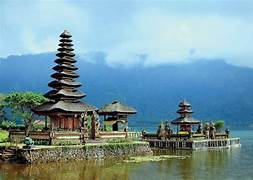
"The westernmost of the Lesser Sunda Islands is the Indonesian province of Bali. The province consists of the island of Bali and several smaller offshore islands, including Nusa Penida, Nusa Lembongan, and Nusa Ceningan to the southeast, east of Java and west of Lombok. The most populated city in the Lesser Sunda Islands and the second-largest city in Eastern Indonesia, after Makassar, is Denpasar, the province capital . The larger urban area surrounding Denpasar is known as the Denpasar metropolitan area. Ubud, a highland village in Greater Denpasar, is regarded as the cultural hub of Bali. With a notable increase in tourism since the 1980s, the province is now Indonesia's top tourist destination and is experiencing overtourism.Eighty percent of the Bali economy is based on tourism-related businesses.With 86.40% of the population practicing Balinese Hinduism, Bali is the only province in Indonesia with a majority of Hindus.It is well known for its highly developed arts, which include music, sculpture, painting, leather, metalworking, and both traditional and modern dance. Bali hosts the Indonesian International Film Festival each year. Other major gatherings that have taken place in Bali include the 2022 G20 summit, the 2018 Annual Meetings of the World Bank Group and the major Monetary Fund, and Miss World 2013. Agriculture accounted up the majority of the Balinese economy's output and employment in the 1970s. In terms of revenue, tourism has surpassed all other industries, making Bali one of Indonesia's richest regions. In 2003, tourism accounted for around 80% of Bali's GDP.All of Bali's banks had non-performing loan rates of 2.23% by the end of June 2011, which was less than the 5% average for the Indonesian banking sector. However, the terrorist attacks in 2002 and 2005 had a severe negative impact on the economy. Since then, the tourism sector has bounced back from these incidents. Although it is important throughout the island, the tourism sector is concentrated in the south. The town of Kuta (with its beach) and its outer suburbs, Legian and Seminyak (once separate townships), the town of Sanur on the east coast (once the only tourist destination), Ubud in the middle of the island, Jimbaran to the south of the Ngurah Rai International Airport, and the more recent developments of Nusa Dua and Pecatu are the main tourist destinations. Bali is well known for its many and intricate artistic disciplines, including performing arts, woodcarving, painting, sculpture, and handicrafts. In contrast to the rest of Indonesia, Balinese cuisine is also unique in that it frequently uses pork in dishes like Babi Guling.Gamelan, or Balinese percussion orchestra music, is extremely complex and diverse. Hindu epics like the Ramayana are frequently portrayed in Balinese performing arts, but with a strong Balinese touch. Pendet, legong, baris, topeng, barong, gong kebyar, and kecak (the monkey dance) are some of the well-known Balinese dances. With paid performances at thousands of temple festivals, private ceremonies, and public events, Bali is home to one of the most inventive and varied performing arts traditions in the world. Each family's ancestral hamlet, to which the cycle of life and religion are intimately linked, remains the center of Balinese society.As a result of Indonesia's democratization and decentralization since 1998, coercive elements of traditional society—such as customary law penalties enforced by traditional authority like village councils (including ""kasepekang,"" or shunning)—have gained significance.
Cape Town
Cape Town
South Africa
AFRICAN
Yes
35
South Africa's legislative capital is Cape Town. It is the oldest city in the nation and the location of the South African Parliament. Cape Town is the largest city in the Western Cape and the second most populous city in the nation, after Johannesburg.The city is a part of the metropolitan municipality known as the City of Cape Town.Table Mountain, Cape Point, the city's harbor, and its natural environment in the Cape Floristic Region are some of its most well-known features. Numerous publications have ranked Cape Town as the world's greatest city and the finest place to go, including Time Out in 2025, The New York Times in 2014, and The Telegraph for the last eight years (2017–2025). With the greatest concentration of Cape Dutch-style buildings worldwide, Cape Town is renowned for its architectural legacy. Constantia, the historic government buildings in the Central Business District, and Long Street are the best examples of the Cape Dutch architectural style, which blends the architectural traditions of the Netherlands, Germany, France, and Indonesia. Mostert's Mill in Mowbray is the only fully operational windmill in South Africa. Constructed in 1796, it underwent restorations in 1935 and 1995. In 2014, the International Council of Societies of Industrial Design declared Cape Town the World Design Capital. Additionally, Cape Town is designated a "Design City" by the Creative Cities Network of UNESCO. Cape Town's biggest performing arts facility is the Artscape Theatre Centre. The 17th-century savory, sweet, spiced beef dish known as bobotie is one of the foods that originated in Cape Town or is associated with it. A sandwich stuffed with slap chips and other toppings, the Gatsby was initially offered in the Athlone area in 1976 and has since come to represent the city.A classic Cape Malay dessert, the koe'sister is characterized as a cake-like dumpling flavored with cinnamon and topped with a dusting of desiccated coconut. Table Mountain's mass and the chilly Benguela Current of the South Atlantic Ocean both locally alter Cape Town's Mediterranean climate. While the average high temperature is 70°F (21°C) in January and February and the average low temperature is 55°F (13°C) in July, the coast and mountain slopes experience colder weather. Freezing rarely happens. Rainfall occurs on 69 days of the year on average; the southern winter months of June through August account for roughly half of the 26 inches (660 millimeters) of yearly rainfall. Every year, almost five million tons of goods pass through the port of Cape Town. Although ships with a draft of more than 40 feet are not permitted to enter the port during low tide, interoceanic commerce benefits greatly from its dry dock and maintenance facilities. Container traffic is accommodated at the Ben Schoeman Dock.


 (1).jpg)

.jpg)

.jpg)


.jpg)