Rishikesh India
Rishikesh India
India
ASIA
Yes
21
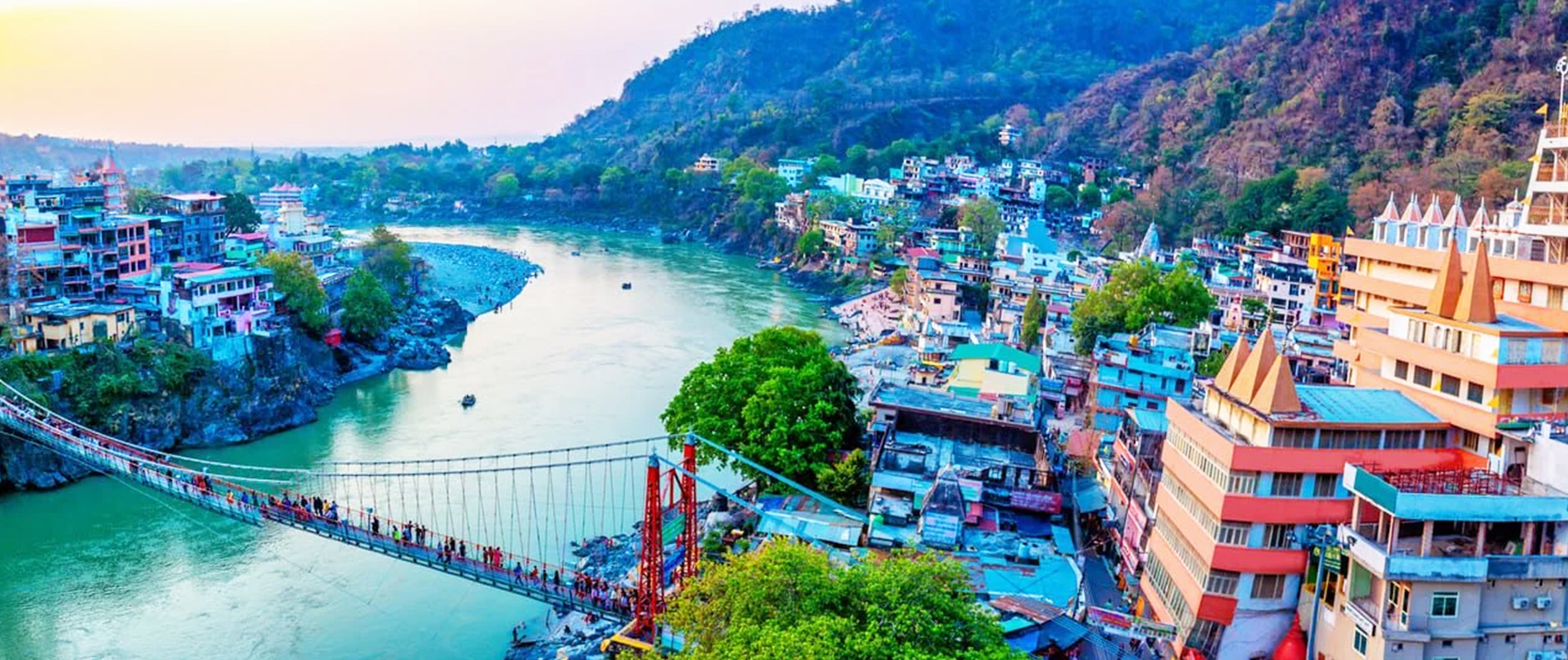
People travel from all over the world to northern India to seek calm, and Rishikesh is one of the main tourist and pilgrimage destinations. With good reason, Rishikesh is known as the "yoga capital of the world." In the Indian state of Uttarakhand, Rishikesh—sometimes spelled Hrishikesh—is a Tehsil and Municipal Corporation located in the Dehradun District. Located on the Ganges River's right bank, it is a Hindu pilgrimage destination where saints and sages from antiquity have meditated in pursuit of enlightenment.Along the river's banks are a large number of temples and ashrams. Badrinath, Kedarnath, Gangotri, and Yamunotri are the four Char Dham pilgrimage sites that may be reached from Rishikesh. Along with summer and winter trekking sites like Dodital, Dayara Bugyal, Kedarkantha, and Har Ki Dun, it serves as a starting point for Himalayan tourist destinations including Harsil, Chopta, and Auli. Rishikesh's food is exclusively vegetarian. In Rishikesh, the sale of meat, fish, and eggs has been prohibited since 1956. The Supreme Court maintained the egg prohibition in 2004.Garhwali cuisine, which includes common meals like daal, gahat, and phaanu, is the traditional cuisine of Rishkesh. The main ingredients are vegetables, millet, barley, buckwheat, lentils, and legumes. Only specific spices are utilized. The typical cooking oil is mustard oil.Street vendors selling chaat and samosas are ubiquitous, as are restaurant thalis. Rafting is a highly well-liked adventure sport in Rishikesh, and there are plenty of authorized and trained instructors and operators available for all skill levels. The greatest months to go rafting are September through June.There are serious pollution problems with the Ganges River, which rises in Rishikesh from the Himalayas. The river exhibits high levels of contamination in the urban areas of Rishikesh and Haridwar, even though it is largely undisturbed by pollution at its source. In Rishikesh, rafting is a widely popular adventure sport. There are numerous trained and authorized rafting teachers and operators available for all skill levels. Rafting is most enjoyable from September to June.The Ganges River, which rises in Rishikesh from the Himalayas, is severely polluted. Although the river is largely undisturbed by pollution near its source, it exhibits high levels of contamination in the metropolitan areas of Haridwar and Rishikesh.
Maasai Mara Africa
Maasai Mara Africa
Africa
AFRICAN
Yes
38
Maasai Mara, frequently spelled Masai Mara, and referred to locals as just "The Mara," is a sizable national game reserve in Kenya's Narok County that borders Tanzania's Serengeti National Park. The Maasai people, the region's original occupants who came from the Nile Basin, are honored by the name. From a distance, their description of the region is as follows: "Mara" means "spotted" in the Maa language due to the short, bushy trees that are scattered throughout the terrain. With its populations of lions, leopards, cheetahs, and African bush elephants, the Maasai Mara is one of Africa's wilderness and wildlife protection areas. In addition, it is home to the Great Migration, which has earned it a spot among the ten Wonders of the World and the Seven Natural Wonders of Africa. Depending on the weather, the Great Migration often takes place in July when a huge number of wildebeest migrate from Tanzania across the Mara River. The Maasai Mara National Reserve, the Mara Triangle, a number of Maasai group ranches, and Maasai Mara conservancies are all included in the Greater Mara ecosystem. The Masai Mara, sometimes referred to as "the world's eight world wonders" or one of the most well-known wildlife places in the world, is home to an abundance of species, breathtaking views, and unending plains.The Masai Mara National Reserve, an unfenced reserve with unrestricted wildlife movement, and a number of conservancies comprise the Greater Masai Mara area. Maasai families privately own these parcels of land. The Maasai families who lease their property to safari lodges have the opportunity to use the money they make from the conservancies to fund development or education projects in their communities. The Masai Mara was called in honour of the Maasai people, the traditional residents of the area. 'Mara' means'spotted' in Maasai (Maa) dialect. It won't be difficult to comprehend how the Masai Mara gained its name after visiting. The terrain does appear somewhat'spotted' due to the small, bushy trees that dot it. The environment of the Greater Masai Mara is enormous. It is almost 1510 square kilometers in size. The Serengeti National Park in Tanzania is adjacent to the Maasai Mara, a sizable game reserve in Narok County, Kenya. It is named after the Maasai people, who were the original occupants of the region, and how they described it from a distance: "Mara" means "spotted" in the Maasai language, referring to the numerous trees, plants, cloud shadows, and animals that dotted the terrain.


 (1).jpg)

.jpg)

.jpg)


.jpg)