Phuket Thailand
Phuket Thailand
Thailand
ASIA
Yes
0
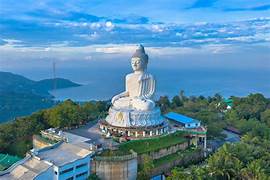
"The capital of Phuket province, Phuket is a city in southeast Thailand that is part of Phuket Island. In 2024, there were 71,284 people living in the city municipality and 252,515 people living in the Amphoe Mueang district as a whole. There are about 430,000 people living there when the larger metropolitan region is taken into account. Bangkok is located 862 kilometers (535.6 miles) south of Phuket. Buddhism is the predominant religion. Both domestic and foreign tourists find the city's Buddhist temples to be appealing travel destinations. There are also a few Hindu temples with statues of Brahma and Ganesha around the streets. The songthaews are primarily used for transportation by both locals and visitors. While blue songthaews link Phuket Old Town with the several beach resorts throughout the island, pink songthaews make stops throughout Phuket Old Town. The distance between Phuket Old Town and Phuket International Airport is 36 kilometers (22 miles). The airport and Phuket Old Town are currently connected by an hourly scheduled bus service. The songthaews are primarily used by both locals and visitors for transportation. While blue songthaews go between Phuket Old Town and the several beach resorts on the island, pink songthaews make stops around Phuket Old Town. Phuket Old Town is located 22 miles (36 kilometers) northwest of Phuket International Airport. Between the airport and Phuket Old Town, there is currently an hourly regular bus service."
Bangkok Thailand
Bangkok Thailand
Thailand
ASIA
Yes
22
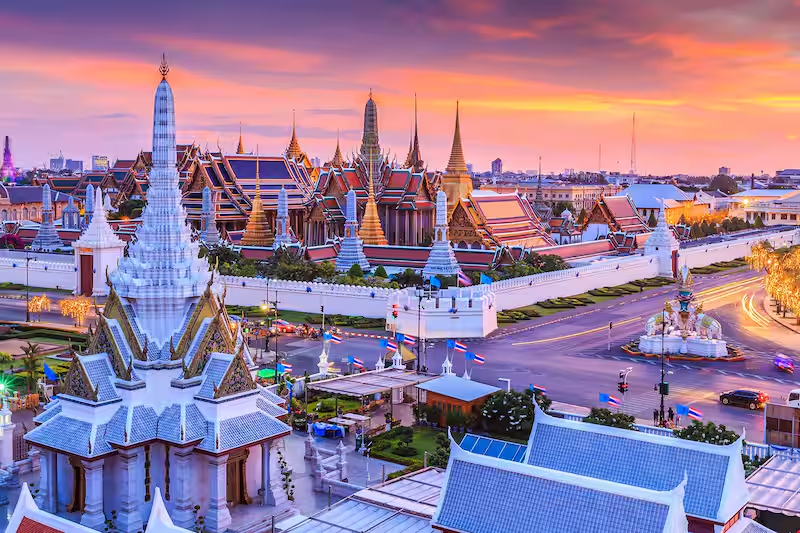
"Bangkok, Thailand's capital and most populated city, is formally known as Krung Thep Maha Nakhon[b] and is commonly referred to as Krung Thep[c]. With an anticipated 10 million residents as of 2024, the city makes approximately 13% of Thailand's total population and is located in the Chao Phraya River delta in central Thailand, covering 1,568.7 square kilometers (605.7 sq mi). According to the 2021 estimate, the Bangkok Metropolitan Region is home to around 17.4 million people, or 25% of Thailand's total population. This makes Bangkok a megacity and an extreme primate city, surpassing all other urban centers in Thailand in terms of both size and economic significance. In the 15th century, during the Ayutthaya period, Bangkok began as a tiny trading port. Over time, it expanded and became the location of two capital cities: Thonburi in 1767 and Rattanakosin in 1782. As Siam was under pressure from the West in the late 19th century, Bangkok was at the center of the country's development. Throughout the 20th century, the city was at the epicenter of the nation's political conflicts as Siam (later renamed Thailand) abolished absolute monarchy, embraced constitutional government, and experienced multiple upheavals and coups. Bangkok's culture is a reflection of its status as Thailand's hub for modernization and riches. The city has traditionally served as a gateway for Western ideas and material products, which its citizens have embraced and incorporated to varying degrees with Thai values. The lifestyles of the growing middle class best illustrate this. Shopping malls are popular weekend destinations, and conspicuous consumption is a sign of social and economic standing. Many of Thailand's yearly festivities are observed by Bangkok locals. Traditional ceremonies and water fights are held all around the city during Songkran, which takes place from April 13 to 15. Typically held in November, Loi Krathong is accompanied by the Golden Mount Fair. The plaza in front of CentralWorld is the most well-known location for New Year's celebrations. In addition to domestic flights to and from Bangkok's two international airports (Suvarnabhumi and Don Mueang), the country's roadway and rail networks connect Bangkok to the rest of the nation. Khlong Toei Port is continuously used for its centuries-old maritime cargo transportation.

 (1).jpg)

.jpg)

.jpg)


