Kyoto Japan
Kyoto Japan
Japan
ASIA
Yes
21
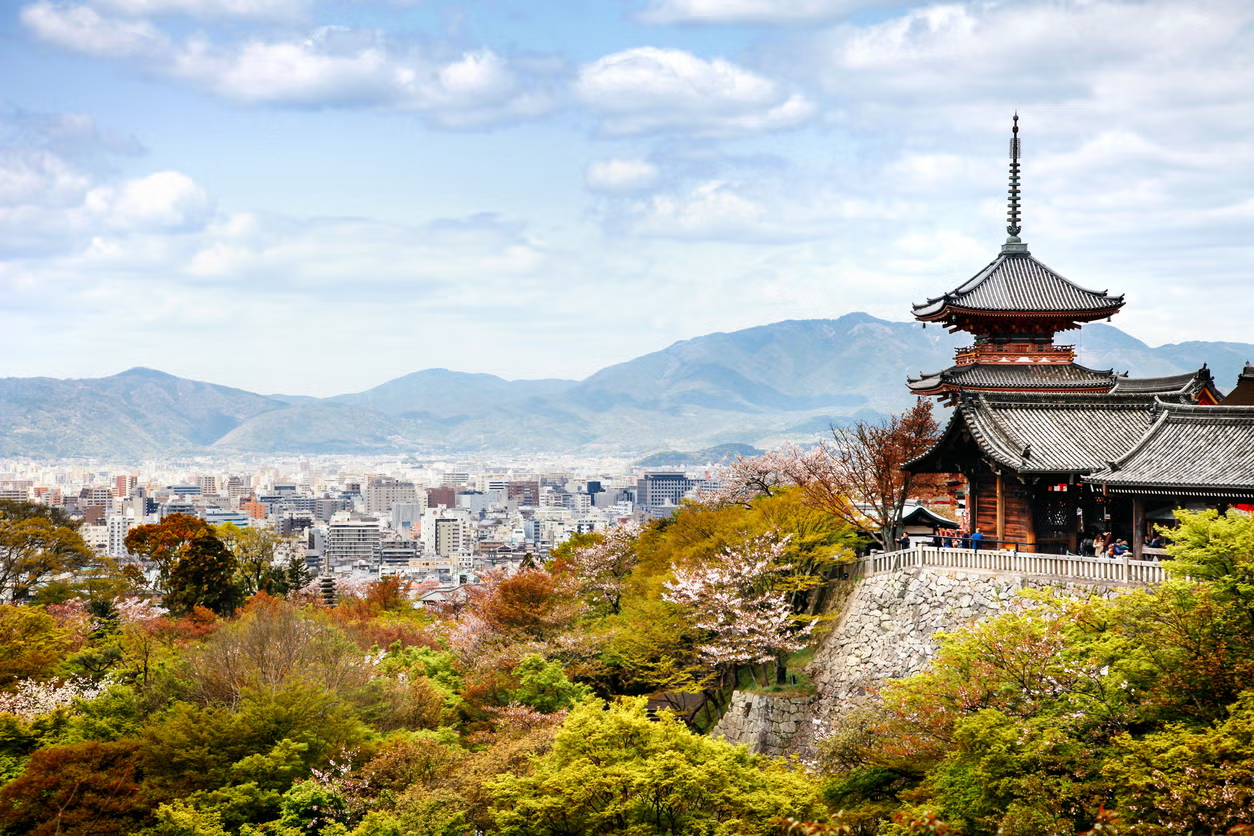
Located in the Kansai area of Honshu, the largest and most populated island in Japan, Kyoto serves as the capital of Kyoto Prefecture. As of 2020, the city had a population of 1.46 million, making it the ninth-most populous city in Japan. The city is home to more over half (56.8%) of the people in Kyoto Prefecture. With a population estimated at 3.8 million according to the census, the city serves as the cultural hub of the much larger Greater Kyoto metropolitan statistical region (MSA). Together with Osaka and Kobe, it is a component of the even larger Keihanshin metropolitan area. Emperor Kanmu selected Kyoto as the new location of Japan's imperial court in 794, making it one of the country's oldest cities. Heian-kyō, the original city, was laid out according to traditional Chinese feng shui, taking inspiration from the ancient Chinese cities of Chang'an and Luoyang. Up until 1869, Japan's emperors governed from Kyoto for the next eleven centuries. Following the Meiji Restoration, Tokyo replaced Kyoto as the capital. In 1889, the present-day city of Kyoto was created. The city's prewar cultural legacy has mostly survived because it was spared from widespread destruction during World War II. Kyoto is a popular tourist destination and is regarded as Japan's cultural center. The city is home to the national government's agency for cultural affairs. Many Buddhist temples, Shinto shrines, palaces, and gardens may be found there; some of these have been named UNESCO World Heritage Sites. Kyoto is a popular tourist destination because of its traditional festivals, which have been celebrated for more than a millennium.The Aoi Matsuri on May 15 is the first. The Gion Matsuri, one of Japan's three main festivals, takes place two months later in July and ends with a huge procession on July 17. In order to guide the spirits home, Kyoto celebrates the Bon Festival with the Gozan no Okuribi, which involves setting fires on mountains (August 16). The Festival of the Ages, or Jidai Matsuri, is held on October 22 to honor Kyoto's rich history.
Cairo Africa
Cairo Africa
Cairo
AFRICAN
Yes
38
Cairo isn’t just the capital of Egypt — it’s the pulse of the nation. A city where ancient history meets modern chaos, where the call to prayer rises above the traffic, and where every alley seems to hum with life. Home to over 10 million people, Cairo is one of the biggest and most energetic cities in the Middle East and Africa. It’s a place of contrasts — the timeless Pyramids of Giza just a short drive from bustling markets, rooftop cafés, and shiny new malls. The Greater Cairo Metropolitan Area, with more than 22 million residents, is among the most populated urban regions on Earth. Surrounded by ancient sites like Memphis, Heliopolis, and the Giza Plateau, Cairo is a living bridge between Egypt’s past and its future. The city’s origins trace back to Fustat, Egypt’s first Islamic capital founded in 641 CE, and later to 969 CE, when the Fatimid dynasty created what we now call Cairo. Through centuries — under the Ayyubids, Mamluks, and beyond — the city became Egypt’s heart of architecture, art, and learning.
.jpg)

 (1).jpg)
.jpg)




.jpg)