Belfast Europe
Belfast Europe
Europe
EUROPE
Yes
23
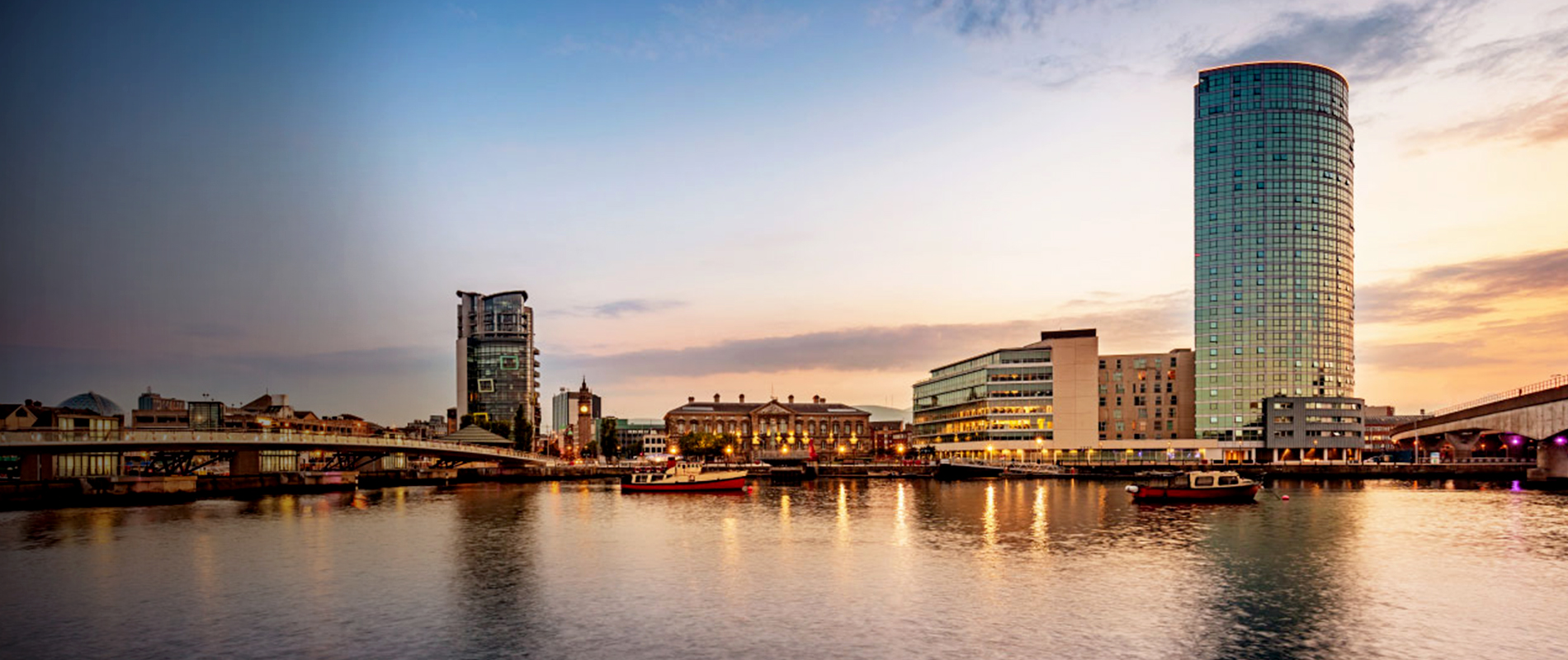
Belfast, the capital and main port of Northern Ireland, is situated on the banks of the Lagan River and is connected to the ocean by the North Channel and Belfast Lough. With a projected population of 348,005 in 2022 and a metropolitan area of 671,559. It is the second-largest city in Ireland, after Dublin. An influx of Scottish Presbyterians propelled the town's early expansion after it was first established as an English hamlet in 1613. The revolt of 1798 and the union with Great Britain in 1800, which is later seen as a crucial factor in the town's industrial change, were both influenced by their descendants' disenchantment with Ireland's Anglican establishment. There were sectarian problems with the Irish Catholic community, which was attracted from western districts by jobs in factories and mills. Increased by disagreements about Ireland's future in the UK, these two times erupted in protracted violence: in 1920–22, when Belfast became the capital of the six northeastern counties that maintained their British ties, and in the late 1960s, when the British Army was constantly present on the streets. The division of Protestant and Catholic working-class communities by barriers is a relic of strife. Belfast's name, Feirste in Irish, alludes to a tidal ford or sandbar.This was created where the river flowed into the Lagan down High Street until it was culverted in the late 18th century. The early settlement sprang up at this crossing, which is beneath or near the present Queen's Bridge. Different transcriptions of regional pronunciations of "Belfast"—such as Bilfawst, Bilfaust, or Baelfawst—that they occasionally find acceptable are used by Ulster-Scots compilers. In addition to one each in Australia, Canada, New Zealand, and South Africa, Belfast has given its name to over a dozen settlements in the United States, the largest of which being Belfast, Maine, as a result of emigration. Belfast saw a sharp increase in industry starting in the 1820s, whereas other Irish towns saw a decline in manufacturing. Following a cotton boom and bust, the town gained the nickname "Linenopolis" for being the world leader in the production of linen items, which mostly involved women and children working in the mill and finishing processes. Heavy industry developed as a result of shipbuilding.Her shipyards were producing up to 25% of the United Kingdom's total tonnage by the 1900s, and they closed one-eighth of the world's production in 1914, just before the Great War.167 This featured the tragic RMS Titanic, the biggest ship in the world when she was launched in 1911, which was built by Harland & Wolff.Mineral waters, tobacco, rope, and textile machinery were among the other important export sectors.
Johannesburg Africa
Johannesburg Africa
South Africa
AFRICAN
Yes
39
Johannesburg is a city in South Africa's Gauteng province. It is the main financial and industrial center of the nation. Johannesburg, one of the newest big cities in the world, was established in 1886 after gold was discovered. Prior to becoming one of South Africa's four provinces, the city was a part of the Transvaal, an independent Afrikaner, or Boer, republic. Today, the city is a part of one of South Africa's nine provinces, Gauteng, which means "Place of Gold" in Sotho. The Highveld, a wide, grassy plateau that stretches across the interior of South Africa, is where Johannesburg is located. The city is situated on the edge of the Witwatersrand, also known as the Rand, which is a chain of low, rocky ridges that serves as a watershed between the drainages into the Atlantic and Indian seas. The city is between 5,700 and 5,930 feet (1,740 and 1,810 meters) above sea level. The climate of Johannesburg is moderate. The average temperature is around 75 °F (24 °C) in the summer and 55 °F (13 °C) in the winter, with very few periods below freezing. In both winter and summer, the city receives roughly eight hours of sunlight each day. Although the overall amount of rainfall fluctuates greatly from year to year, it averages around 28 inches (700 millimeters) annually. A major location for several creative and cultural industries, Johannesburg is a cultural center in South Africa with a diverse range of cultural venues. In addition to a plethora of other museums, theaters, galleries, and libraries, Johannesburg is home to the South African Ballet Theatre, the National School of Arts, and the University of Witwatersrand's School of the Arts.The Central Business District of Johannesburg is home to the Johannesburg City Library. The city is home to a number of Premiership and National First Division football teams. The top Johannesburg teams in the Premiership, such as Orlando Pirates (also known as the Buccaneers) and Kaizer Chiefs (also known as Amakhosi), are bitter rivals. They are headquartered at the Orlando and FNB stadiums in the city. Soccer City, the site of the 2010 FIFA World Cup final, hosts a number of major league and cup matches. FC AK and Jomo Cosmos are the teams in the First Division. The stadiums used by Katlehong City and Alexandra United are Alexandra and Reiger Park, respectively.


 (1).jpg)

.jpg)
.jpg)



.jpg)