Belfast Europe
Belfast Europe
Europe
EUROPE
Yes
23
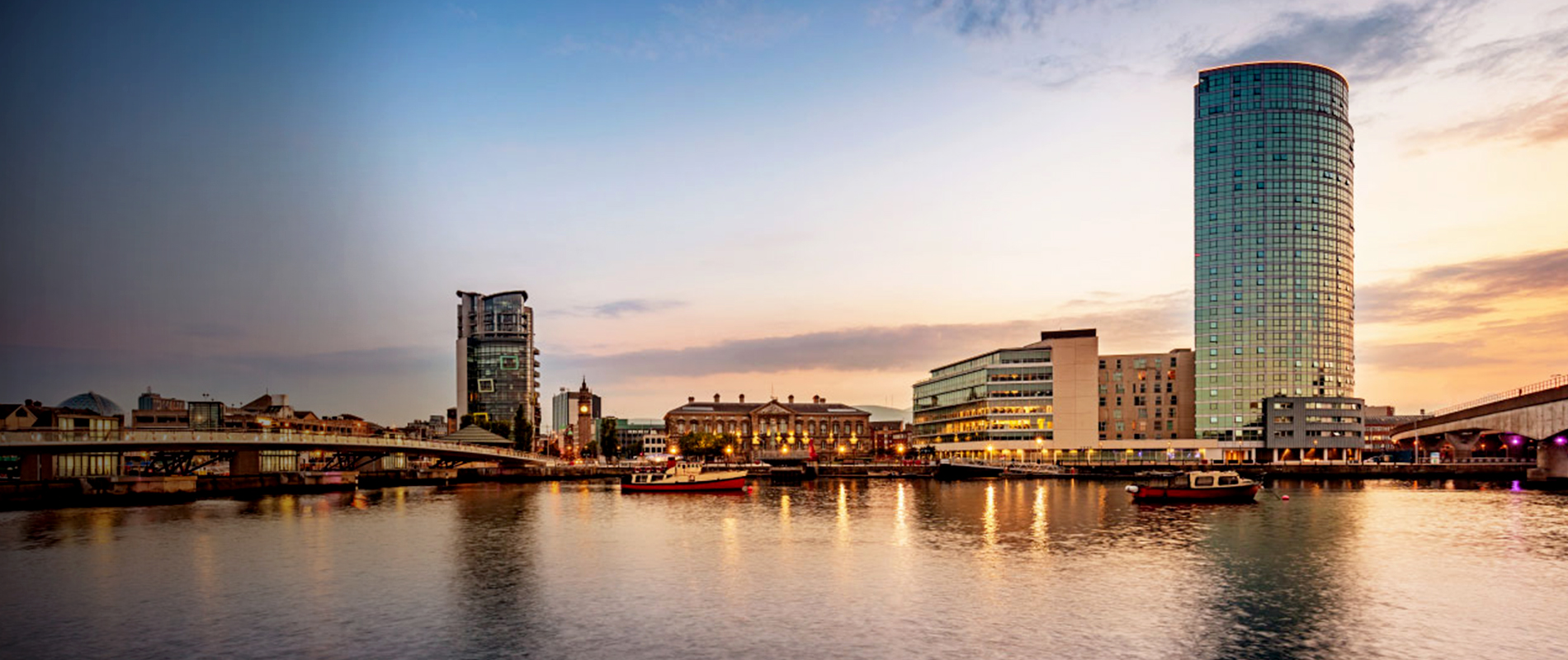
Belfast, the capital and main port of Northern Ireland, is situated on the banks of the Lagan River and is connected to the ocean by the North Channel and Belfast Lough. With a projected population of 348,005 in 2022 and a metropolitan area of 671,559. It is the second-largest city in Ireland, after Dublin. An influx of Scottish Presbyterians propelled the town's early expansion after it was first established as an English hamlet in 1613. The revolt of 1798 and the union with Great Britain in 1800, which is later seen as a crucial factor in the town's industrial change, were both influenced by their descendants' disenchantment with Ireland's Anglican establishment. There were sectarian problems with the Irish Catholic community, which was attracted from western districts by jobs in factories and mills. Increased by disagreements about Ireland's future in the UK, these two times erupted in protracted violence: in 1920–22, when Belfast became the capital of the six northeastern counties that maintained their British ties, and in the late 1960s, when the British Army was constantly present on the streets. The division of Protestant and Catholic working-class communities by barriers is a relic of strife. Belfast's name, Feirste in Irish, alludes to a tidal ford or sandbar.This was created where the river flowed into the Lagan down High Street until it was culverted in the late 18th century. The early settlement sprang up at this crossing, which is beneath or near the present Queen's Bridge. Different transcriptions of regional pronunciations of "Belfast"—such as Bilfawst, Bilfaust, or Baelfawst—that they occasionally find acceptable are used by Ulster-Scots compilers. In addition to one each in Australia, Canada, New Zealand, and South Africa, Belfast has given its name to over a dozen settlements in the United States, the largest of which being Belfast, Maine, as a result of emigration. Belfast saw a sharp increase in industry starting in the 1820s, whereas other Irish towns saw a decline in manufacturing. Following a cotton boom and bust, the town gained the nickname "Linenopolis" for being the world leader in the production of linen items, which mostly involved women and children working in the mill and finishing processes. Heavy industry developed as a result of shipbuilding.Her shipyards were producing up to 25% of the United Kingdom's total tonnage by the 1900s, and they closed one-eighth of the world's production in 1914, just before the Great War.167 This featured the tragic RMS Titanic, the biggest ship in the world when she was launched in 1911, which was built by Harland & Wolff.Mineral waters, tobacco, rope, and textile machinery were among the other important export sectors.
Kruger National Park Africa
Kruger National Park Africa
Africa
AFRICAN
Yes
37
Covering 19,623 km2 (7,576 sq mi), Kruger National Park is located in the northeastern South African provinces of Mpumalanga and Limpopo. It stretches 65 km (40 mi) from east to west and 360 km (220 mi) from north to south. Skukuza is home to the administrative headquarters. The South African Republic's government first protected portions of the park in 1898, and in 1926 it was designated as the country's first national park. It is a part of the biosphere reserve known as the Kruger to Canyons Biosphere. Kruger National Park is home to all five of the big game creatures and boasts 147 species of large mammals, more than any other game reserve in Africa. Webcams have been installed to watch the wildlife. There are believed to be just 400 African wild dog packs in all of South Africa, and Kruger is home to packs of these endangered animals. There is a reasonably consistent group of bird species from the park's southern to central regions, but the mopane-dominated flatlands north of the Olifants show a fall in richness.The larger birds of prey, on the other hand, breed during the dry winter, when their prey is most exposed, whereas the majority of species breed during the summer, when rainfall sustain the majority of vegetable and animal food. In 1918, Kruger National Park was declared, and a commission was formed to oversee its development and planning. A government officer named Johannes Andries (Dries) de Ridder served as the commission's first secretary. After 44 years in charge of the Kruger Park, Warden James Stevenson-Hamilton retired on April 30, 1946. Colonel J. A. B. Sandenbergh of the South African Air Force took his post. The government forcibly removed the Makuleke people from the northern portion of the park in 1969, and approximately 1500 of them were relocated to territory in the south so that their original tribal lands could be incorporated into the larger Kruger National Park. The famed Big Five (lion, leopard, elephant, rhinoceros, and buffalo) are among the remarkably diverse species that makes Kruger National Park famous. The park, which spans about two million hectares, draws tourists from all around the world with its unmatched wildlife viewing opportunities.


 (1).jpg)

.jpg)

.jpg)


.jpg)